Get Full Government Meeting Transcripts, Videos, & Alerts Forever!
Get email alerts on the Subordination Clause topic
No spam. Unsubscribe anytime.
Court hears arguments over whether Unico breached subordinated note when senior loan forbade cash payment
Summary
In oral argument before the Other Court, counsel for Note Hold 2, LLC argued Unico defaulted by failing to make a scheduled principal payment; counsel for Unico said senior-loan restrictions barred cash payment and there was no obligation to make principal payments "in kind."
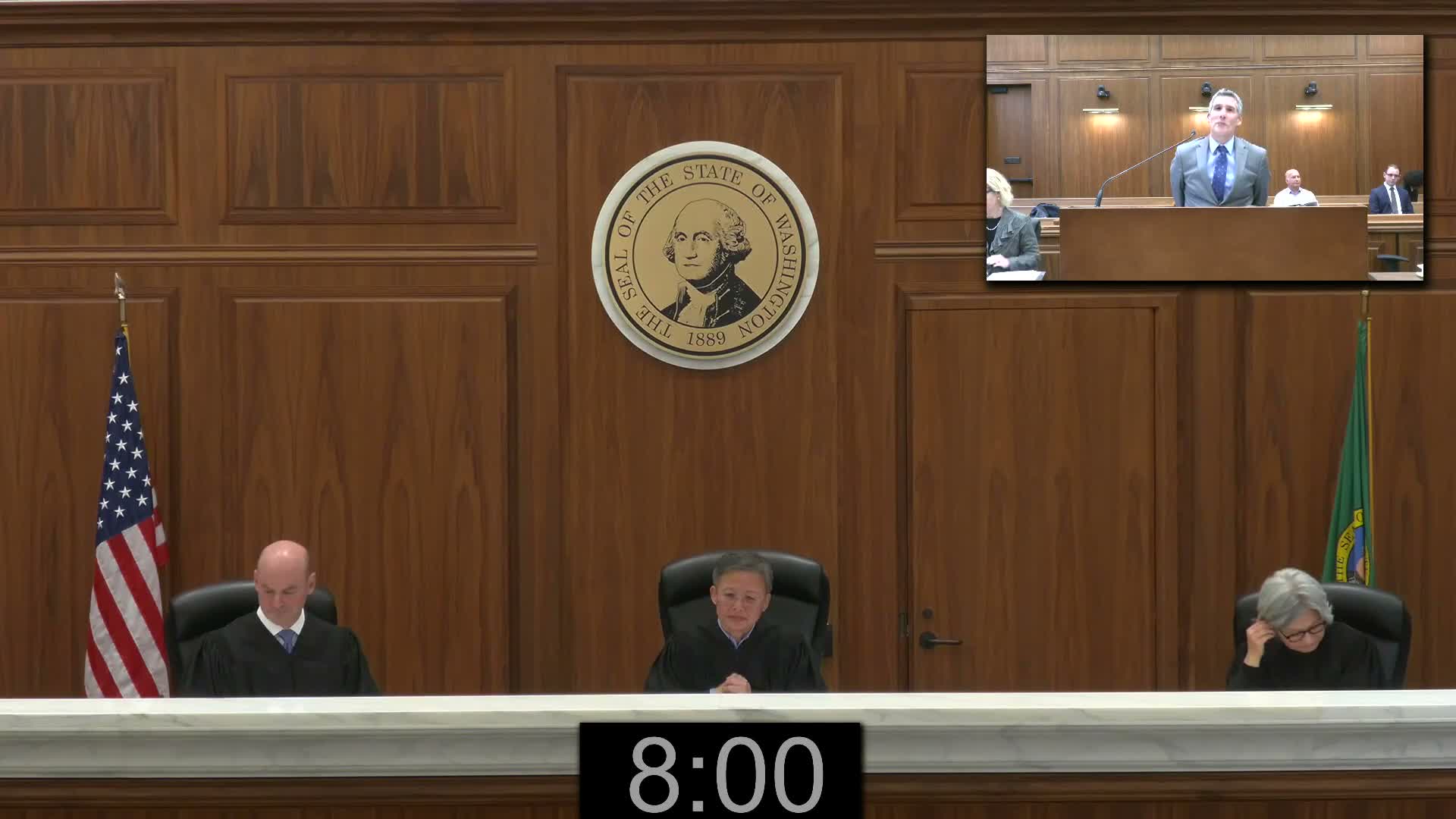
The Other Court heard argument in Note Hold 2, LLC v. Unico on whether Unico breached a subordinated promissory note by failing to make a scheduled principal payment when a senior lender's loan documents prohibited cash payments.
Jonathan McQuaid, attorney for appellant Note Hold 2, LLC, told the panel he would focus on three points and opened by saying Unico "defaulted on the promissory note" by not paying principal and interest when due. McQuaid argued the trial court erred by construing the subordination clause "as a blanket prohibition of all payments," and urged the court to construe subordination provisions narrowly according to their plain terms.
Claire Taylor, attorney for respondent Unico, told the court that appellant concedes the senior loan documents prohibit cash payments and that Unico "cannot pay in cash because of the senior loan documents." Taylor said the appellant was effectively asking the court to read an affirmative obligation into the subordinated note to pay principal in kind (with noncash property), but the note contains no such agreement.
Much of argument turned on the note's text. The panel and counsel read the scheduled payment language and section 12, which conditions payment in cash on permissibility under senior debt documents. McQuaid argued the schedule'which lists a cash amount as the predicate obligation'and section 12 are in tension: if the note requires a cash payment but the senior documents prohibit cash, McQuaid said the court must decide whether the prohibition eliminates the obligation (no payment due) or instead limits the medium/timing of payment.
Taylor responded that the note itself provides a mechanism for handling interest when cash payments are restricted: interest may be "paid in kind" by adding it to the principal balance. She said there is no clause obligating Unico to make principal payments in kind and that the trial court appropriately enforced the contract as written. Taylor urged the appellate court to affirm, arguing some of the declaratory-judgment questions appellant now presses were not ripe or were derivative of the trial court's finding that there was no breach.
The panel also discussed the temporal scope of the complaint: counsel and the bench agreed the complaint focuses on alleged nonpayment in 2024, and that maturity-related questions tied to 2025 were not pled in the record before the trial court. McQuaid cited cases including Freestone Capital Partners and Merit v. USAA to support his reading; the bench probed factual differences between those precedents and the record here.
Taylor told the court that Note Hold 2 will get paid when senior-lender restrictions are lifted or when the senior debt is paid off, stressing that the risk of deferred payment was part of the parties' bargain in taking a subordinated position. After brief further questioning, counsel thanked the court and the chair concluded the matter for the morning.
The court did not announce a decision on the record during argument.