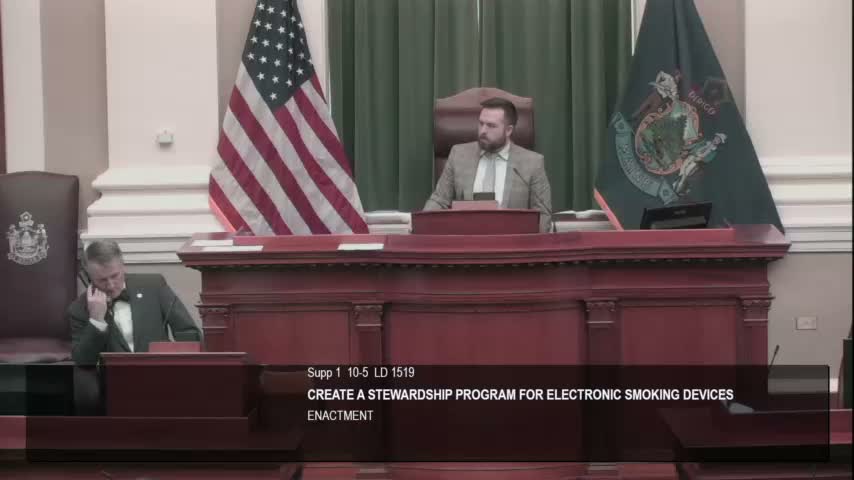
House approves e-cigarette stewardship law requiring retailer collection and DEP oversight
Loading...
Summary
The House approved a bill that requires retailers to act as collection sites for electronic smoking devices and establishes a stewardship program; supporters cited environmental and public-health benefits while opponents raised concerns about sanitary risk, retailer burden and DEP capacity.
The Maine House voted to pass LD 1519, a bill to create a stewardship program for electronic smoking devices that would require retailers to serve as collection sites for returned devices within five years of enactment and give the Department of Environmental Protection (DEP) implementation responsibilities.
Supporters said the provision extends the state's extended producer responsibility framework to a new product category, recovers plastics and batteries that would otherwise become litter or hazardous waste, and will generate long-term fee revenue for the state. "This bill will also generate revenue through fees coming into the state of Maine, which is a win for us in the long term," said a floor supporter, noting the bill followed a DEP recommendation.
Opponents, including Representative Duchar, requested roll calls and urged delay, arguing DEP currently lacks staff and the program could saddle small retailers with sanitation and fire-safety liabilities. "How long will retailers be obligated to retain these products before transmitting them to a waste facility?" one opponent asked, citing concerns about battery fire hazards and unclear requirements for participation by out-of-state manufacturers.
The House recorded a roll-call tally (approximately 75 to 68 in favor as announced on the floor) and the measure was sent to the Senate. The transcript records committee support and several members emphasized the bill's environmental and public-health aims alongside operational questions that will need resolution in rulemaking and implementation.
What's next: The measure advances to the Senate; the DEP will have rulemaking and implementation obligations if the bill is enacted, and the transcript records follow-up questions about staffing and the participation of foreign producers that will need to be settled in implementation.