Get Full Government Meeting Transcripts, Videos, & Alerts Forever!
Get email alerts on the Police Transparency topic
No spam. Unsubscribe anytime.
Residents, advocates urge Spokane County to roll back redaction fee for body‑camera footage
Summary
An impacted mother and local accountability advocates urged Spokane County commissioners to reconsider a recently approved policy charging the public 78 cents per minute for redacted body‑worn camera footage, saying the fee erects barriers to justice and to legal representation.
An impacted mother and local police‑accountability advocates asked Spokane County commissioners on the record to reconsider a newly approved fee that charges the public for redacted body‑worn camera footage.
During the open public forum, a woman who identified herself as an affected mother said her son was shot and killed on 01/07/2019 and that she did not receive public records until “September” of a later year. She told the board she believes families face added costs and barriers when seeking records and asked commissioners to “reconsider this resolution.”
Jim Lady, identifying himself as a regional representative of the Washington Coalition for Police Accountability and police‑accountability director for Spokane Community Against Racism, said the board’s vote last week set a new fee of “78 cents per minute” for redacted body camera footage and called the policy harmful. “You voted against transparency and you voted to revictimize people that have been victims of the judicial system,” he said.
Lady told commissioners the policy was aimed at deterring requests and said the county did not consult with people affected before adopting the fee. “You pulled the trigger without ever considering beyond your target to see who else you might harm,” he said.
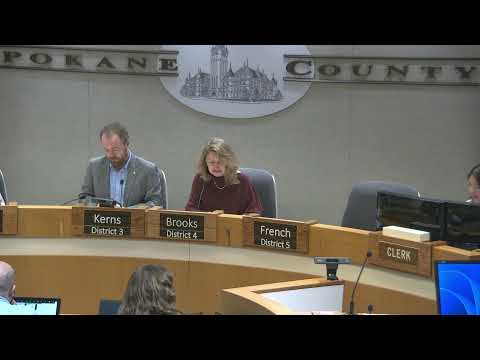
A commissioner who was addressed in the exchange (identified in the transcript as Commissioner Kearns) asked whether the presentation that accompanied the policy stated that crime victims and attorneys requesting records on a victim’s behalf would not be charged. Lady replied that, in his experience working with families, many people seeking records are not recognized as victims and therefore have been charged, citing specific cases he said were charged for records.
Speakers urged the board to roll back the fee or to restore cost exemptions that would allow victims and prospective plaintiffs to obtain redacted footage without paying. No vote or reversal of the policy occurred during the meeting; speakers requested that commissioners revisit the matter.
What happens next: Commissioners did not take action to reverse the fee during the session. Residents and advocates said they will press the board to reconsider the policy and asked for broader public consultation before implementation.