Get Full Government Meeting Transcripts, Videos, & Alerts Forever!
Get email alerts on the Economic Development topic
No spam. Unsubscribe anytime.
City frames economic-development goals and Glen Cove sewer limits; Mill Road lift station funded by state and federal grants
Summary
Staff presented an economic-development framework tied to the comprehensive plan, noted sewer capacity as the primary constraint for light-industry growth in Glen Cove, and reported Mill Road lift-station funding of $2.5M federal and $1.7M state with a $2M connection-charge line in the capital budget.
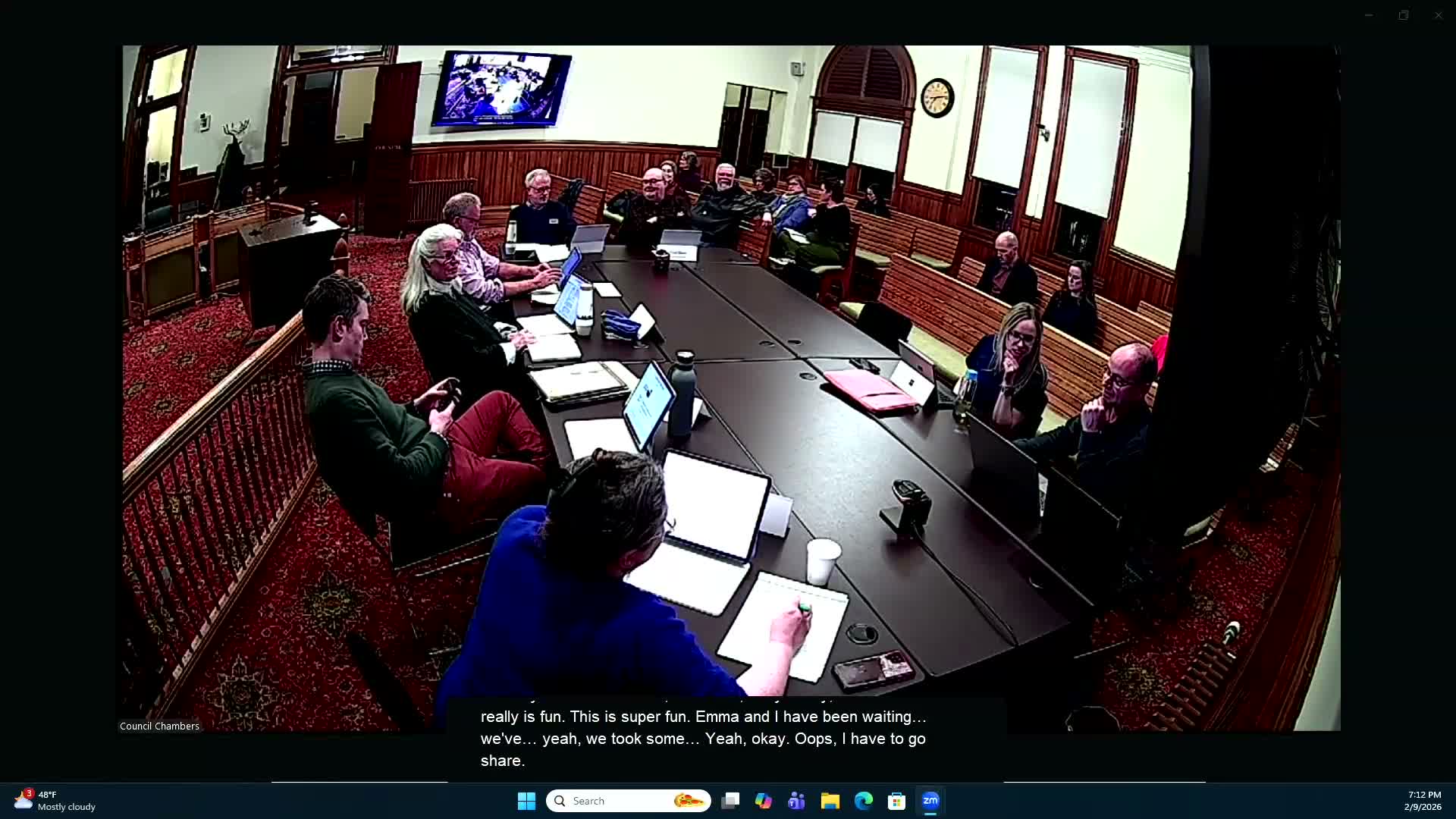
City staff and consultants presented an economic-development briefing that tied local priorities (jobs, affordable housing, and sustainable growth) to the recently updated comprehensive plan and a county study of Glen Cove. The presentation framed economic development as a communitywide effort and emphasized that the city’s role is to set values, align infrastructure and partners, and remove barriers to private investment.
Glen Cove and sewer constraints: staff summarized the county-sponsored Glen Cove study and said sanitary sewer—not water—is often the limiting factor for light industrial and processing businesses. The presentation noted that on-site septic and private systems can be infeasible for many light-industrial uses because of space and environmental constraints. "Sewer service is generally the limiting factor in light industry," the City staff member said.
Funding and fiscal mechanics: staff reported Mill Road lift station funding includes $2,500,000 in federal funds and $1,700,000 in state funds. They also identified a $2,000,000 line item in the capital package labeled local facilities charge for connection fees, and explained that per-connection charges would depend on how many properties ultimately connect to the new infrastructure (fewer connectors produces higher per-connection charges; more connectors spreads the cost).
Jurisdictional and revenue-sharing issues: staff stressed that if private investment remains outside the city limits (in Lambert/UGA areas), most tax revenue accrues to Jefferson County rather than Port Townsend, and described the need for revenue-sharing discussions and intergovernmental coordination. Staff urged a financial analysis to quantify public and private returns and suggested targeted marketing to attract the types of light-industry businesses that fit the city’s infrastructure and environmental constraints.
Next steps: staff recommended additional financial analysis, regional coordination with Jefferson County about allowable uses and potential revenue-sharing, and follow-up reporting on implementation options and funding scenarios for sewer expansion and Glen Cove infrastructure.