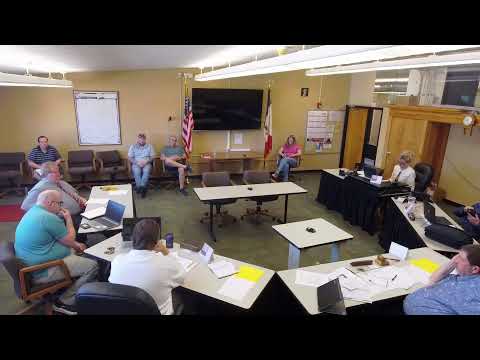
Supervisors plan narrow strategy as county watches proposed Alliant gas plant, pipeline
Loading...
Summary
Officials discussed legal limits on county standing, road and watershed impacts, and recommended waiting for a formal Iowa Utilities Commission filing before deciding whether to intervene; the board asked staff to draft a letter and coordinate with neighboring jurisdictions and advocacy groups.
Benton County supervisors and staff spent the meeting outlining how the county could respond to a proposed Alliant natural-gas power plant and associated pipeline near Atkins, emphasizing limits on county legal standing and practical next steps.
A staff member explained that projects of this type are reviewed by the Iowa Utilities Commission (IUC) through an administrative process in which affected parties can intervene, participate in discovery and request hearings. "These projects are regulated by the Iowa Utilities Commission...once an application is filed...affected parties have an opportunity to file as an intervener," the staff member said, and recommended waiting for the company to file formal application materials before developing a full strategy.
Discussion focused on where the county could demonstrate a direct, legal interest. Staff said adjacent landowners and the city of Atkins have stronger claims to intervene because they would be directly affected; the county's best narrow arguments would be demonstrable impacts to county-owned infrastructure such as road damage from construction or watershed impacts. Participants raised concerns that construction traffic could "tear this road up," and staff said they would explore whether the company might be asked to assume repair responsibility or whether other mitigation steps are available.
Speakers noted existing case law that gives broad deference to utility commissions and allows pipelines to acquire easements in some circumstances, meaning court challenges can be difficult. Environmental and watershed impacts were cited as potential evidence to include if the county intervenes; staff pointed to a Fairfax study on aquifer impacts as one example the county may review.
The group agreed on interim steps: monitor for the formal IUC filing, draft a county letter summarizing Benton County concerns for the IUC and the consumer advocate, contact the Department of Natural Resources about watershed questions, and identify partner organizations (such as Sierra Club and landowner groups) who might intervene or support technical studies. No formal county intervention was authorized at the meeting; supervisors emphasized the county will likely limit any future involvement to narrow, fact-based claims tied to county property or infrastructure.
Why it matters: The proposed plant and pipeline could affect local roads, emergency services and natural resources in Benton County and nearby jurisdictions. County officials said coordination with the city of Atkins, adjacent landowners and advocacy groups will be needed to develop technical evidence and legal arguments.
Next steps: Staff will watch for the IUC application, draft a letter to the utilities commission and consumer advocate, and request technical guidance from the Department of Natural Resources and other agencies before recommending any formal county intervention.