Get Full Government Meeting Transcripts, Videos, & Alerts Forever!
Get email alerts on the Opioid Response topic
No spam. Unsubscribe anytime.
County reports STARS sobering-triage outcomes and flags $1.8M opioid funding over-obligation; staff seek direction on carryover and caps
Summary
Officials reported the sobering, triage and transition program served 1,735 people from Dec 2024–Jan 2026 with 62% connected to next-level care and 48 MAT enrollments; staff said opioid tracker shows an $1.8M over-obligation under current carryover assumptions and requested board direction on caps and city partnership options.
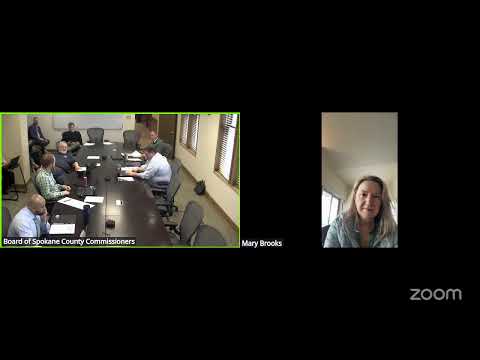
County staff updated the board on opioid-abatement funds and the sobering, triage and transition (STARS/STAT) program on March 17, reporting program outcomes and asking the board to discuss funding carryover rules and potential program caps.
Jessica Thompson (speaker 13) said the STAT program served 1,735 individuals between December 2024 and January 2026, with 62% of those connected directly to the next level of care (withdrawal management or residential treatment). She also said 48 individuals received medication-assisted treatment while in the program and that polysubstance use — especially fentanyl combined with methamphetamine — accounted for many intakes.
Heather (speaker 19) and other finance staff reviewed the opioid-abatement tracker and said that, under a worst-case approach with no carryover, the opioid account is over-obligated by roughly $1.8 million. Staff described options including capping ongoing program obligations, reallocating underspent administrative amounts, and further discussion with city partners (some city funds were proposed as joint investments). Commissioner questions focused on whether unsettled carryovers and unspent contract allocations could be recaptured for upstream prevention or new projects.
Why it matters: staff said transitional and upstream prevention funding are priorities for improving outcomes, but fiscal constraints require careful management of carryover, caps and contract obligations. Staff asked the board to authorize further conversations with city partners about joint projects, pauses or caps to avoid persistent over-obligation.
What’s next: staff will return with a proposed path to manage carryovers, consider capping selected contracts, and provide more granular expenditure reporting on opioid funds and pending settlement receipts.