Hospital district urges help filling board vacancies as indigent‑care costs outpace local taxes
Loading...
Summary
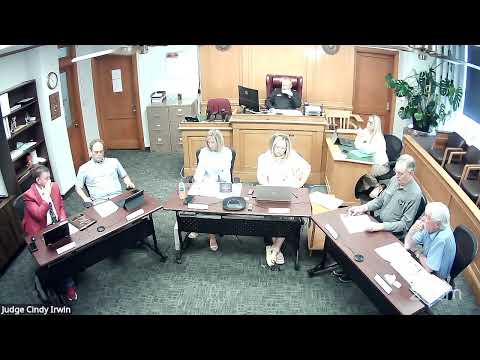
Jesse Sheffield, representing the Hutchinson County Hospital District Board, told commissioners the district frequently lacks quorum with just four of seven seats filled, is reviewing bylaws and may need to seek a voter-approved tax increase to cover indigent-care shortfalls; he requested coordinated recruitment with the court.
Jesse Sheffield, representing the Hutchinson County Hospital District Board, told the Hutchinson County Commissioners that the district currently has only four of seven board seats filled and is “in dire need of board members,” which has left the board unable to take action at times. Sheffield said the shortfalls stem from recent turnover — including an appointed seat expiring and the death of a precinct-elected member — and from volunteers who step down after a few months because of other commitments.
Sheffield described a governance change in 2023 when the for‑profit operator ceased hospital operations and the county EMS nonprofit took over day‑to‑day operations. “So now they are a nonprofit,” he said, adding that any net revenue “would be put back into the operations.” He told the court the hospital board is reviewing its bylaws “to try to better get ready for the future of health care in the county.”
Commissioners raised concerns about indigent‑care billing for inmates and unpaid prescription charges; one commissioner said the county has been paying out of pocket for inmate prescriptions because the billing mechanism to the hospital had broken down. Sheffield acknowledged the problem and said that under the indigent‑care contract the hospital is supposed to process those charges. He said he would work with county staff to ensure the issue is addressed.
On funding, Sheffield described the scale of the county’s indigent‑care need and the role of intergovernmental transfers (IGTs) and state/federal programs in supplementing local tax revenue. He said indigent‑care costs were about $12,800,000 last year while local tax collections for the district produced roughly $3,000,000, and described IGTs as a way to multiply county contributions to cover care costs.
Sheffield also discussed the district’s tax rate, which he said is currently 10¢ and among the lowest in the state; he said the board has been reluctant to raise taxes but that it may need to ask voters to approve an increase, with a working rate of 13¢ discussed and 15¢ noted by one speaker as preferable for long‑term stability. Sheffield asked the commissioners for help recruiting qualified board members and proposed a joint work session to identify governance gaps and coordination points between the district and the commissioners’ court.
The court did not take a formal vote on policy changes during the update; commissioners thanked Sheffield and agreed to follow up on recruitment and coordination.