Lifetime Citizen Portal Access — AI Briefings, Alerts & Unlimited Follows
Olympia adopts Home Energy Score ordinance requiring disclosure at listing, effective May 1, 2027
Loading...
Summary
After extensive public comment both for and against, the Olympia City Council unanimously adopted a residential energy performance rating and disclosure ordinance (Home Energy Score) that will require a mandatory disclosure at time of listing, with a one‑year implementation delay and provisions for subsidized assessments for low‑income sellers.
The Olympia City Council on March 24 adopted an ordinance requiring a Home Energy Score (HES) disclosure at the time a single‑family or similar dwelling is listed for sale, setting an effective date of May 1, 2027 and a one‑year implementation delay to allow program setup and assessor recruitment.
Pamela Braff, the city’s director of climate programs, described the HES as the U.S. Department of Energy’s standardized home energy rating tool. Braff told council the assessment typically takes about an hour and costs roughly $150–$350, and that the proposed ordinance would apply to single‑family detached dwellings, duplexes, triplexes, quadplexes, cottage housing, townhouses and attached ADUs; it would exclude building types that do not work with the HES tool (for example, stacked multifamily and mobile homes).
Braff said the ordinance incorporates a regional approach through the Thurston Climate Mitigation Collaborative, includes subsidized assessments for qualifying low‑income sellers, and anticipates contracting with a national third‑party HES partner to provide assessor training and quarterly quality‑assurance reviews. She said staff estimates roughly 3,000 homes would be rated in the first year and that the program would require additional certified assessors and shared program management across jurisdictions.
The meeting included extensive public comment. Realtors and builders urged the council to pause or make the program voluntary, citing transaction friction, potential impacts on affordability, enforcement questions and limited local assessor capacity. Advocates for climate action, public health and consumer protection—along with several homeowners—argued mandatory disclosure will help buyers understand likely operating costs, access incentives and prompt cost‑effective retrofits.
Council members pressed staff on compliance and enforcement approaches. Braff said compliance would rely in part on a required NWMLS (Northwest Multiple Listing Service) reporting form, periodic desktop reviews by city staff (and the third‑party partner) and complaint‑driven follow up; the ordinance sets civil penalties (first offense $50; second $125; third $250) but staff emphasized the preference to bring listings into compliance before penalties are assessed.
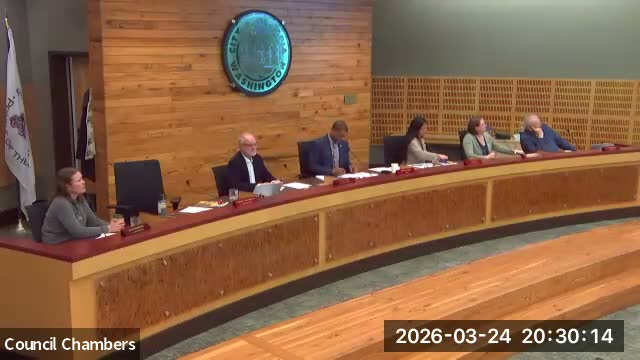
After discussion about program cost, enforcement, equity and regional coordination, Council member Madron moved to approve the ordinance; the motion was seconded and passed by unanimous voice vote. The ordinance’s effective date was set for May 1, 2027 to allow time for contracting, assessor recruitment and program setup. The council directed staff to continue stakeholder engagement and to develop subsidy protocols and outreach materials during the implementation year.
Council and staff said they will monitor program impacts and make adjustments as needed once the program launches.