Get Full Government Meeting Transcripts, Videos, & Alerts Forever!
Get email alerts on the Behavioral Health Taskforce topic
No spam. Unsubscribe anytime.
Regional Safe & Healthy task force offers draft recommendations, eyes May report
Summary
Conveners and staff updated the council on an 8‑meeting task force and advisory committees that have prioritized about 11–15 draft recommendations focused on crisis response, behavioral health integration, facility needs and data sharing; the task force plans to deliver data‑informed recommendations to regional elected leaders in early May.
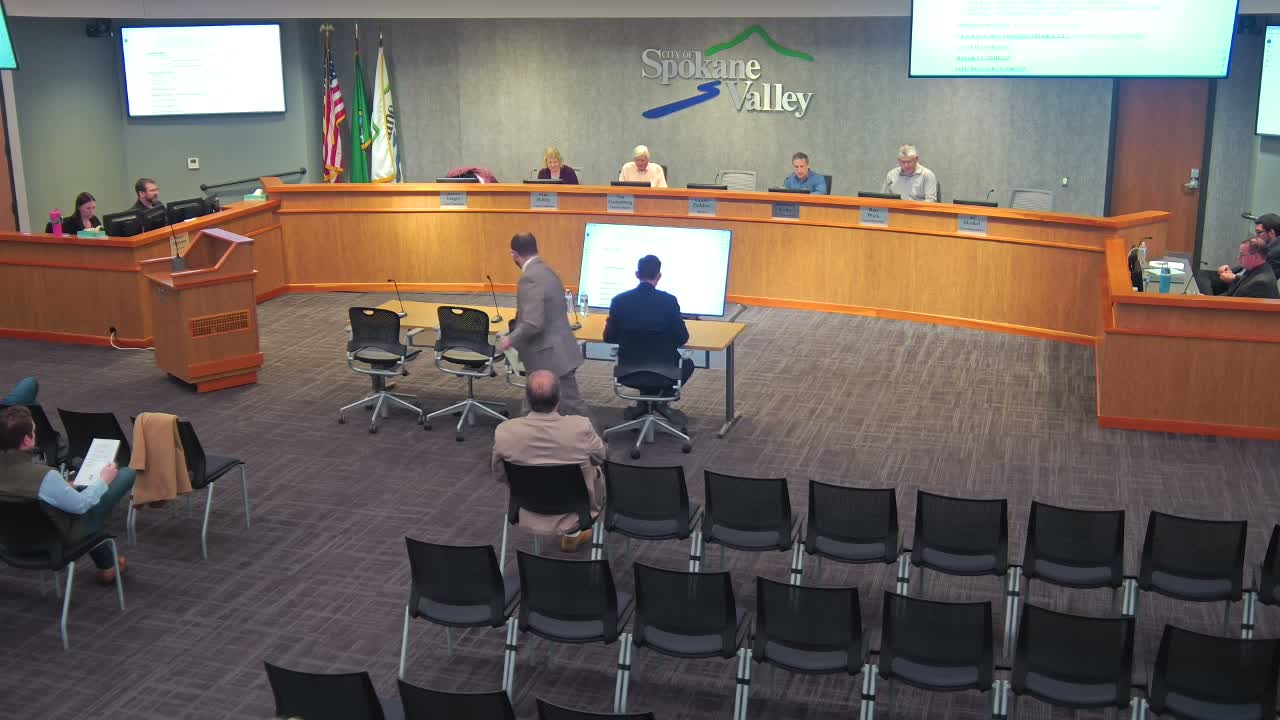
Representatives of the Safe and Healthy Spokane Regional Task Force presented an update on the project’s structure, findings to date and next steps, telling the council the effort aims to deliver data‑informed, community‑led recommendations in early May.
Eric Lamb, deputy city manager, said the project grew from a regional convening effort and includes conveners from Greater Spokane Incorporated, Greater Spokane Valley Chamber, Downtown Spokane Partnership and Avista. Lance Beck and Zeke Smith (task‑force presenters) described a process of asset assessment and advisory committees that produced roughly 56 initial recommendations; the advisory groups narrowed priorities by impact, opportunity and resource need and are now prioritizing approximately 11–15 recommendations for the task force to consider.
Presenters emphasized system-level goals: strengthen coordination among first responders, behavioral‑health providers and stabilization services; expand crisis response and stabilization capacity; address workforce constraints for crisis services; and improve regional data sharing and common performance metrics. The group said facilities work includes criteria for future developments — not strictly a new jail — and noted the task force is not making a direct funding or tax measure recommendation; instead, it aims to inform other jurisdictions as they consider possible ballot measures and facility plans.
Council members asked whether recommendations would be formalized or implemented by consensus; presenters said the report will be an invitation for collaborative regional engagement and that some recommendations will require additional planning, funding and potentially code or policy changes. The task force will meet through its final sessions and post materials, recordings and reports on its website before the May deliverable.