Subcommittee chair frames DOE FY2027 budget around reliability, nuclear and data-center demand
Loading...
Summary
At a House Committee on Energy and Commerce subcommittee hearing on the Department of Energy's fiscal 2027 budget, the panel's chair said DOE priorities should focus on energy and national security, grid reliability, affordability, nuclear fuel and new reactors, and managing rapid data-center load growth.
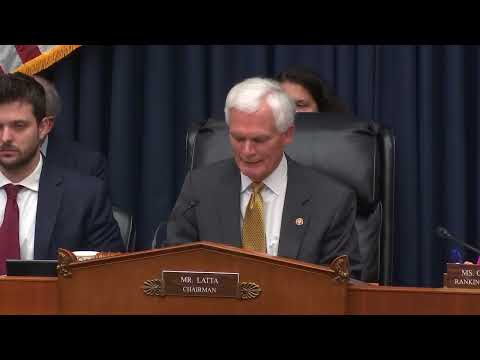
At a hearing of the House Committee on Energy and Commerce's Energy Subcommittee on the Department of Energy's fiscal 2027 budget, the subcommittee chair said the department should prioritize energy and national security, reliable and affordable power, and technologies to support future economic growth. The chair opened the session by welcoming the DOE secretary and saying that after 14 months the department 'looks very different' under current leadership.
The chair credited the department with efforts to apply DOE supercomputing and artificial intelligence resources to societal problems, accelerate work on nuclear technologies and fuel infrastructure, increase collaboration to secure the grid during emergencies, and refocus loan programs toward energy expansion and reliability. He said most of those priorities are reflected in the DOE proposed FY2027 budget.
Affordability was a central theme. The chair said average utility bills rose 11% in 2025 and rose about 29% over the four years before 2025, and that some communities are facing substantially higher increases. He urged the secretary to address the forces behind higher energy costs and asked specifically about the impact on oil prices from conflict with Iran and prospects for more stable supplies.
The chair cited a report from the Lawrence Berkeley National Laboratory and characterized its findings as showing that 'far left policies are driving price increases'; that statement was presented as the chair's reading of the report and is reported here as his assertion. He also credited DOE's use of emergency authorities during recent extreme weather (the chair referenced "winter storm Fern") and said those emergency orders helped prevent blackouts and avoid economic damage.
On electricity demand, the chair noted continuing projections for significant load growth from data centers and reshored manufacturing. He said data centers could consume up to about 17% of total electricity — a figure the chair stated is roughly 60% higher than estimates projected in 2024 — and said the department has taken steps to help data centers connect to the grid in ways he described as driving down costs for ratepayers.
The chair emphasized the subcommittee's findings that experts favor 'dispatchable, reliable and affordable' baseload power to meet historic load growth and said DOE is prioritizing dispatchable resources. He also described efforts to "usher in a nuclear renaissance," pointing to work on American nuclear fuel infrastructure and demonstrations of new reactor designs, and asked that DOE's efforts be coordinated with the Nuclear Regulatory Commission's commercial licensing process.
Contrasting past policy approaches, the chair said the previous administration "sought to end the use of fossil fuels," and said the current department has supported liquefied natural gas (LNG) exports and reversed certain regulations to promote fossil-fuel production.
The chair closed by saying he looked forward to the discussion of the secretary's priorities and yielded back the balance of his time.