Get Full Government Meeting Transcripts, Videos, & Alerts Forever!
Get email alerts on the Electric Distribution topic
No spam. Unsubscribe anytime.
City hears electric‑system asset‑management study; formal approval deferred
Summary
Consultants presented a GIS‑based asset management study recommending relay and meter upgrades, substation maintenance and long‑term planning (replacement value estimated near $28 million). Commissioners asked for the full report to be posted and postponed formal approval.
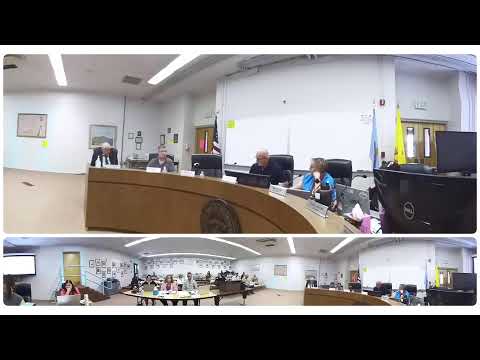
Consultants from T and E Services presented an electric distribution asset‑management plan to the Truth or Consequences City Commission, outlining short‑, mid‑ and long‑term work to improve reliability and prepare the system for projected load growth through 2045.
"The objective of our work was to assess the performance of the electric distribution system and identify any concerns or deficiencies currently or in the future," said Robert Perea, manager of the planning division at T and E Services. The team said it built a GIS‑referenced inventory and an electrical model — a so‑called digital twin — to analyze feeder loads, voltage performance and protection settings.
The consultants recommended short‑term substation maintenance and relay‑setting updates; midterm upgrades to relays, feeder breakers and metering; and longer‑term options including a possible new substation for redundancy. They said modern relays with integrated metering and communications would shrink outage footprints and provide data useful for planning and grant applications.
Kenny Adams, who identified himself as director of stations engineering for TND Services, described the team’s modeling assumptions: the study started with 2025 load data and applied a conservative 1.5% annual growth rate to 2045 for projection purposes. He noted the model flags some low‑voltage areas (notably South Broadway) driven largely by phase imbalance, and said phase balancing and metering improvements could mitigate many of those issues.
"Most of those issues can be mitigated with phase balancing," Adams said, adding that relay‑synchronization and metering would improve fault isolation and troubleshooting.
Commissioners asked operational and financial questions. When asked whether the study would reduce inherent line losses, the consultants said updating metering would help identify inefficiencies but that some losses are physical and unavoidable. The presentation noted a replacement‑cost estimate for the system of roughly $28,000,000.
Despite receiving the presentation, commissioners did not vote to adopt the plan. Several members said the slides were a summary and requested the comprehensive report be posted publicly and given time for review before any formal approval or adoption of a work program.
City staff and some commissioners said many recommendations would be phased: some maintenance and relay work could be done in‑house, while substation work and major feeder/cable replacements would require contracting and budget appropriations. The consultants noted temporary contingency options — such as renting a mobile transformer — in the event of a transformer failure before any long‑term replacement is scheduled.
The commission concluded the item by accepting the presentation for the record and directing staff to post the full report and provide time for review; no formal action on plan approval was taken.