Get Full Government Meeting Transcripts, Videos, & Alerts Forever!
Get email alerts on the Tax Policy topic
No spam. Unsubscribe anytime.
Council approves tax-relief ordinance and hires outside counsel to update business tax rules
Summary
Harrisburg council passed Bill 5 of 2026, discharging certain 2024–2025 real-estate tax liabilities for historically tax-exempt properties, and authorized a contract with McCormick Law Firm to revise the city’s business privilege and mercantile tax rules with a Jan. 1, 2027 effectiveness target.
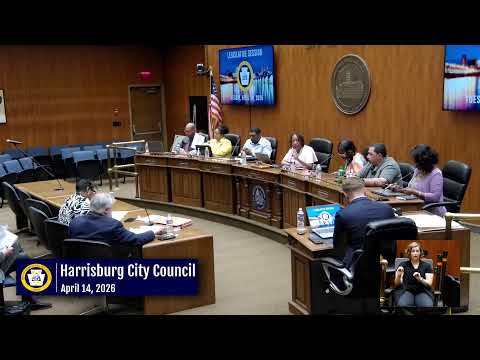
Harrisburg City Council on April 14 approved Bill 5 of 2026, an ordinance to give and discharge certain 2024 and 2025 city real estate taxes (including interest, penalties and costs) and to strike off tax liens for some historically tax-exempt properties, by a 7–0 roll-call vote.
The administration committee had flagged Bill 5 during committee review and Solicitor Neil Grover explained that the ordinance addresses specific properties, including a church that had been operating since 2017 but had not timely filed paperwork to establish exemption. Council members asked what categories qualify for exemption; Grover said exemptions can include constitutionally authorized government property used for public purposes, hospitals, churches and publicly funded senior centers.
Council also approved Resolution 22 of 2026 to authorize the city to negotiate a professional services agreement with McCormick Law Firm to serve as special counsel to review and revise the city’s business privilege and mercantile tax ordinance and related regulations. Business tax administrator Mike Hughes and McCormick attorney Nick Grimes told council the firm’s work would update an ordinance last substantially revised in 2001. Grimes said the target effective date for any updated rules is Jan. 1, 2027; the fee structure discussed was $250 per hour for attorneys and $150 per hour for paralegals, and the firm will provide a scope and timeline once it begins the work.
Council members asked about the anticipated budget impact of retaining outside counsel; Grimes said he could provide a better estimate once work begins and that costs will depend on hours required. The resolution passed by a 7–0 vote.
Council members said they expected the law firm to bring the ordinance and regulations current and to offer clearer guidance for taxpayers.