Get Full Government Meeting Transcripts, Videos, & Alerts Forever!
Get email alerts on the Education Scholarships topic
No spam. Unsubscribe anytime.
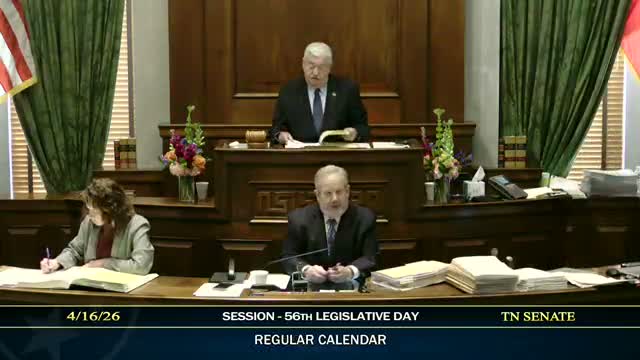
Tennessee Senate approves expansion of Education Freedom Scholarships after heated debate
Summary
After hours of floor debate over transparency, cost and the impact on public schools, the Senate passed House Bill 25-32 to expand the state's Education Freedom Scholarship program; the measure passed 18–14 and includes reporting requirements and a prioritized award system.
The Tennessee Senate passed House Bill 25-32 on final consideration after heated floor debate, advancing an expansion of the state's Education Freedom Scholarship program.
Leader Johnson, who sponsored the measure on the floor, said the bill responds to unmet demand and builds on last year’s program. "Last year we passed a program that created 20,000 education freedom scholarships," Leader Johnson said, and the legislation before the Senate would raise available slots and set a clear order of priority for awards while requiring annual reporting by the department on applications and demographics.
Opponents urged caution. Sen. Briggs said transparency gaps left lawmakers unable to evaluate outcomes: "I don't know what the numbers are because quite frankly, the numbers have not been available," he said, arguing that data about student performance and the program’s recipients remain incomplete. Sen. Oliver warned the program disproportionately benefits wealthier counties and said the fiscal trade-offs risk damaging public education funding.
Lawmakers also debated whether the program’s documentation requirements would force schools to collect Social Security numbers. Leader Johnson told colleagues the bill does not force districts to require Social Security numbers from families for general enrollment, but he confirmed the scholarship application process itself does collect that information under existing law.
The bill's text sets priorities for returning scholarship students, applicants from households at or below the federal free or reduced-price lunch threshold, then progressively higher incomes; it also expands eligibility tiers and adds a reporting requirement intended to produce county-level data without exposing personally identifiable student information.
Senators voting in opposition cited fiscal concerns and the program’s distribution so far, including testimony that an earlier round of scholarships had drawn applicants well beyond the available slots. The final vote on the floor was 18 in favor and 14 opposed. Under the bill, the expansion will be subject to appropriation and the Department of Education must report application and award breakdowns to the General Assembly.