Get Full Government Meeting Transcripts, Videos, & Alerts Forever!
Get email alerts on the Certified Budget topic
No spam. Unsubscribe anytime.
Marshalltown board opens certified-budget process, flags tax-rate rise to about $17.96
Summary
The Marshalltown Community School District board opened a public hearing on the FY2026–27 certified budget property-tax statement and reviewed a proposed total school tax rate projected near $17.96, driven by special-education deficits and excess ELL costs; the board set a final public hearing for April 20.
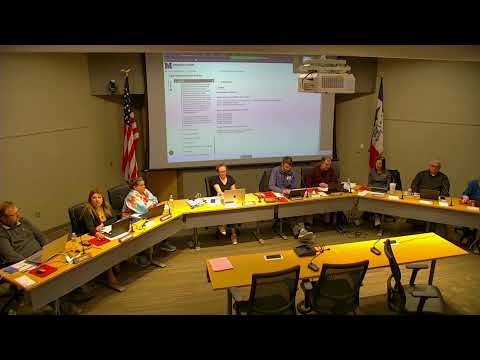
The Marshalltown Community School District Board of Education on April 6 opened the required public hearing on the FY2026–27 certified budget property-tax statement and reviewed a proposed rise in the district portion of the property-tax rate.
Chair (speaker 2) called the special meeting to order and asked for public comment after Randy Denham (speaker 5) summarized the tax-statement that was filed with the county auditor earlier this spring. Denham said the current total school property-tax rate is $15.95 and the property-tax statement lists a maximum levy of $18.23; based on ongoing adjustments tied to legislative changes and final calculations, he said the district expects a total tax rate closer to $17.96 for FY27.
Denham told the board the tax increase is primarily driven by two budget pressures required by law: the district’s special-education deficit and excess costs for English-language-learner services. He said the state does not fully reimburse the district for those expenses and that federal pandemic-era funds that temporarily eased that burden have expired. "We are legally obligated to provide those services," a district official said during the presentation, noting the federal commitment historically covered a portion of special-education costs but that local property taxes make up the shortfall.
Two residents addressed the board during the hearing. Victor (speaker 10) described himself as a retired lifelong Marshalltown resident and said rising taxes will hit people on fixed incomes; he also criticized recent district property purchases and investments in athletic facilities as areas to scrutinize for savings. Kelly Smith (speaker 12) asked whether state or federal sources had funded the ELL program in the past; staff answered that the district relied on property-tax dollars historically and that federal pandemic funds had temporarily reduced the local burden but are no longer available.
Denham provided homeowner-impact examples using assessed value (not market value): he estimated a $100,000 assessed home would see roughly a $33.49 annual increase under the proposed rate (about $2.79 per month); $150,000 assessed would be about $55.10 annually. He noted the district would publish a tax-calculator spreadsheet for residents to check their own assessed values.
Board members discussed the district’s revenue mix — what is controlled by state formula, voter-authorized levies and the board’s own levies — and the district’s ongoing efforts to identify about $2 million in budget reductions to stabilize reserves. Denham said the board expects to use a combination of PPEL/SAVE funds for capital projects and cash-reserve levies to support spending-authority needs tied to special-education and excess-ELL costs.
The board set a final public hearing on the FY2026–27 certified budget for 5 p.m. on Monday, April 20, and directed the board secretary to publish the certified-budget estimate in compliance with Iowa code. The motion to set the public hearing passed on a recorded voice vote.
What’s next: Staff will publish the certified-budget estimate and the district will hold the April 20 public hearing, after which the board can finalize the adopted levy and budget for FY27.