Get Full Government Meeting Transcripts, Videos, & Alerts Forever!
Get email alerts on the School Budget Reconfiguration topic
No spam. Unsubscribe anytime.
South Portland school budget update draws sharp pushback over reconfiguration and staff cuts
Summary
Administrators presented a FY27 budget and a reconfiguration plan that would reduce student-facing positions; teachers, union leaders and parents urged the board to pause, preserve special-education supports and related-arts roles, and provide more data on transportation and classroom impacts.
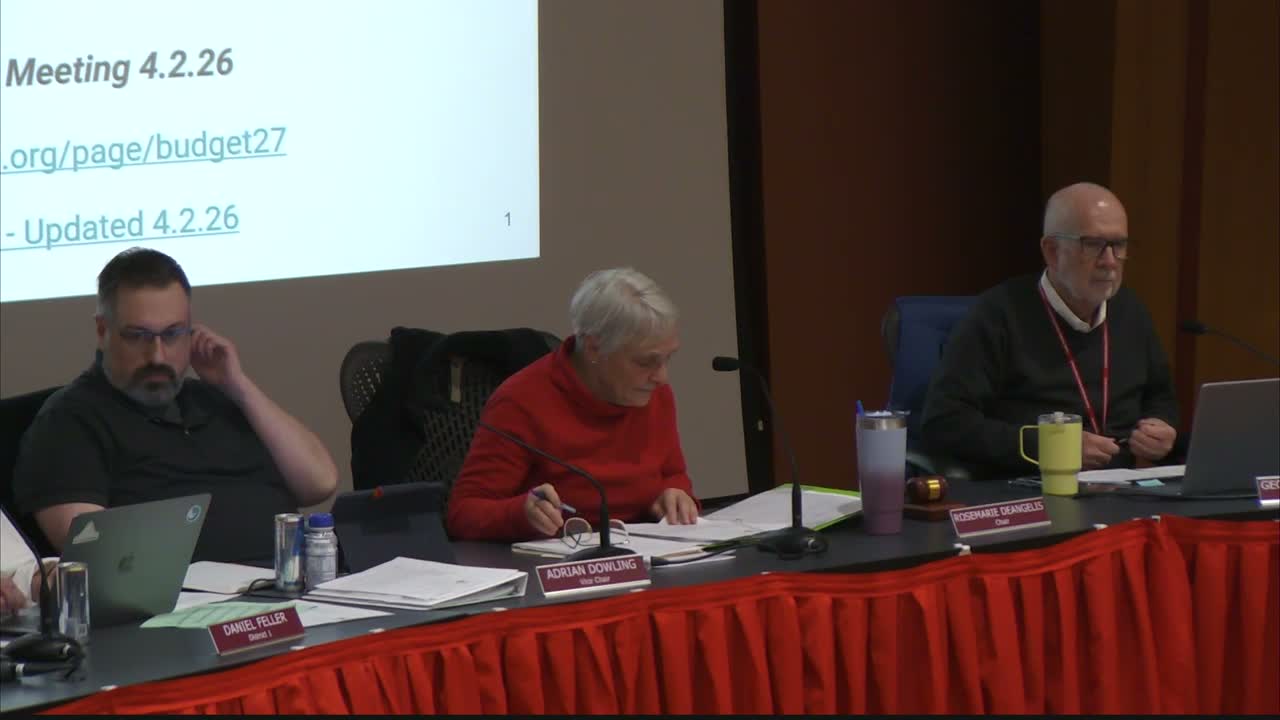
The South Portland School Board heard a detailed FY27 budget presentation and a contentious public reaction at its April 1 meeting, where administration framed the proposal as a realistic reset to avoid longer-term deficits while outlining staff-role restructurings tied to an elementary reconfiguration that some parents and teachers say is being rushed.
Administrators opened the budget segment by emphasizing multi-year deficits and the decision to more closely align next year’s spending with recent actuals. Abigail Ketchin, the district’s director of finance, said the draft FY27 budget budgets more fully for unpredictable but contractually required costs such as tuition reimbursement and electricity, and that previous years’ underestimates contributed to the current shortfall.
The board’s questions ranged across the proposed tax rate (Ketchin confirmed the plan starts at a 6% local increase), the effect of a half‑percent decrease in the health‑insurance cap (roughly $52,000 of projected savings), and projected cost changes for two school resource officers (administration cited a city‑provided estimate of about $220,000). Administrators also described revenue from a mechanic contract with Portland and said solar credit allocations are determined by the city’s formula.
Discussion repeatedly returned to two linked controversies: the decision to reconfigure elementary schools following a board vote earlier in the week, and the set of personnel reductions that accompany the FY27 proposal. Board members pressed administration about how the proposed shift from some director roles to instructional-strategist or board‑certified behavior‑analyst arrangements would preserve services for students with IEPs. Administration said it had reviewed service minutes and schedules and expects to meet student needs with a mix of instructional strategists, BCBAs and existing MTSS teams, while acknowledging the changes will require careful transition work.
Public comment stretched for more than an hour. Dozens of staff, parents, students and union leaders described the cuts as harmful to student supports and enrichment: teachers asked the board to spare related‑arts positions (music, art, STEM, PE), special‑education staff described daily safety and coverage risks if embedded OTs and ed‑tech positions are eliminated, and students told the board that losing subjects such as computer science would narrow future opportunities. Unions reported progress in securing additional state funds (speakers said roughly $300,000 had been identified for the district, though administrators cautioned official confirmation was pending) and urged those funds be used to restore student‑facing roles.
Several commenters and board members also questioned the timetable for reconfiguration. Administration described plans for neighborhood listening sessions, staff preference surveys and a goal to publish a timeline within days; many public speakers said the district should pause implementation until transport, class‑size and special‑education impacts were fully analyzed.
The board voted unanimously to convene a follow‑up meeting with the city council to seek budgetary guidance, but deferred action to adopt a final FY27 budget so members could review updated state funding estimates and discuss how to allocate any newly confirmed dollars. The board also removed a proposed item to add four early‑release days from the night’s agenda after parents objected.
Administrators said they will continue community outreach (planned listening sessions and online surveys), provide additional data requested by board members (transportation assumptions, special‑education service plans, and updated fiscal figures), and return with revisions or recommended next steps that the board can act on before the city council votes on the municipal budget process.
The board did not adopt a final budget tonight; next steps include further administrative follow‑up, a scheduled council workshop next week, and the possibility of a board meeting to act once state funding figures are confirmed.