Lifetime Citizen Portal Access — AI Briefings, Alerts & Unlimited Follows
City staff to revive food-truck licensing after council raises equity and enforcement concerns
Loading...
Summary
City staff briefed the council on existing food-vendor rules, enforcement gaps and options used by neighboring cities; council asked staff to update prior ordinances, work with the city clerk on a mobile-vendor license, and return with a public-hearing schedule and implementation plan.
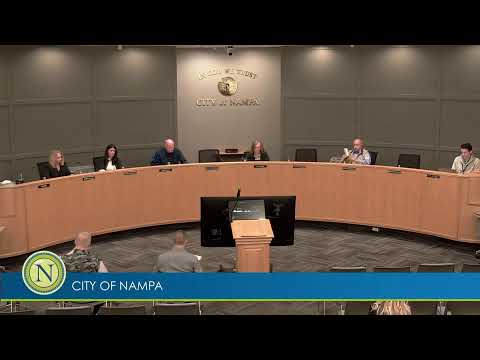
Mark Steuer, senior director of development services, told the Nampa City Council the city’s 2021 code currently treats mobile food vendors as temporary uses that require a temporary use permit, a solicitor’s license and a health permit, and limits operations to commercial and industrial properties.
"So the purpose of it is to provide an update, provide background, and really reignite discussions that have been taking place over the last 3 years," Steuer said as he outlined a history of proposed ordinance amendments that stalled in 2023–24.
The presentation noted code compliance recently identified 17 operating food trucks; only a handful held all required permits. Steuer said the city has granted a limited special-event permit in at least two cases where trucks operated on the public right-of-way for short windows, subject to engineering review.
Council members voiced two consistent concerns: fairness to brick-and-mortar restaurants and the city’s capacity to enforce any new rules. "I'm concerned about the facilities, lack of facilities, and sanitation," one council member said, echoing calls for clearer restroom and waste-disposal requirements.
Council president said the intent is to return to the drafts that were developed in 2023 and work with the city clerk to finalize a mobile-food-vendor license. "We wanna bring everything back and get it fired up and get things in motion so that we can adopt an ordinance and, get the implementation," the president said.
Staff outlined neighboring-city approaches: Caldwell requires an annual clerk’s permit and limits on outdoor seating that must be removed nightly, while Meridian ties hours to the primary business and requires general-liability insurance listing the city as additional insured. Council discussed an option to encourage development of a centralized food-truck court—a private or public site with sewer, power and restroom facilities—to concentrate vendors and reduce curbside impacts.
No ordinance vote was taken. Council directed staff to update the prior ordinance and license language, incorporate vendor feedback, coordinate with the city clerk’s office and return with updated documents and a proposed public-hearing timeline. The clerk’s office will advise whether the license (Title 5) requires a public hearing while planning-and-zoning changes (Title 10) have previously gone through hearings.
Staff said they will bring the revised ordinance and licensing documents back to council for further action and a public hearing as required.