Lifetime Citizen Portal Access — AI Briefings, Alerts & Unlimited Follows
Senate approves $200M initial corpus for a taxpayer endowment fund after sharp floor debate
Loading...
Summary
House Bill 4072 creates a statutory taxpayer endowment trust with an initial $200 million corpus and provisions to grow corpus over time; supporters framed the fund as a way to reduce income tax reliance, while opponents argued the money should be returned to taxpayers now.
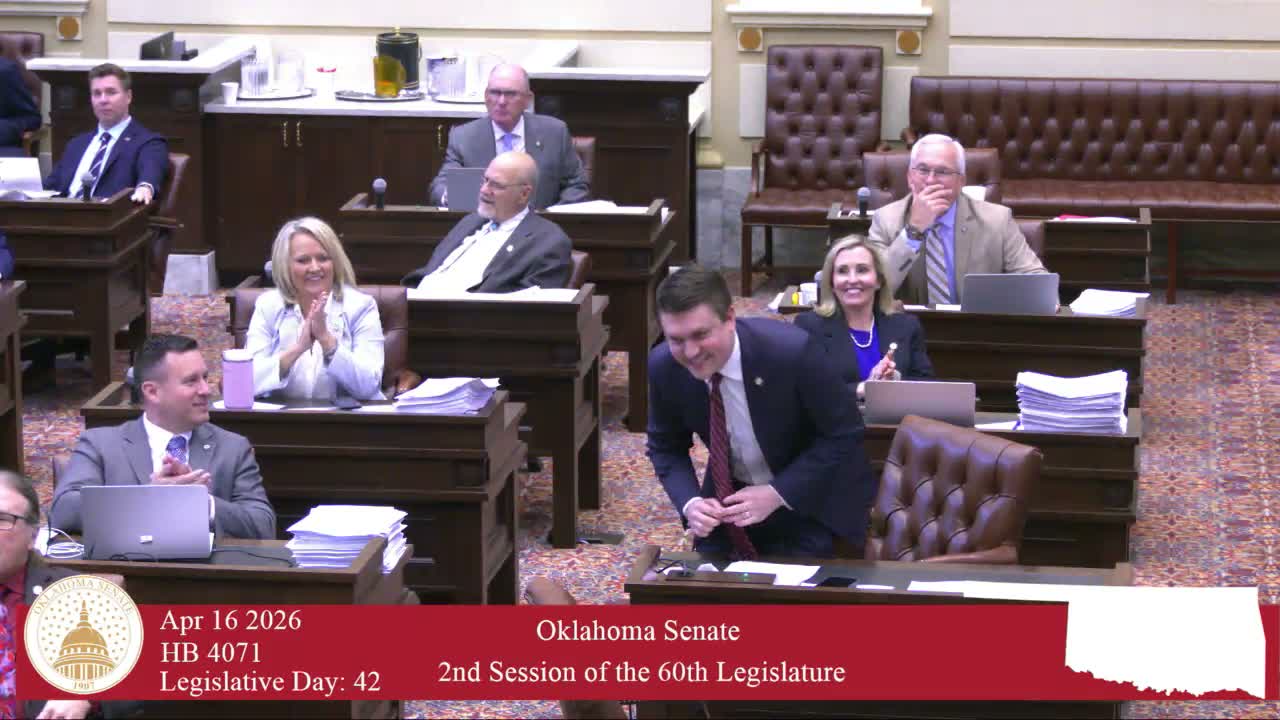
The Oklahoma Senate on April 16 passed House Bill 4072, establishing a taxpayer endowment trust with an initial $200 million transfer from the state revenue stabilization fund to create a long‑term corpus intended to generate recurring investment returns for future budget stability and potential tax relief.
President Pro Tem Paxton and other backers said the fund is intended to promote long‑term savings and reduce reliance on income tax through compounding investment returns. "It is to promote savings investment and reduced reliance on income taxation," Pro Tem Paxton said, describing the measure as a generational investment to benefit future legislatures and taxpayers.
Opponents objected both on principle and execution. Sen. Sacchiari questioned whether the statutory structure — rather than a constitutional lock — would protect the corpus from future legislative changes and asked what guardrails exist to prevent the corpus being used to expand government. Sen. Jett and others urged returning surplus revenue to taxpayers as rebates or targeted tax relief instead of creating a new fund.
Many senators debated the appropriate conservative approach to surplus: some argued the fund secures future tax cuts and stabilizes budgets; others said it institutionalizes discretionary spending by future boards and officials. Concerns included the statutory (not constitutional) status of the fund, the composition and powers of the Invest in Oklahoma board that would oversee investments, and the timing and thresholds for distributions.
The joint committee report was adopted and HB 4072 passed third reading (28 ayes, 18 nays). Because the bill is statutory, future legislatures could amend its terms.
What it does: Establishes a taxpayer endowment trust with $200 million initial corpus and future funding mechanisms; oversight by the Invest in Oklahoma board and statutory guardrails limiting higher‑risk allocations to a small percentage.
What to watch: How the board invests the corpus under applicable statutory guardrails; whether future legislatures use earnings for tax relief, infrastructure, or other priorities; and whether calls for constitutional protection re‑emerge.