Lifetime Citizen Portal Access — AI Briefings, Alerts & Unlimited Follows
Senate approves temporary OPERS employer contribution cut amid debate on impact for state workers
Loading...
Summary
Lawmakers voted to lower the state's employer pension contribution level in a measure with a five‑year sunset. Supporters cited a more than 100% funded status and the budgetary relief; critics urged prioritizing state employee pay and requested actuarial modeling.
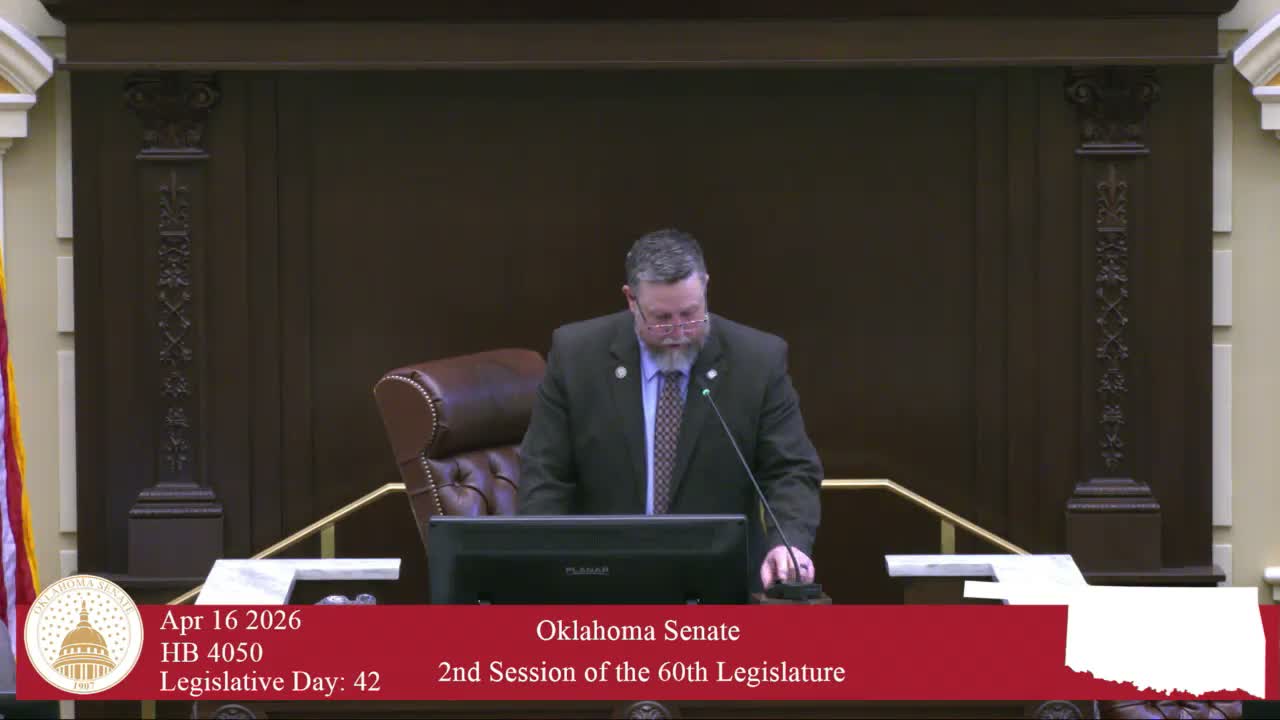
The Senate voted April 16 to approve House Bill 4050, a package of reforms to the Oklahoma Public Employees Retirement System (OPERS) that reduces the employer contribution rate for participating state agencies for a five‑year period.
Sen. Hall, the bill sponsor, said the pension system is currently funded above 100% and that the employer contribution reduction is a fiscally responsible way to redirect funds in the near term. "The pension will remain sound," Hall said on the floor, adding the change includes a five‑year sunset to allow reassessment.
Opponents pushed for an actuarial analysis before passing changes. "We're underpaying state employees," Sen. Kurt said in debate, arguing that redirected dollars should be used for raises and to address high turnover in certain agencies. Sen. Hicks asked whether there was a formal actuarial report; senators on the floor said there was not a newly commissioned actuarial study but that pension managers indicated the change would not jeopardize funding.
Sponsors said the change would yield roughly $65 million annually in budgetary relief to the state during the sunset period, money they intend to reallocate across priorities including education, health care and longevity pay increases already made this session.
The Senate adopted the JCR and passed HB 4050 on third reading. The exact allocation of the redirected funds will be addressed in the enacted general appropriations and follow‑up oversight.
What it does: HB 4050 reduces the state's employer contribution percentage to OPERS for five years, with a sponsor‑described anticipated annual fiscal impact of about $65 million; benefits and plan actuarial status remain subject to pension administrator confirmation.
What to watch: Opponents asked for greater transparency about long‑term impacts on the pension’s funded ratio and urged that any freed funds be targeted to employee compensation.