Lifetime Citizen Portal Access — AI Briefings, Alerts & Unlimited Follows
Dubuque council hears HR plan to modernize pay, digitize records and expand retention programs
Loading...
Summary
City HR detailed FY2027 priorities including a new HRIS rollout, targeted market-adjustment pay for hard-to-fill roles, a digitization project for personnel files, expanded mentoring and training programs, and continued use of data from voluntary exit interviews to reduce turnover.
DUBUQUE, Iowa — The Dubuque City Council heard a multi-part presentation on the human resources department’s FY2027 budget on April 15, with staff emphasizing technology, targeted pay adjustments and new retention measures.
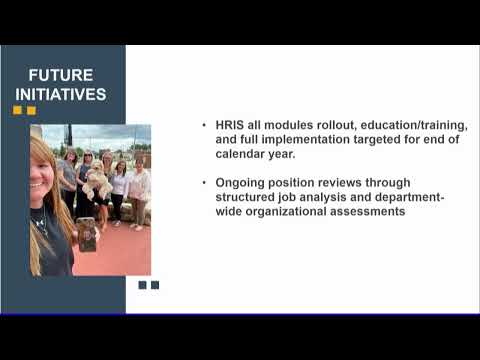
Shelley Stickford, the city’s chief human resources officer, told the council HR will complete an enterprise HRIS rollout this year to automate hiring, compliance tracking and safety training records. Stickford said the department has taken on internal compensation and classification work after an external study and will continue structured job analyses to align positions with market conditions and organizational needs.
Kelly Larson, training and development manager, said HR completed OSHA-aligned training delivered through the learning management system—about 2,000 employee completions—and is expanding mentoring and new supervisor training. Larson said tuition reimbursement spending has totaled about $22,000 so far in FY2026, on track toward a $50,000 annual budget.
Kristen Dietz, talent acquisition manager, described organizational-structure reviews in engineering, housing and public works and the creation of a ‘market-adjustment supplemental pay’ effective Jan. 4, 2026. Dietz said this tool addresses documented gaps between city pay and the external labor market for roughly 50 employees across 13 critical public-works positions without reopening base wage schedules under collective-bargaining agreements.
Connie Palm, benefits and compensation manager, outlined benefit enhancements in recent years, including the January 2026 addition of a Roth (post-tax) option to the city’s 457 retirement plan and the introduction of a higher-value dental option. Palm said about $2.64 million in FY27 wage increases are included across bargaining units, with adjustments ranging from 3% to 5% depending on classification.
Council members questioned several line items. Staff explained an $80,000 request for one-time digitization of historical personnel files will fund secure scanning of paper records into the HRIS; ongoing records storage and HRIS licensing would be handled separately. Dietz said interns had been considered for the digitization work but were not chosen because some files require a higher confidentiality threshold. The larger $50,000 request to hire an executive recruitment firm to fill the city manager search was described as consistent with national costs for top executive recruitments.
Councilors also asked why only eight exit interviews were recorded in FY2026. Stickford said employees may decline an interview; the department aggregates voluntary responses and forwards patterns to the city manager for action when appropriate. Several council members supported the proposed investments aimed at recruitment and retention, saying they align with council priorities to treat employees competitively.
The council opened the item to public comment; residents praised HR outreach but pressed staff for clarity on administrative overhead recharges that allocate HR costs to enterprise funds. City staff said they would follow up with the council on the calculation method.
The HR presentation and associated improvement-package requests will be included in the council’s revised FY2027 recommendation and discussed again at upcoming budget hearings.