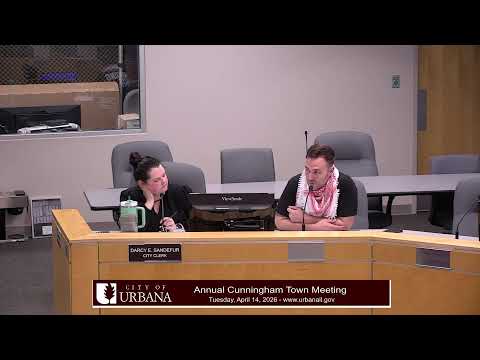
Cunningham Township reports rising service demand; staff outlines shelters, rental assistance and new help desk
Loading...
Summary
Township staff presented an annual report showing increased revenue and service spending in fiscal year 2025, detailed a winter emergency shelter with roughly 100‑cot capacity, reported expanded rental and general assistance, and introduced a help desk at the Urbana Free Library to manage high call volume.
Queenette Odudu, representing the Cunningham Township supervisor's office, presented the township’s annual report for the year ending June 30, 2025, and described expanded services responding to rising community needs. She said total revenue was "just over $4,100,000" for the year and that the township ended the year with a positive net position reported as "over $4,700,000." Odudu emphasized that property taxes remain a primary revenue source and that public‑welfare spending rose to meet increased demand.
The presentation included program‑level details: staff said the township operated a public winter emergency shelter that provides approximately 100 cots for people who identify as male and that, according to the presentation, it is scheduled to close on May 23, 2026, with private donor support. The rental‑assistance program served 331 households in 2025 with direct payments totaling more than $562,000; staff reported $497,000 spent on general assistance and $350,000 in direct rental payments for the year. Cumulative rental assistance since the program began was reported as more than $1.5 million.
Odudu outlined Bridge to Home, the township’s housing continuum, and reported multi‑year placements and outcomes. Program counts in the presentation included hundreds of people served through street outreach, emergency housing, transitional family housing and rapid rehousing; staff cited a placement rate of roughly 71 percent for one continuum measure and said 90 percent of households in a cited emergency housing cohort were successfully housed by year‑end.
The township also reported community investments and partnerships: an Angel Donor Fund raised $96,000 in 2025 (more than $251,000 since 2022) used for household essentials; the Solidarity Garden network produced roughly 24,000 pounds of food for about 1,300 households; and a new help desk at the Urbana Free Library handled a large call volume (the presentation stated the front desk received over 21,000 calls in 2025). Odudu said the township is saving toward facility expansion to meet growing service demand.
"These numbers represent everything we did, and behind these numbers are real people," Odudu told attendees, describing a case example of a formerly homeless participant who moved into permanent housing with township support. She invited further questions and said staff would provide follow‑up details by email for items needing more information.
The presentation closed with a list of collaborators from government, nonprofits, schools and faith groups and a call to continue community partnership to address homelessness and basic needs in Urbana.