Lifetime Citizen Portal Access — AI Briefings, Alerts & Unlimited Follows
Valley Stream board adopts local law to allow tax levy above state 2% cap amid resident objections
Loading...
Summary
Trustees adopted Local Law 2-2026 to authorize a village property tax levy above the 2% state cap, citing storm damage and rising employee health care costs; residents pressed officials on affordability, pool fees, code enforcement and infrastructure spending. The board tabled the overall budget for further revision and must reconvene before April 20.
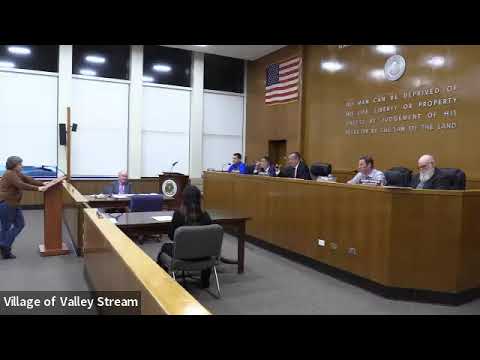
The Village of Valley Stream on April 13 adopted Local Law 2-2026, allowing the village to levy property taxes above the 2% cap set in state law, after officials cited unexpected winter storm costs and higher employee health-care bills.
Mayor Farr and Treasurer Michael Fox told residents the measure applies only to the village portion of property tax bills, not town, county or school levies. The board estimated the village portion of a typical tax bill at roughly $3,000 and said a 2% increase would amount to about $7 per month; piercing the cap could add to that figure if enacted.
“This is the village tax only, not town, county, or school,” the presiding official said, adding that the 2% figure is a state threshold. Treasurer Michael Fox told the meeting the village had budgeted for three years of typical winter costs but this season’s storms and related equipment damage significantly exceeded those assumptions, and employee health-care costs rose by roughly 21 percent over the last two years.
Residents at the public hearing questioned whether the extra revenue would improve visible services and urged tighter spending controls. Evelyn Wines, a longtime resident, asked, “Why do we have to change this law to make it uncap it... We don't think that we should have to pay more.” Jenna Rosatano said she moved back to Valley Stream for its parks and pool and asked the board, “If it's a choice between somebody paying their bills and something that is not a necessity for life, what do we choose?”
Officials responded with line-item and revenue explanations. The treasurer and other trustees said recreation fees and other user charges help offset costs; Michael Fox noted pool fees were increased to reflect higher chemical and water costs, and that fee increases are intended to offset, not subsidize, operating expenses. The board also described new municipal revenues — for example, renting a municipal parking lot to commercial drivers — that flow into the village general fund.
Other commenters urged more vigorous code enforcement and stronger coordination with county police after reports of commercial vehicles and congestion in residential streets. Phil Riggio, an engineer and resident, argued that road-repair and infrastructure spending appeared lower than in neighboring jurisdictions and questioned whether current budgetary choices provided adequate long-term value.
During the meeting the deputy clerk read Resolution 071-26, the text adopting Local Law 2-2026. The motion to adopt was moved and seconded; roll call showed three affirmative votes and two trustees absent or excused, and the board approved the local law. The board then opened the separate public hearing on the 2026–27 budget but voted to table adoption and reconvene after absent trustees can participate. The treasurer noted the public hearing must be closed by April 20 and the board said it will schedule a follow-up meeting to finalize the budget.
The action authorizes the village to levy a property tax rate higher than the 2% state cap for the budget year in question; board members said they would continue reviewing the draft budget to reduce the currently posted 4.9 percent figure before final adoption. The public record includes multiple requests from residents for clearer reporting on how any additional revenue will be used and how unused funds would be applied to future tax rates or capital projects.