Get Full Government Meeting Transcripts, Videos, & Alerts Forever!
Get email alerts on the Winegrower Appeal topic
No spam. Unsubscribe anytime.
Planning board overturns city manager to allow small‑scale home wine production to seek permits
Summary
The board ruled April 14 that a small‑scale home winegrower operation can be considered a permissive home occupation on a specific property, allowing the applicant to pursue state and federal licensing; staff had advised against permissive classification citing state winegrower definitions.
The Rio Rancho Planning and Zoning Board voted April 14 to grant an appeal from a resident seeking zoning confirmation that small‑scale home wine production is compatible with Chapter 121 (home occupations). The vote overturned a prior city manager decision and staff interpretation that found a winegrower's license (which can include manufacturing, storing and transporting wine) was not a permissive use in the SU special use residential zone.
Brian Babiak, planning and zoning division manager, explained staff's position: staff reviewed the municipal code and New Mexico statutes and concluded the definitions of "winegrower" and state licensing imply commercial manufacturing and capacity that are not compatible with the listed permissive home occupations. Babiak said staff's November zoning certification and the city manager's February decision upheld that interpretation and that if the board reversed, the applicant would still need to obtain a home‑occupation permit, a business registration and the appropriate state and federal alcohol permits before production or sales could begin.
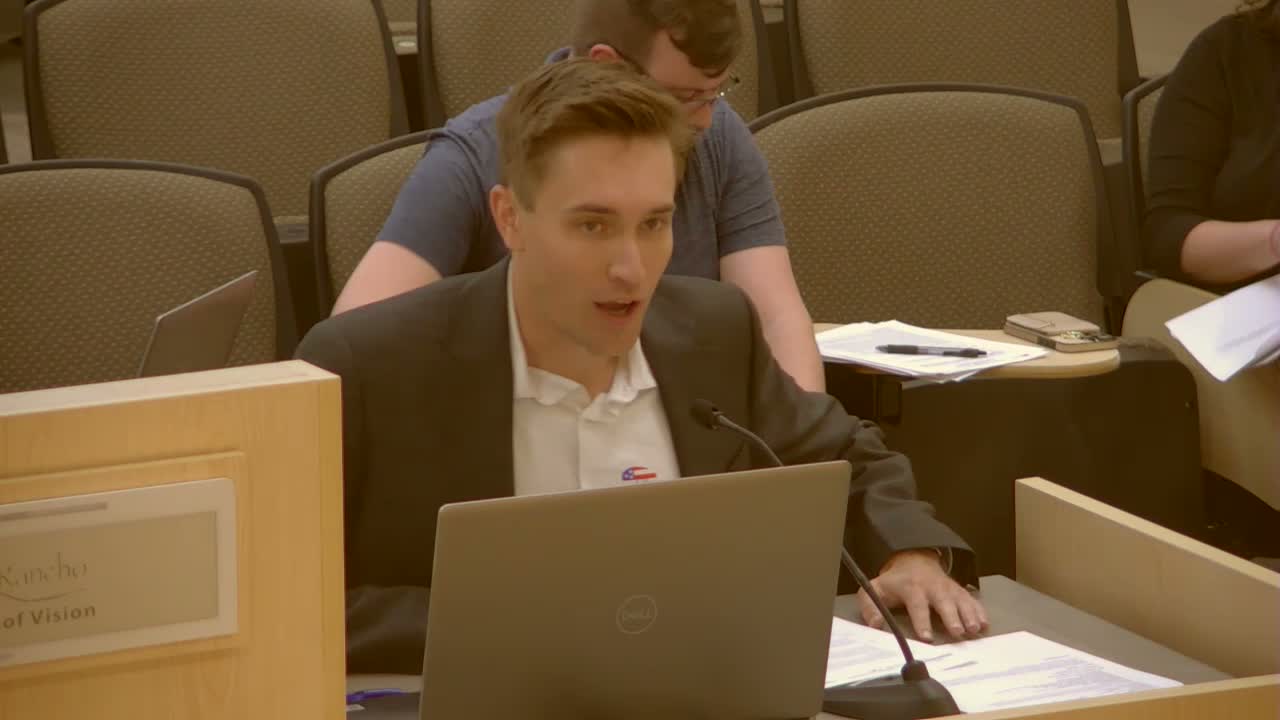
Applicant Matthew Chaplin testified under oath that his proposal is for a small artisan home production limited in scale and scope: he said his current personal production under federal personal‑use allowances is about 200 gallons per year, he proposed an annual range of 300–800 gallons (with an absolute maximum of 1,000 gallons), and that all production would happen inside a single enclosed 120‑square‑foot room with no on‑site tastings, no customer visits, no signage and no exterior modifications. Chaplin said he would sell only through off‑site channels (online sales, farmers markets, sales to local wineries, limited wholesale) and comply with all state and federal licensing and labeling rules if the zoning statement were issued.
Board members clarified that an affirmative vote on the appeal would only determine land‑use permissibility for the property under city code; state and federal licensing, including any Alcohol and Gaming Division or federal TTB approvals, would still be required before commercial sales or distribution. After brief procedural questions, the board voted in the affirmative on the appeal, effectively allowing the applicant to proceed to the next step of seeking a home occupation permit and any necessary state and federal alcohol permits.