City water staff: conservation credits are dwindling; offset fee set at about $36,000 per acre-foot
Loading...
Summary
The water division explained how the city's water bank and development-water budgets work, confirmed a one-time offset fee near $36,000 per acre-foot, and warned a 198-acre-foot conservation-credit pool could be drawn down in roughly two to three years at current designation rates.
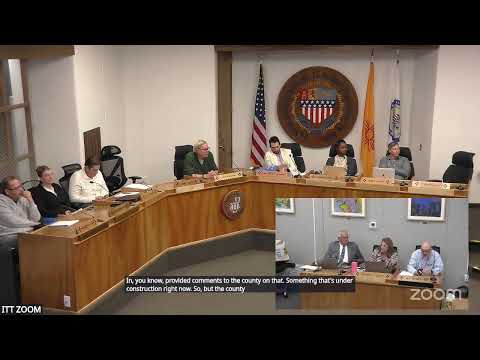
City water staff on Wednesday gave a detailed explanation of the water bank, development-water budgets and the mechanics of offset fees for new development, warning that conservation credits the city uses to subsidize affordable housing and small projects are being consumed rapidly.
Alan Hook, water resource coordinator for the Water Division, said the water bank lets developers either transfer water rights into the city's Buckman Well Field or pay an offset fee for below-threshold projects. "You can either bring in new water rights through what we call the water bank... or they could pay a water offset fee," Hook said.
Hook said staff currently sets the offset fee at roughly $36,000 per acre-foot, a level the city adopted to align with county practice and recent market activity. "We felt that $36,000 per acre-foot was a fair market value," he said, noting the fee was increased gradually to avoid sudden shocks to projects already in the pipeline.
Staff described thresholds that require bringing state-recognized water rights for larger projects: commercial projects above 5 acre-feet, mixed-use projects above 7.5 acre-feet and residential projects above 10 acre-feet. Above those thresholds the city requires water-right transfers that must be approved by the state engineer, a process Hook said can take about 6 to 18 months.
Hook laid out a conservation-credit accounting picture: the governing body allocated 500 acre-feet to a conservation pool in a 2023 resolution; after recent designations for affordable housing and below-threshold development the pool is at about 198 acre-feet. "We are down to a 198 acre-feet for low-priced dwelling units, affordable housing, as well as small development," Hook said, and he warned that, at current rates of use, the balance could be drawn down in roughly two to three years.
For very small projects Hook gave an example: an accessory dwelling unit (ADU) typically equates to about 0.09 acre-feet and would incur a one-time offset payment on that scale (about $3,240 at the $36,000-per-acre-foot rate), not including meter or infrastructure charges.
Hook also described market challenges: private water-right transfers into the city's bank fell to zero in early 2025 amid protests and difficult transfer conditions, and staff said it has become harder to purchase water rights on the open market. That shift has increased reliance on conservation credits and alternative offset mechanisms.
During questions, commissioners asked about permanence of the fee and whether the county uses similar rules; Hook said the one-time fee is effectively a perpetual dedication (a one-time payment tied to the development) and that Santa Fe County currently charges a similar offset fee but does not require water-right transfers the way the city does.
Hook closed by noting longer-term projects (such as San Juan Chama return-flow credits and additional supply projects) could expand the city's portfolio; for now staff recommended monitoring the conservation-credit balance and preparing potential options for replenishment.