Get Full Government Meeting Transcripts, Videos, & Alerts Forever!
Get email alerts on the Streetscape topic
No spam. Unsubscribe anytime.
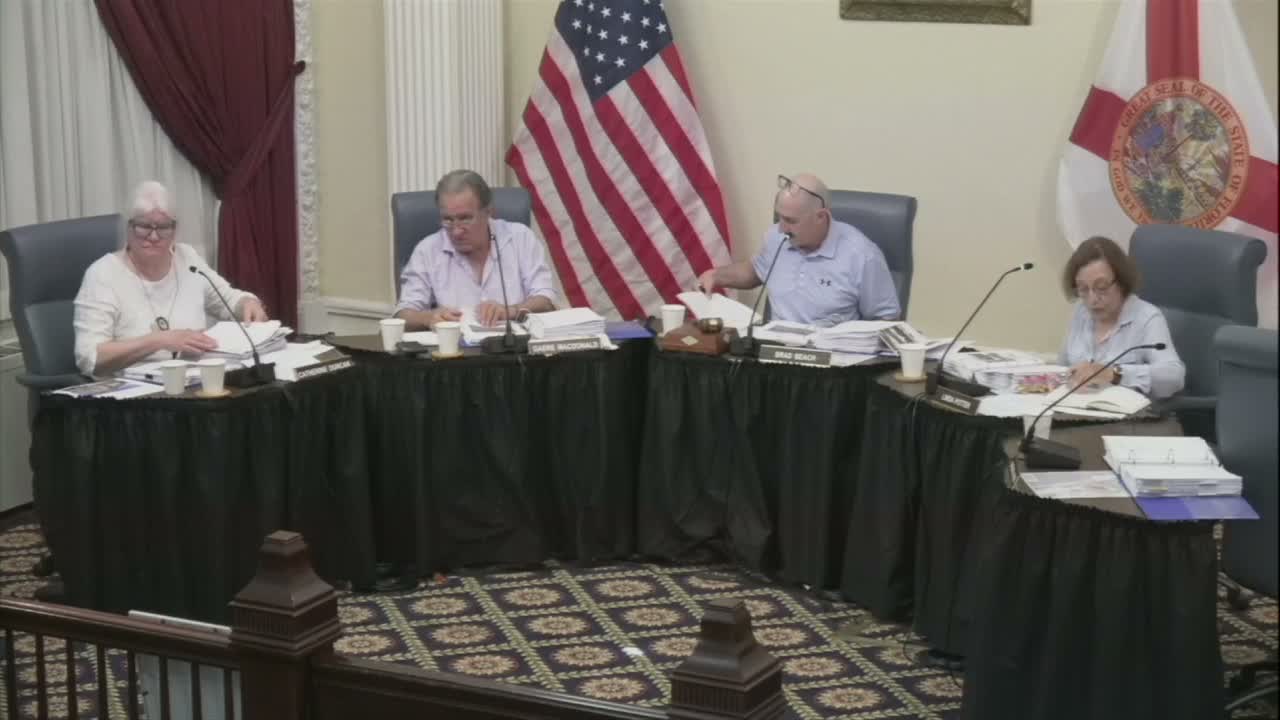
Board signs off on King Street streetscape project, asks for archaeology safeguards
Summary
The board approved the King Street and Cathedral Place streetscape certificate but asked the city to include explicit vibration limits, monitoring and archaeological protections during construction to avoid damage to the plaza's documented deposits.
The Historic Architecture Review Board approved the City of St. Augustine’s King Street and Cathedral Place streetscape plan on April 16, with a condition that construction specifications explicitly protect known archaeological deposits in and around the plaza.
City and consultant teams presented a multi‑block plan for sidewalks, brick banding, coquina concrete surfaces, tree wells, buried utilities and new site furnishings. Staff reminded the board that the plaza and adjacent streets lie within a National Historic Landmark area and archaeological zones that have yielded deposits under the roadway.
The board’s approval includes a recommendation — effectively a condition for implementation — that contractors use construction methods that minimize vibration and ground‑disturbing impacts, avoid large rollers and heavy compaction where archaeological deposits may exist, and include monitoring and mitigation measures. The board stressed that those methods should be spelled out in bid and construction documents rather than left to ad hoc decisions during work.
Consultants said utility work will be concentrated along existing alignment corridors where possible, that water and storm mains will be replaced, and that electrical conduit for undergrounding will be provided. The design team also proposed tree bands with a mix of cabbage palms and live oaks, brick paving at select parking and crosswalk locations, and coquina concrete as a primary pedestrian surface in sensitive areas.
Board members praised the plan’s potential to improve pedestrian comfort and downtown drainage but repeatedly emphasized that archaeological review and monitoring must be part of the construction contract. Staff and the consultants agreed to integrate archaeologists into the forthcoming construction specification and to include limits on compaction/vibration and procedures should significant deposits be encountered.
Next steps: the city will finalize construction documents and include the agreed archaeological and vibration protections before advertising for bids.