Get Full Government Meeting Transcripts, Videos, & Alerts Forever!
Get email alerts on the Budget topic
No spam. Unsubscribe anytime.
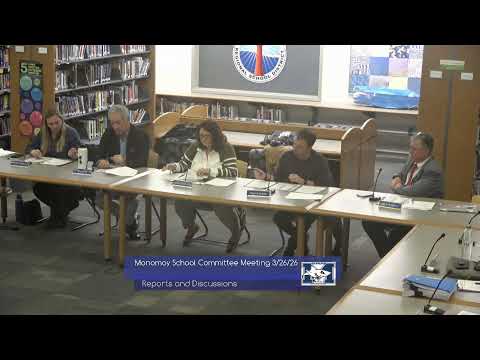
Monomoy committee adopts $51.74 million FY2027 budget after debate over staffing cuts and falling enrollment
Summary
The Monomoy Regional School Committee on March 26 approved a $51,735,982 FY2027 budget that trims about 10.5 positions and uses $900,000 from reserve funds, after administrators warned continued enrollment declines and assessment pressures from Harwich and Chatham. (Budget vote recorded in open session.)
The Monomoy Regional School Committee voted March 26 to adopt a $51,735,982 operating budget for fiscal year 2027, approving a proposal administrators said reduces staffing by about 10.5 full‑time equivalent positions and relies on $900,000 from excess and deficiency funds to limit the assessment impact on the member towns.
School business manager Michael McMillan presented the plan, saying the draft represents a 5.07% increase and reflects targeted cuts and reorganization to reduce costs while preserving classroom priorities. "Today, in front of you, is a proposal to approve a budget of $51,735,982," McMillan said, and described reductions that total about $482,000 from central office and school administrative positions alongside other changes.
The nut graf: the budget passed after committee members raised concerns about sustained enrollment declines and the strain those losses place on future budgets and services. Committee members cited roughly a 9% enrollment drop in recent years and projections that could reach an 11% decline by FY2030, which administrators and board members said will force more difficult choices if trends continue.
Members questioned how the towns of Harwich and Chatham had received the number and pressed on the district's use of savings. "We're trying to wean ourselves off excess and deficiency because you keep spending your savings," McMillan said, arguing the district could not rely indefinitely on reserves. Mr. Edwards, a committee member, described the process as "particularly hard" given late timing of numbers and warned that the committee's "back is kind of against the wall." Missy Bridal Long, another member, urged that longer earlier budget seasons with town collaboration are needed to avoid repeat last‑minute pressure.
Key details administrators provided included: a projected net reduction of 10.5 positions; $482,000 in targeted reductions; roughly $2.5 million in district reserves with $900,000 planned to be used in FY27 (down from $1,000,000 used previously); and transportation and benefits pressures that are increasing local assessments. McMillan noted that state revenue increases were minimal (about 0.23% in the current cycle), leaving assessments to pick up most of the additional costs.
Committee action and context: a motion to approve the FY2027 budget was made and seconded in open session; a roll‑call of individual votes was not printed in the transcript, but the motion carried. The committee and administration emphasized that continued enrollment declines may require more substantial changes next year and that the district will pursue earlier town engagement and a longer budget season to improve planning.
The committee also discussed capital and debt-service timing tied to middle- and high‑school projects, noting principal payments on major projects will increase district cost pressures in coming years. Administrators said they would return with any required budget transfer requests should material account changes occur.
The committee adjourned other business and moved on to remaining agenda items after the vote.