Get Full Government Meeting Transcripts, Videos, & Alerts Forever!
Get email alerts on the Land Use topic
No spam. Unsubscribe anytime.
Middletown approves logistics‑center overlay for Corman site, contingent on cleanup
Summary
The board approved a zoning map amendment and text change to create an LC Logistics Center Overlay District for an 85‑acre, legacy Superfund/brownfield site, adding a conditional logistics‑fulfillment use for sites of 50 acres or more and recording a 200‑foot conservation easement along Neshaminy Creek; board emphasized DEP/ EPA cleanup requirements and that any land development would require additional conditional‑use review.
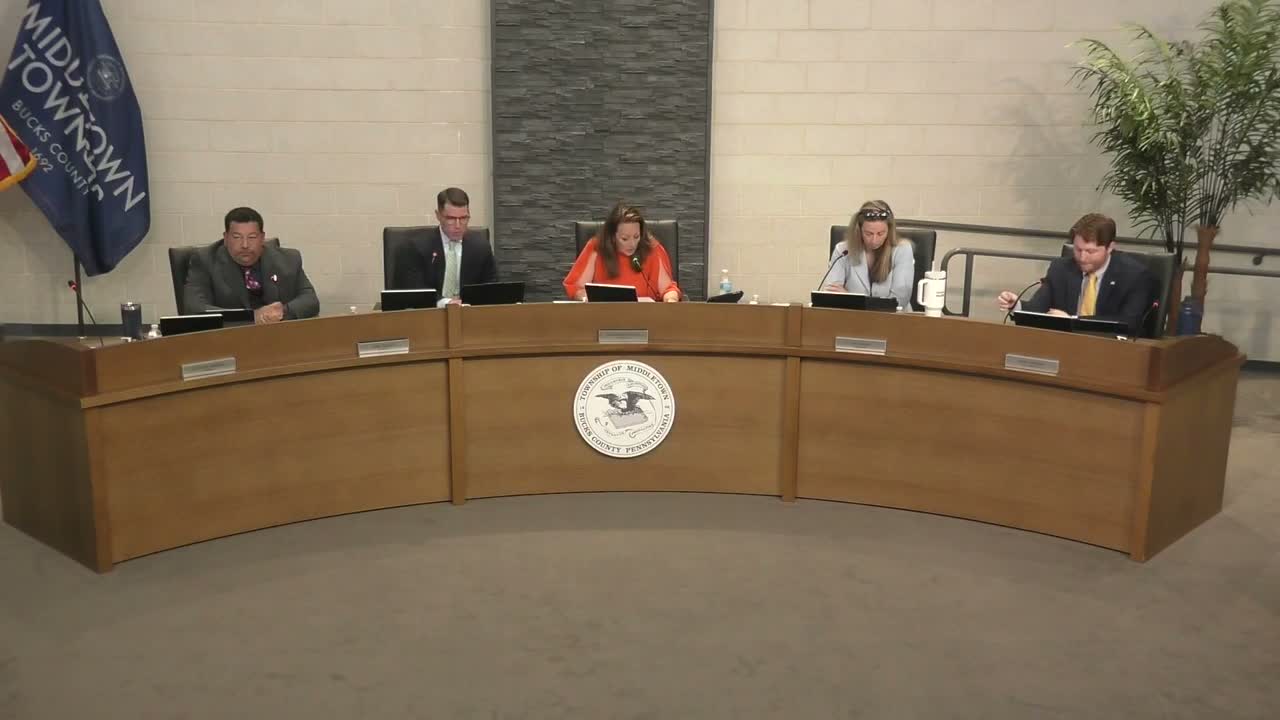
After extended public comment and technical explanation, the Middletown Township Board of Supervisors voted 5‑0 to approve a petition from Corman Commercial Properties to amend the zoning map and text to create an LC Logistics Center Overlay District (ordinance 26‑05) over an 85‑acre legacy Superfund/brownfield site along Route 1.
Staff and applicant representatives told the board the change would consolidate scattered commercial and open‑recreation zoning into a uniform M‑1 Light Manufacturing designation for the site, add a conditional‑use pathway for logistics/fulfillment centers on parcels of 50 acres or more, and establish a 200‑foot conservation easement along the Neshaminy Creek to preserve riparian area and allow trails where appropriate. The applicant’s counsel and land‑use team emphasized that federal and state remediation approvals would be required before substantive land development could proceed.
Ed Murphy, speaking for the applicant, summarized the goals: “We’re trying to create a more uniform zoning classification that would give confidence to the business community, that they could locate a use that could afford to undertake the cleanup.” Staff and counsel noted the planning commission recommended approval after multiple hearings and that the text amendment removed previously proposed uses the planning commission found objectionable, namely data centers and cold‑storage uses.
Residents raised a range of concerns in public comment: potential contamination, stormwater and flood‑plain impacts, traffic and truck volumes on Route 1, and whether the township would receive adequate tax benefits. Joe Fitch and other residents questioned cleanup responsibility and where runoff would go; board members and applicant representatives repeatedly answered that remediation standards are set by DEP/EPA and that remediation costs would be the developer’s responsibility as part of any land development.
The board attached the ordinance change and map amendment to the record and required that any future land development or conditional‑use application would return to the planning commission and supervisors for detailed conditions, traffic analysis, stormwater controls and remediation plans. The motion to approve the zoning map change and text amendment passed 5‑0.
What’s next: Approval of a zoning change is a legislative action that does not itself authorize construction; any future land‑development plan or conditional‑use application will require cleanup approvals, traffic and stormwater studies and specific conditions negotiated with the board.