Lifetime Citizen Portal Access — AI Briefings, Alerts & Unlimited Follows
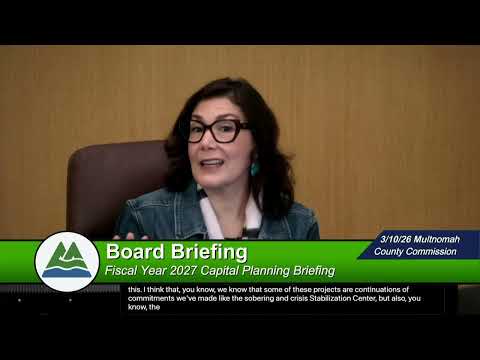
Multnomah County board hears FY 2027 capital plan: $197M requested, funding gaps noted
Loading...
Summary
County staff presented a draft FY 2027 capital plan with 28 project submissions requesting over $197 million through FY31, outlined priority tiers and funding scenarios, and flagged potential near‑term underfunding and larger multi‑year shortfalls.
Multnomah County officials on Thursday presented the requested Fiscal Year 2027 capital plan, summarizing 28 project submissions that together seek more than $197 million in county funding over a five‑year window and identifying priority tiers, specific project estimates and potential funding shortfalls.
Tracy Massey, interim deputy chief operating officer and DCA director, told the Board the steering committee and capital groups organized projects into four priority tiers after reviewing CPIFs (capital project information forms) and an equity matrix. The county received requests for nine new capital projects totaling about $86 million over five years and 19 continuing projects that together account for the larger total.
“Turning to 2027 planning, we received 28 project submissions requesting over $197,000,000 in additional accounting for county funding from fiscal year 27 through 2031,” Massey said.
Dan Zalco, division director for facilities and property management, highlighted Tier 1 items including an ADA sidewalk improvement program (aligned with a 10‑year plan), the Justice Center electrical bus duct system (city of Portland contribution ~40%; $2.5 million county funds anticipated in 2027), and a sobering/crisis stabilization center with a $36 million project estimate that would require $12.3 million in county funds in FY27. Zalco also introduced a new $14 million vector control project that includes $8 million in county funding and $6 million from the Bureau of Environmental Services for property acquisition, renovation and relocation costs.
Sim Mogel, the county’s chief information officer, briefed the board on IT priorities, including continuing the HMIS (Homeless Management Information System) implementation that will replace WellSky with Bitfocus Clarity and is expected to complete by May 2027; he said funding for HMIS comes from supportive housing measures and the Regional Investment Fund.
Eric Argano, chief financial officer, presented funding scenarios and described debt options the county could use — from general obligation bonds (which require voter approval) to full faith and credit debt — and summarized internal debt limits. Argano’s conservative funding scenario estimated a potential underfunded gap of about $741,000 for Tier 1/2 needs in 2027 and larger shortfalls across tiers 3–4 over a five‑year window, though he noted many variables and the potential to adjust timing on projects (for example, pushing the vector control request into FY28).
Commissioners asked for additional detail on several items, including the functional differences that HMIS will deliver, long‑range “mega projects” (jail replacement, bridge retrofits, Elections Building), and community engagement and cost estimates for Walnut Park and East County projects. Staff said more detailed follow‑ups and updated tables will be provided to the board and the clerk for meeting materials.
No formal votes occurred at the briefing; staff said the capital budget will be presented in May and a capital plan summary report will be produced in the summer, with a fall status update planned.