Get Full Government Meeting Transcripts, Videos, & Alerts Forever!
Get email alerts on the Special Education topic
No spam. Unsubscribe anytime.
Parent alleges autistic son was repeatedly secluded in 'blue room' as district outlines DESE corrective plan
Summary
A Bridgewater parent said her autistic child was repeatedly placed in a so-called 'blue room' closet over multiple school years; the district reported a DESE integrated monitoring review that found three partially implemented civil-rights standards and said it will submit a corrective action plan.
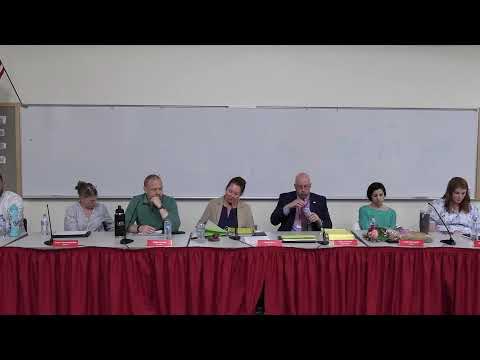
A parent told the Bridgewater-Raynham School Committee on April 15 that her autistic son had been placed dozens of times in a school "blue room," which she described as a closet used for seclusion.
"Bridgewater Raynham calls them blue rooms, but what they truly are are closets used for seclusion," said parent Lauren Boyden, who said her son was placed in such a space 138 times in the 2022–23 school year and 108 times the following year, totaling roughly 21–23 hours. She said one episode lasted two hours and described the space as about 7-by-7 feet with tile floors and no ventilation. "This is not support at all. This is not access to an education," she said.
The committee also heard the superintendent's presentation of the Massachusetts Department of Elementary and Secondary Education (DESE) integrated monitoring review. Superintendent Powers said the district received an "implemented" rating on 26 of 29 standards but was rated "partially implemented" on three civil-rights areas: physical education (CR7b), bullying intervention and training (CR10b), and restraint-procedures training (CR17). Powers said the district must submit a corrective action plan to DESE and that portions of the review may remain open until the requirements are met.
"Of those 29 standards, we received a rating of implemented on 26 of those standards," Powers told the committee, and noted the corrective action plan will remain open until the district satisfies state requirements. He said DESE has model language and guidance that districts can use while they work through the changes.
Parents and committee members asked questions about timing and scope. Powers said the corrective action plan must be submitted in May and acknowledged that some items may take longer than a year to implement, particularly where additional staffing is required.
Boyden said she has pursued answers from DESE and the local press and urged other parents of special-education students to ask questions about district practices. Her account directly challenged a recent email to families from the superintendent, which Boyden said "is not my recollection of events." The district did not make a formal policy change or take a procedural vote on the seclusion practices at the meeting.
What happens next: Powers said the district will prepare and submit the corrective action plan to DESE and share details with families; the committee did not schedule an immediate policy vote on seclusion practices during this session.