Lifetime Citizen Portal Access — AI Briefings, Alerts & Unlimited Follows
Federal $1.3 million grant backs South Lynnwood urban forestry push to restore 12 acres
Loading...
Summary
Lynnwood officials described a five‑year, $1.3 million USDA Forest Service grant to restore roughly 12 acres of forest and wetlands in South Lynnwood, plant hundreds of trees, start a native plant steward program and run monthly stewardship events.
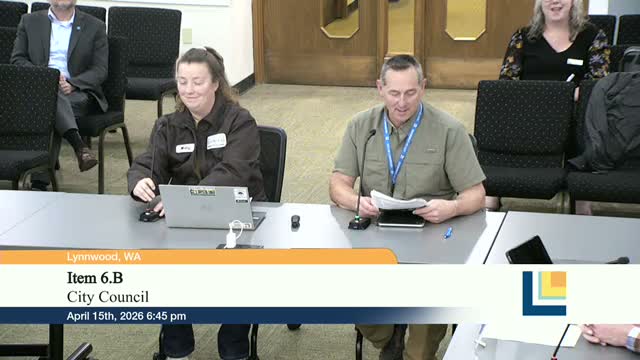
The City of Lynnwood received just over $1.3 million from the U.S. Department of Agriculture Forest Service to fund a five‑year South Lynnwood Urban Forestry Initiative, Parks Maintenance Superintendent Eric Peterson told the council on April 15.
Molly Henderson, Lynnwood’s urban forester, outlined the project’s measurable objectives: restore about 6 acres of forest and 6 acres of wetland across city properties, plant more than 750 trees, host at least 53 stewardship events and track roughly 4,800 volunteer hours over the grant period. The grant funded one full‑time urban forestry position to lead the work, Henderson said.
Henderson reviewed accomplishments during the program’s first year: approximately 1.5–2 acres restored at South Lynnwood Park and Scriber Lake Park, about 117 trees planted across parks, roughly 200 cubic yards of invasive plant material removed from South Lynnwood Park and about 100 cubic yards of mulch applied to new plantings. She also described a monthly volunteer steward program (18 stewardship events held since October 2024), a neighborhood tree giveaway that has distributed 109 trees to date, and planned outreach including two school visits and an Earth Day volunteer event April 18 at Scriber Lake Park from 09:30 to 12:00.
Work includes targeted removal of knotweed and Himalayan blackberry, contracted vegetation management plans with geolocation of park trees, trail repairs and ongoing monitoring for resprouts. Henderson said mitigation planting sites created as part of Scriber Creek Trail phase projects require annual reporting to the Washington Department of Ecology to meet native‑plant coverage rules after a five‑year monitoring period.
Councilors praised the hands‑on work and asked about the grant timeline (Henderson said the program runs through 2029) and staffing: the program has no certified arborist on staff yet but will contract specialists as needed and the grant supports certification training for staff. Henderson said the program will begin a native plant steward curriculum and additional neighborhood tree giveaways later in 2026.