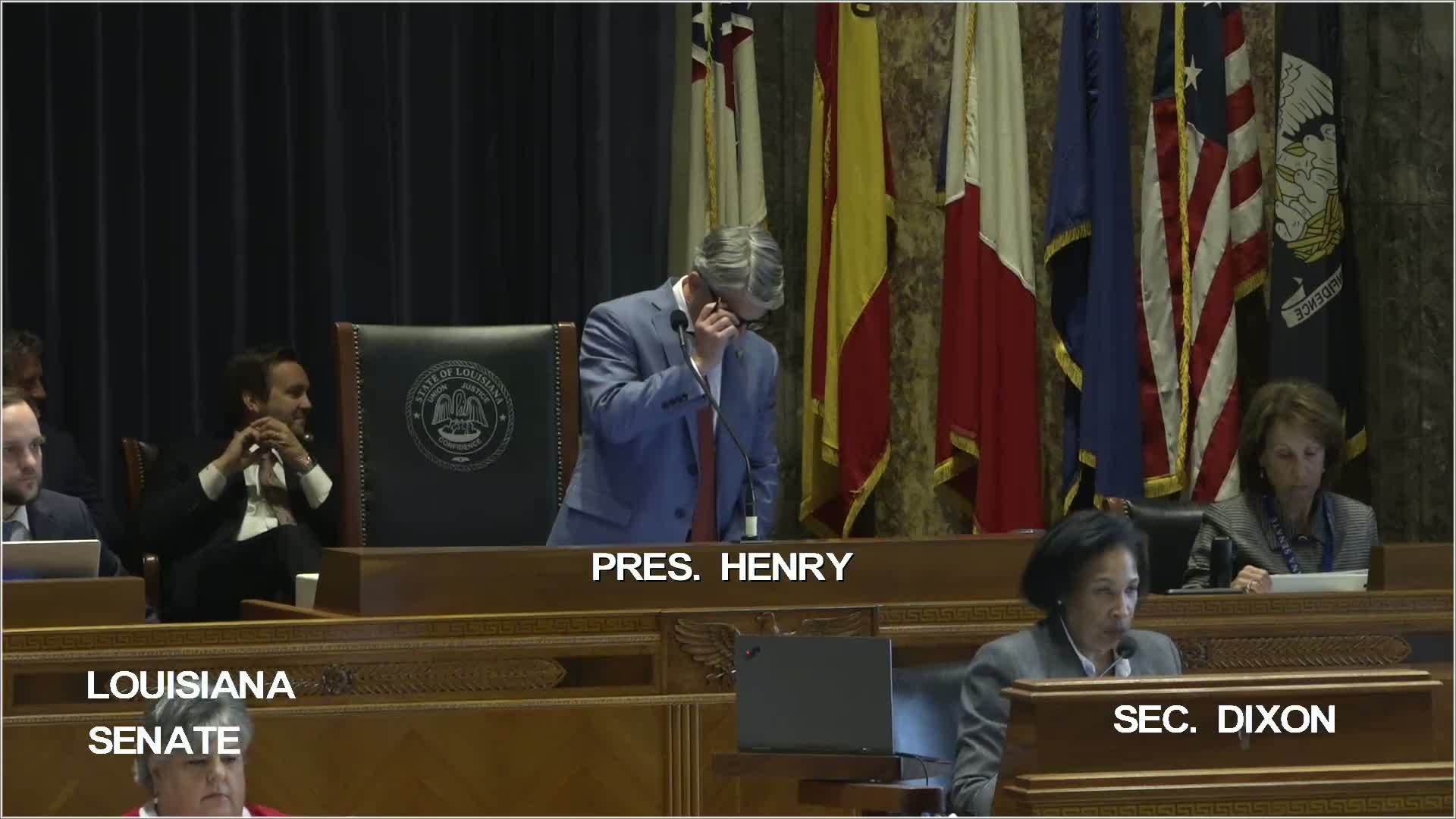
Senate approves plan to reduce Fourth Circuit appellate judges after extended debate
Loading...
Summary
The Louisiana Senate passed SB197, reducing the number of judges on the Fourth Circuit Court of Appeal after an amendment scaled the cutback; proponents cited caseload and potential savings, while opponents questioned data, process and possible effects on appellate review.
The Louisiana Senate on April 7 approved Senate Bill 197, a measure to reduce the number of judges on the Fourth Circuit Court of Appeal, following extended floor debate and a floor amendment that narrowed the original proposal.
Senator Morris, the bill’s sponsor, framed the measure as an efficiency and cost-saving step, saying the bill would recalibrate judgeships to reflect case filings and reduce what he described as excess capacity in the New Orleans-area circuit. He described a change in the amendment from eliminating four judges to reducing the court from 12 to 10 judges and said the act would be effective on the governor’s signature, with operative reductions tied to vacancies or retirements.
Opponents on the floor pressed for empirical support for the change. Senator Plessis questioned where the Supreme Court or the Judicial Council had recommended the reduction and repeatedly asked for the data behind comparisons to other circuits. “Where in the Supreme Court study did it suggest that we should reduce the number of judges from 12 to 8 or 12 to 10?” Plessis asked, pressing Morris for specifics on filings, population trends and the Judicial Council process.
Morris responded that the proposal was grounded in filings data and a work-study and said the fourth circuit has fewer case filings than other circuits and could accomplish its work with fewer judges. He estimated savings per eliminated judgeship in the range the chamber discussed on the floor — “about $800,000 to $1,000,000 per judge a year,” he said — and said the savings would return to the state general fund. Morris also told colleagues the amendment was intended to moderate the original reduction and to take effect in a way tied to the natural vacating of seats.
Debate touched on multiple themes: whether population decline in New Orleans justified removing judges, whether filings or opinion quality should drive staffing levels, and whether bypassing or sidelining the Judicial Council and certain local stakeholders undermined the process. Senators warning of potential downstream effects argued that fewer appellate judges could lengthen dockets and lessen the time available for written, reasoned opinions; Morris countered that data showed the circuit could handle the workload.
An amendment offered by Morris reducing the scope of the original cut was adopted on the floor. The final recorded vote on the bill, as announced, was recorded in the chamber as 26 yeas and 9 nays; the bill was reported adopted and will proceed through final enrollment and delivery to the governor.
Why it matters: The Fourth Circuit covers Orleans and nearby parishes and is the state’s principal appellate forum for that region. Reducing the number of appellate judges changes the capacity for appeals work and may have long-term effects on case processing times and legal oversight. Supporters pointed to budget savings and lower caseloads; opponents pressed for more formal study and a process that more fully engages the Judicial Council and local stakeholders.
The Senate’s passage sends SB197 to the next step in the enactment process; the measure’s operative reductions are tied to subsequent vacancies, and the sponsor said he expected retirements/Departures will effectuate the cutbacks without immediate removals.