Get Full Government Meeting Transcripts, Videos, & Alerts Forever!
Get email alerts on the Absentee Voting topic
No spam. Unsubscribe anytime.
Committee declines to advance bill clarifying absentee voting for jailed but not convicted voters
Summary
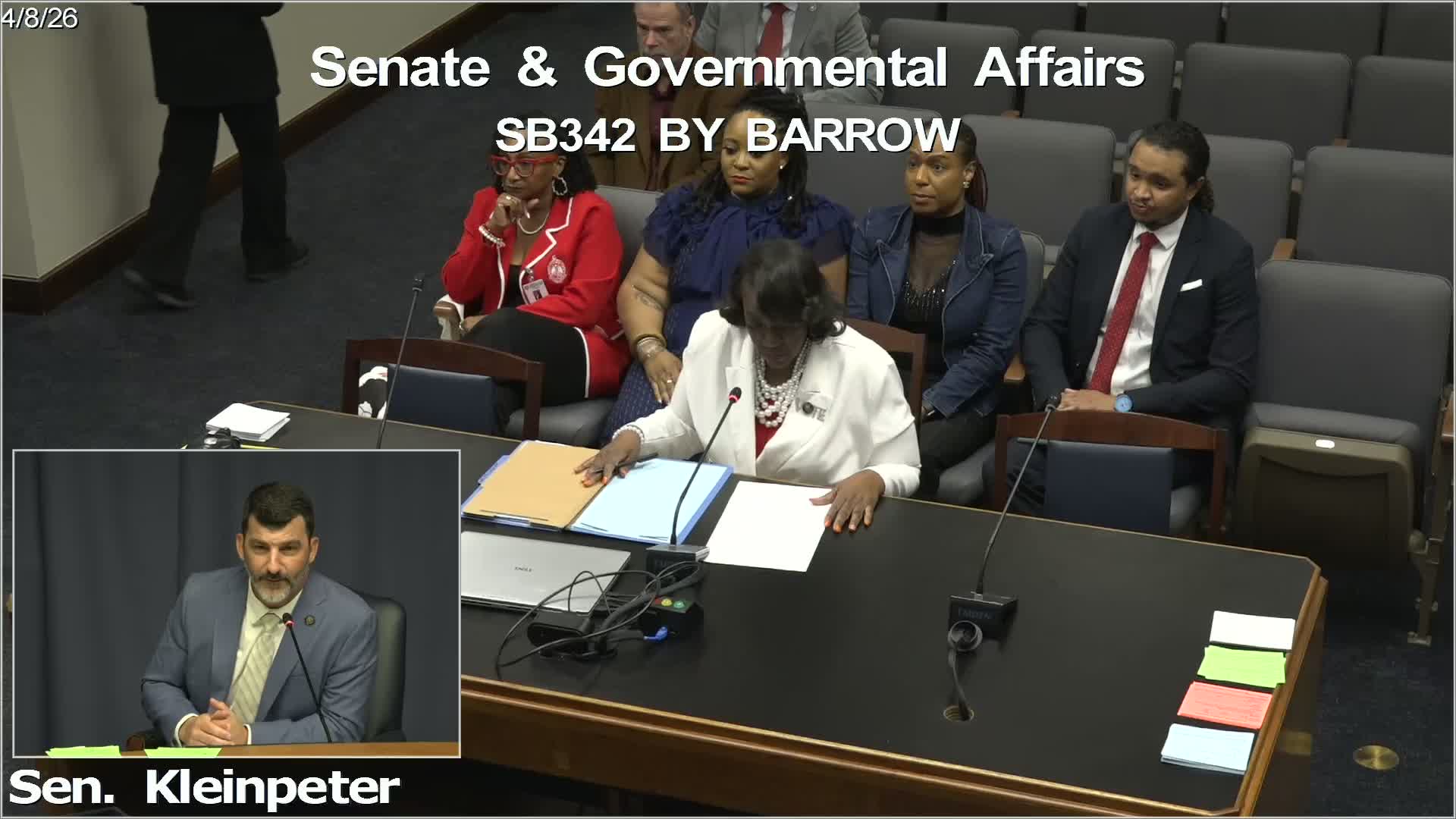
Sen. Regina Barrow presented a substitute for SB 342 to resolve a conflict in Chapter 18 of the Revised Statutes so people jailed for misdemeanors or awaiting trial could request absentee ballots even as first‑time voters. Supporters described it as a narrow technical fix, but a motion to report the substitute favorably failed on a 3–4 vote.
Sen. Regina Barrow presented a substitute version of SB 342 and said the substitute is a two‑page clarification to resolve a conflict in state law that had made it difficult for some eligible people who were jailed but not convicted to cast absentee ballots. Representative Terry Landry, who spoke at the table, described the substitute as “just to clarify” that people incarcerated for non‑felonies or awaiting trial have the right to vote by absentee ballot even if it would be their first time voting in the parish.
Lawmakers and advocates asked how verification would work; Landry and supporters said sheriffs already confirm registration status and that the substitute streamlines procedures so currently eligible but confined voters are not excluded. Bruce Riley and other advocates said the change is narrow and restores access: Riley said officials should not deny a first‑time voter an absentee ballot simply because they are detained.
Senator Carter moved to report the substitute favorably. The roll call produced three yes votes (Carter, Jenkins, Sellers) and four no votes (Faizi, Miller, Reese, Womack), so the motion failed and SB 342 remained in committee.
What’s next: sponsors described the measure as a technical fix and urged co‑authors; with the motion failing, advocates said they will continue outreach and consider revisions to address member concerns about implementation details and verification.