Senate Judiciary B reports bill to curb foreign-adversary tech in Louisiana critical infrastructure
Loading...
Summary
Senate Judiciary B advanced Senate Bill 251 with amendments after proponents from nonprofit State Armour described threats to Louisiana infrastructure and the committee adopted a package removing several contested sections and deferring others for future study.
The Senate Committee on Judiciary B on April 7 reported Senate Bill 251, a measure aimed at keeping certain foreign-adversary technologies off Louisiana’s critical infrastructure, to the next stage with amendments.
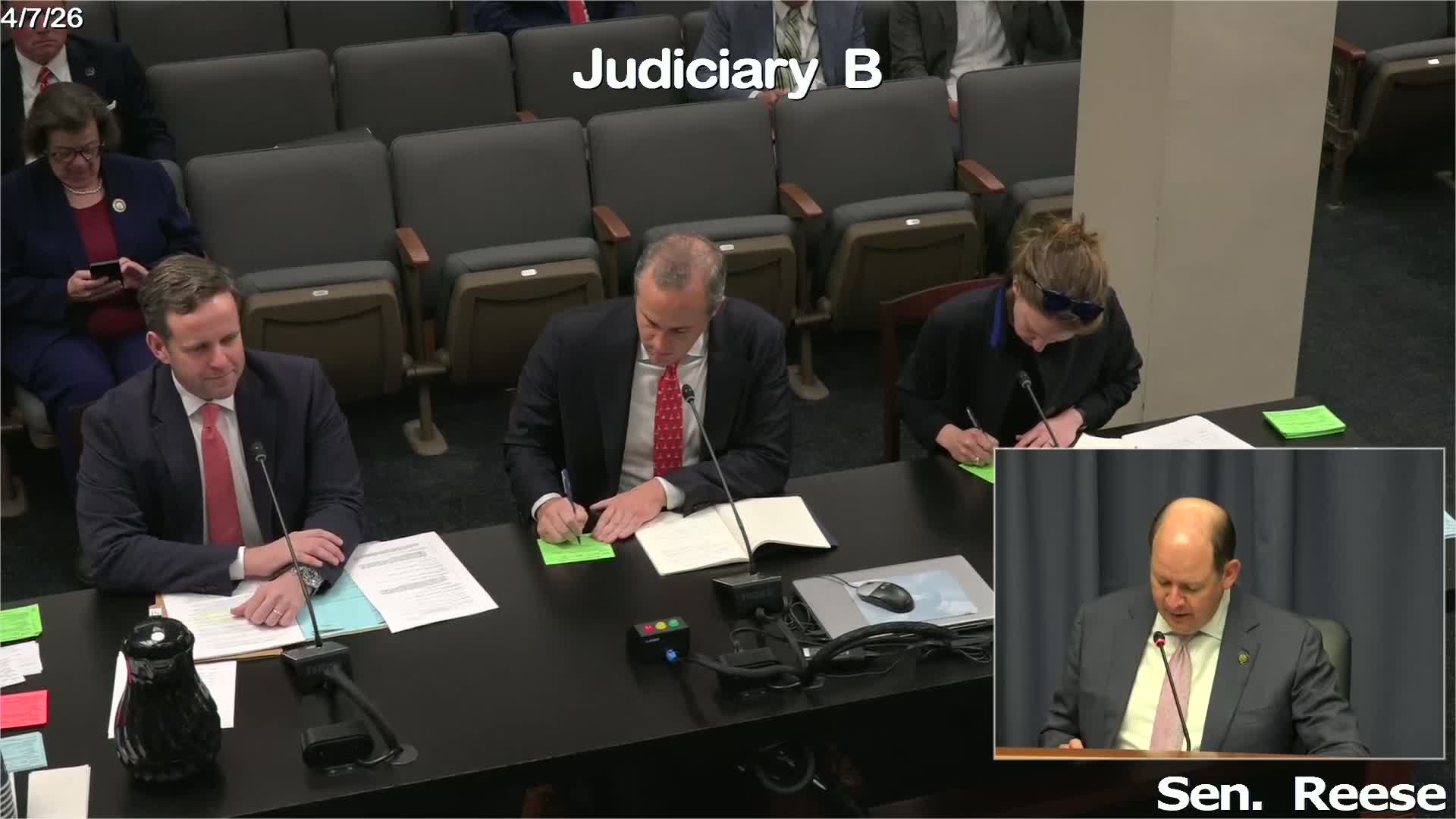
Sponsor Senator Presley told the committee the bill is designed to protect facilities that support daily life and national defense in Louisiana. Committee members adopted Amendment Set 17‑27, and the committee, by unanimous consent, reported SB 251 with those amendments.
The panel accepted substantive deletions in the amendment set. Mr. Miller, who spoke to the amendments, said the package removes language that had required contracts be preapproved by the governor’s office of homeland security and emergency preparedness, deletes a titled prohibition on “adversary network connected devices” (section 3,088) and deletes the bill’s “foreign adversary technology rip-and-replace fund” (section 3,090).
Michael Lucci, founder of the nonprofit State Armour, testified in support and urged caution in implementing parts of the bill that require clear authority and enforcement. “It is within the warfare doctrines of the Chinese Communist Party to hold the American homeland at risk,” Lucci said, arguing that the bill narrows potential vulnerabilities to ports, rails and bases in Louisiana.
Jacqueline Deal, an adviser to State Armour, told the committee she researches the People’s Liberation Army and described Louisiana as strategically important to foreign powers because of its ports, rail links and military facilities, citing Executive Order 14,239 (03/18/2025) as direction for states to take a lead role in infrastructure protection. “Louisiana looms large, as it should, in the Chinese Communist Party’s map of US infrastructure,” Deal said.
During questioning, Senator Owen asked whether the bill aligns with federal guidance on foreign adversaries; Lucci replied that the legislation uses the federal government’s list of foreign adversary countries to define a covered principal. Owen also asked whether the bill contemplates artificial intelligence risks; proponents pointed to a provision in the bill addressing software used in critical infrastructure.
Support was also filed in writing by two individuals who did not speak in person. After debate and the adoption of the amendment set, Senator Owen moved to report SB 251 with amendments; the committee recorded no objection and the measure was reported to the next stage.
The next procedural step for SB 251 is consideration by the full chamber or the bill’s next committee of referral, according to committee practice.