Committee hears survivor testimony on bill to bar NDAs in child sexual‑abuse settlements; lawmakers defer for reworking
Loading...
Summary
Senate Bill 185, which would bar nondisclosure agreements (NDAs) in civil settlements involving child sexual abuse and make them unenforceable as against public policy, drew emotional testimony from a survivor and detailed legal questions about retroactivity and privacy; the Judiciary A committee deferred the measure for further drafting.
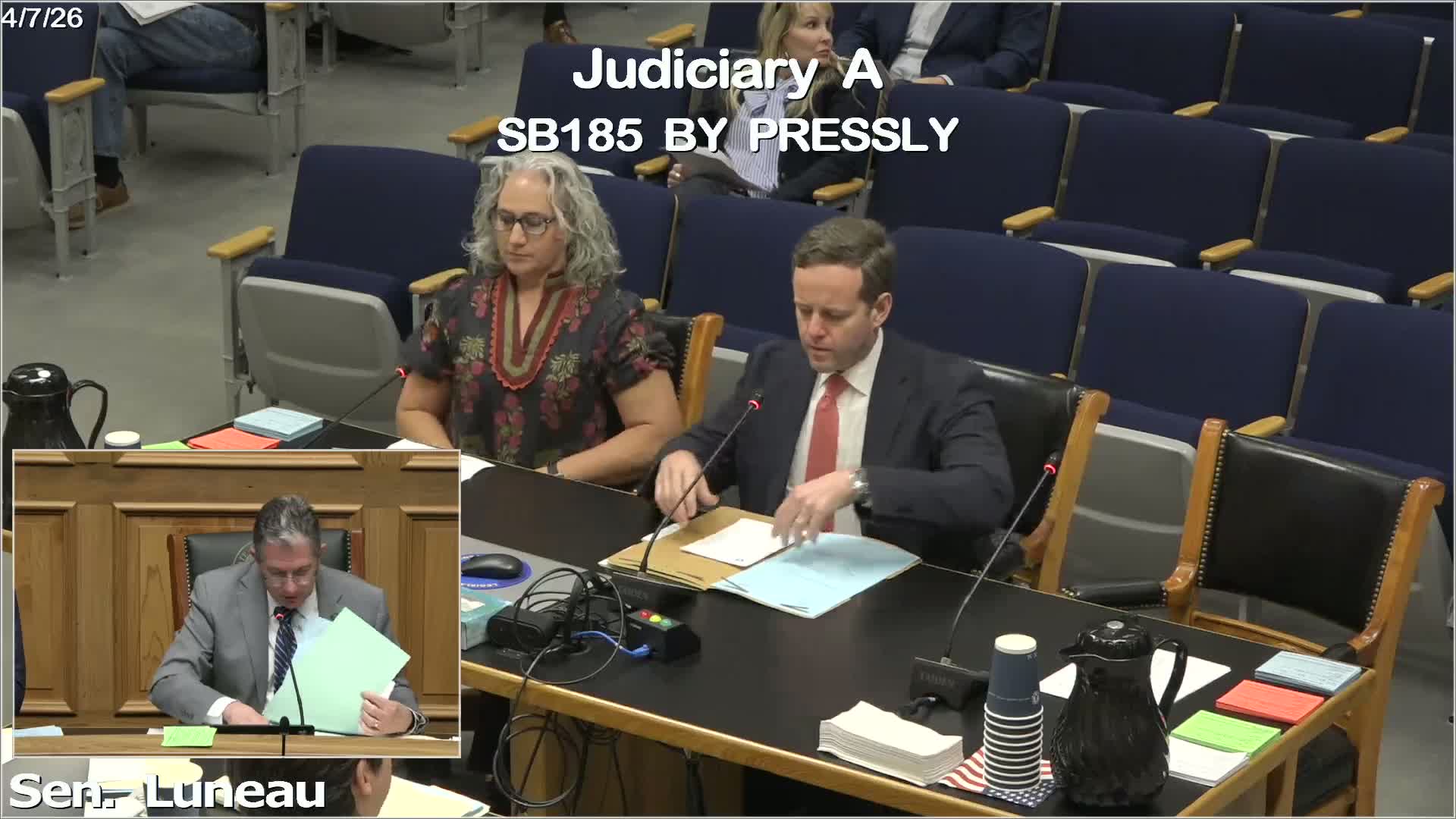
Senator Presley introduced Senate Bill 185 on April 7, saying the measure — inspired by the case of Trey Carlock and a national movement known as Trey’s Law — would prohibit nondisclosure agreements in civil settlements that relate to child sexual abuse and declare those clauses unenforceable as against public policy.
Karen Jenkins of DeSoto Parish, who identified herself as a survivor advocate and a constituent, told the committee why she supports the bill. “If you pass this bill, together, we can help those who have no voice and those who have had their voices silenced,” Jenkins said, describing how NDAs kept abuse hidden and deprived victims and their families of warning others and seeking support.
Supporters framed the bill as a way to give survivors the choice to speak without being silenced by settlement terms; Senator Presley said the bill’s intent is to “give victims their voice back” and that similar laws have been enacted in multiple states. He told the committee he believes portions of the draft could be treated as “null and void as against public policy.”
Several committee members pressed for narrower, clearer language. Vice Chair Luno said he is sympathetic but warned that a law declared a contract null as against public policy can have retroactive effects and might force survivors into public trials. Luno described situations in which survivors — he said — have been made to testify in public and cautioned that some victims do not want public exposure. “This is a serious double‑edged sword,” he said, urging careful drafting to avoid unintended harm.
Senator Carter sought clarification on whether the bill would obligate survivors to go public; Presley and witnesses said the goal is not to force anyone to speak and that the survivor would retain control over disclosure. Lauren Bailey of the Louisiana State Medical Society, who had participated in prior committee discussion, said the amendments considered were intended to avoid having the legislature dictate courtroom procedure and to leave certain discretion with judges.
Advocates including Morgan LaMondre of STAR and written testimony from No More Victims stressed the bill’s role in preventing institutional silence and enabling survivors to warn others. Committee members raised additional questions about non‑disparagement clauses, insurance‑driven NDAs, and the constitutional and procedural implications of retroactivity. Several members urged giving the author time to work with stakeholders and to draft amendments to limit damage to victims and reduce legal exposure.
At the author’s request, and after debate, the committee voted to defer SB 185 until next week for further work; the motion to defer passed without objection.
The committee did not take a final vote on the bill; its next committee appearance is expected after the sponsor and stakeholders submit amended language.