Lifetime Citizen Portal Access — AI Briefings, Alerts & Unlimited Follows
Committee backs recreational alligator-lottery plan with limits, regional tags
Loading...
Summary
House Bill 767 would authorize a recreational alligator-hunting lottery with regional tag allocations, 10,000 tags and two tags per successful applicant; department officials said the program is part of the agency’s strategic priorities and will go through commission rulemaking.
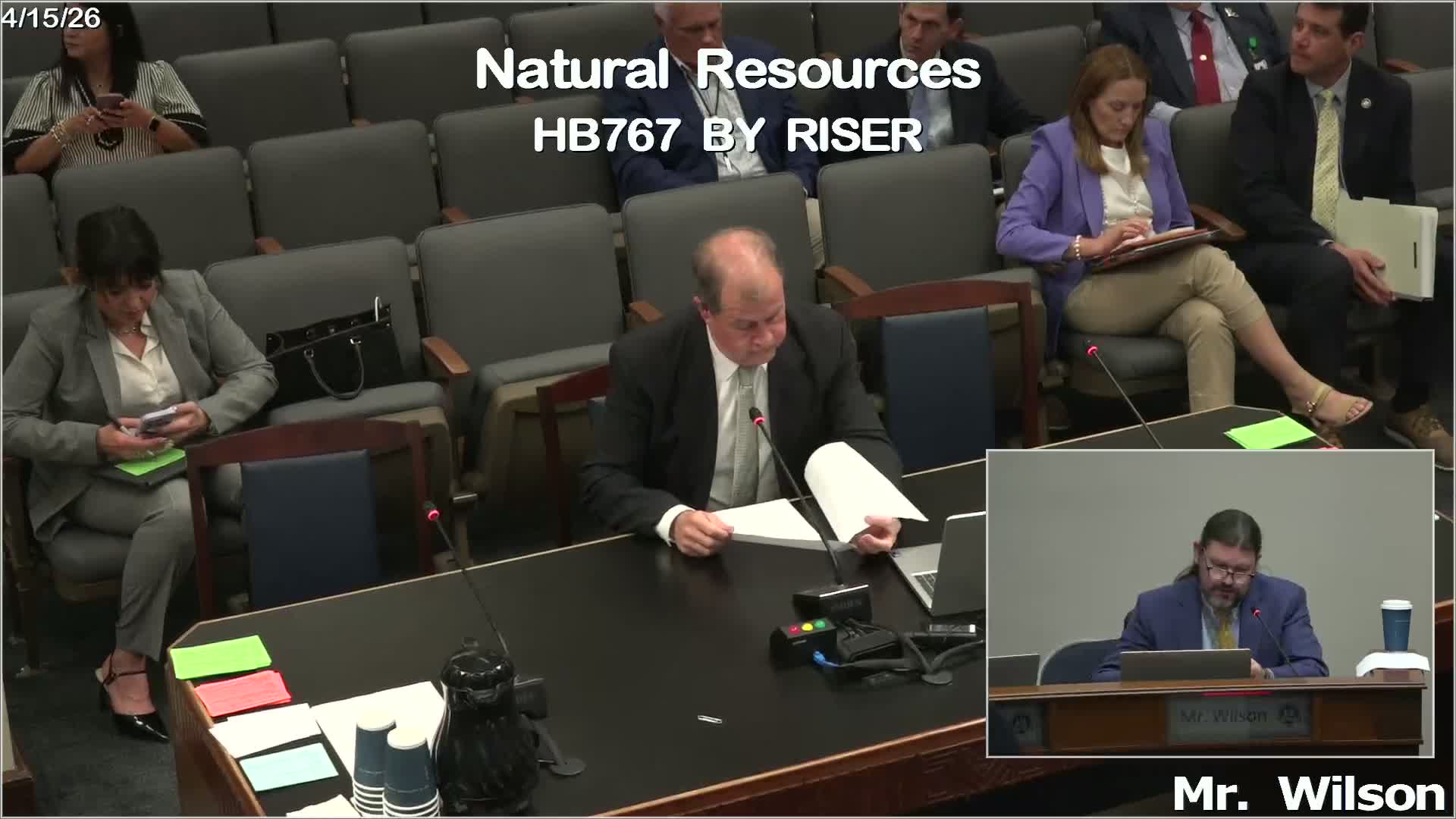
House Bill 767, carried in committee by Representative Reiser, would authorize a recreational alligator-hunting season administered via a lottery and establish differentiated fees for residents and nonresidents. The department described the measure as part of its strategic plan to expand recreational opportunity while managing an expanding alligator population.
Department Secretary Tyler Bosworth and General Counsel Cole Garrett told the committee the framework calls for eight enforcement regions that mirror department enforcement areas, roughly 10,000 tags in the first rollout and two tags issued to each successful lottery applicant. The sponsors said the regional approach is intended to use enforcement agents’ local knowledge of landowners and property boundaries to reduce enforcement problems.
Committee members pressed on fiscal and enforcement questions. The department said the conservation fund primarily pays enforcement agents’ salaries and that the program’s principal goal is to provide recreational access and better population control, not to be a revenue generator. The department deferred exact revenue estimates to staff but confirmed rulemaking and an oversight process will follow the bill’s passage.
On enforcement mechanics, the department said tagging and limits on baiting lines will be worked out with landowners and commercial operators during rulemaking; the department also said licenses and lottery fees are tied into existing sport-license statutes. Senator Kleinpeter moved to report the bill favorably and the measure was reported favorably without objection.
The committee did not adopt statutory or budgetary changes beyond what the bill text provides; final implementation will depend on subsequent commission rules and any adjustments the department proposes during the APA rulemaking process.