Get Full Government Meeting Transcripts, Videos, & Alerts Forever!
Get email alerts on the Judicial Impeachment topic
No spam. Unsubscribe anytime.
Committee advances companion bill to constitutional amendment that details judge‑removal procedure; ACLU warns of threats to judicial independence
Summary
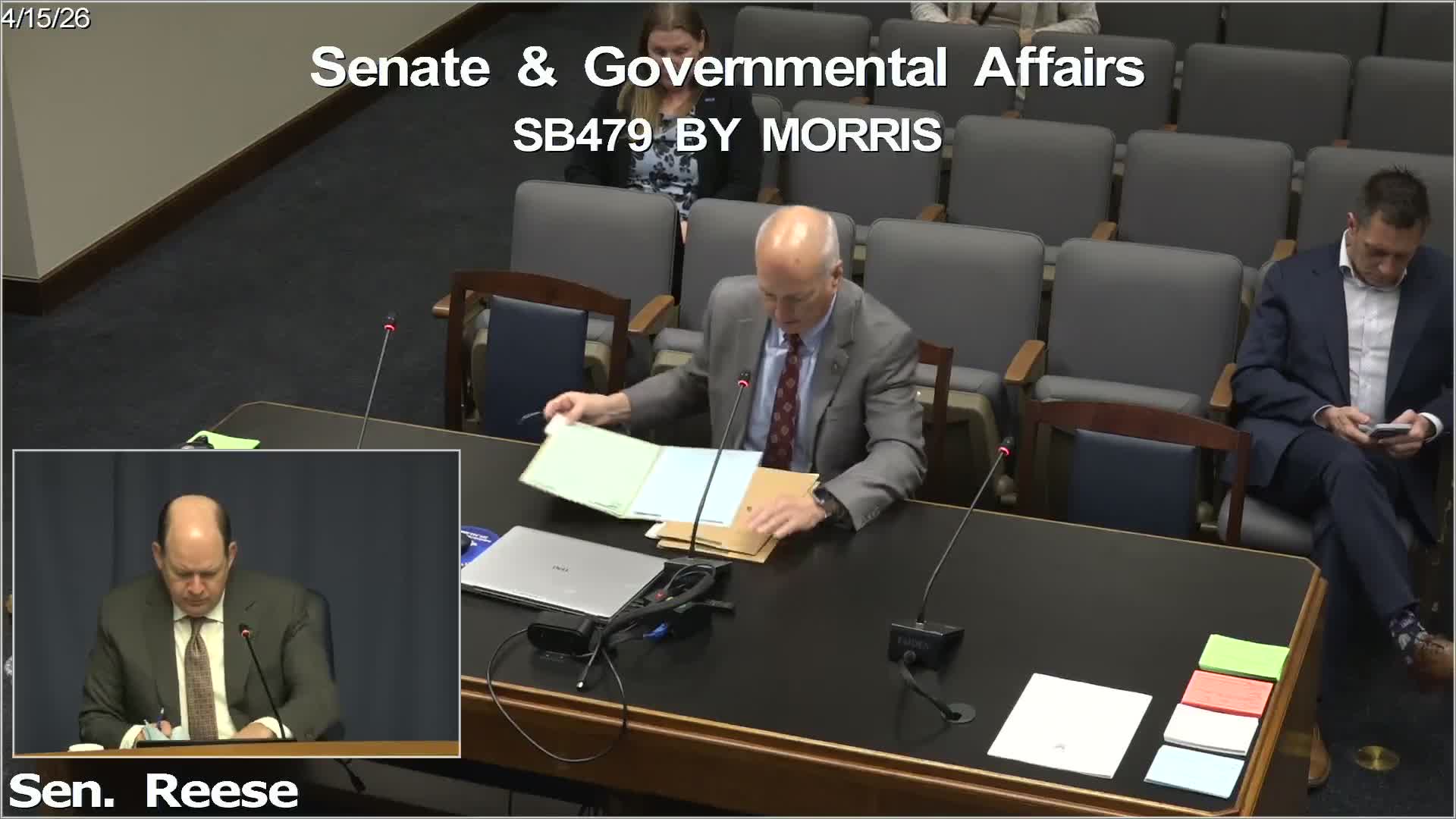
Senate Bill 4 79, a companion to a proposed constitutional amendment on judicial impeachment, was reported favorably by a 4‑3 vote after testimony from supporters and opposition by the ACLU and other groups who said statutory definitions could undermine judicial independence.
Senate Bill 4 79, offered as a companion to a proposed constitutional amendment, would spell out procedures for removal of judges by legislative address and define terms such as "gross misconduct," "malfeasance" and "incompetence." Senator Morris told the committee the bill only takes effect if the constitutional amendment passes and that it provides procedural clarity regarding notice, representation and voting thresholds.
The sponsor offered a sample definition: "Gross misconduct means any willful knowing or recklessly indifferent act or omission ... that constitutes a serious abuse or misuse of official power or authority ... that renders that official unfit to continue in office." Morris said the bill is intended to supplement the constitution and address perceived failures in existing disciplinary channels.
Opponents, including Sarah Whittington of the ACLU, warned that statutory definitions and a legislative review process risk undue legislative intrusion into judicial decision‑making and could undermine an independent judiciary. "If we call into question each and every administrative decision of a judge, we are actually undermining the independence and co‑equal branch of our democracy," Whittington told the panel.
Following debate, Senator Womack moved to report the bill to the floor. Senator Carter objected; roll call resulted in a 4‑3 majority in favor (yeas: Faizy, Miller, Reese, Womack; nays: Carter, Jenkins, Sellers). The committee recorded the bill as reported favorably.
What’s next: Because the companion constitutional amendment must pass before statutory provisions take effect, advocates and opponents said they expect continued debate on both the constitutional and implementing language.