Senate committee advances bill allowing civil suits to remove public officials after two‑thirds authorization, critics warn of vagueness and partisan risk
Loading...
Summary
The Senate Governmental Affairs Committee voted 4‑3 to send Senate Bill 4 25 to the floor with amendments. The bill would permit a civil suit to remove certain public officers for conviction, malfeasance or gross misconduct only after a two‑thirds legislative authorization; opponents warned the civil pathway could be vague and politically weaponized.
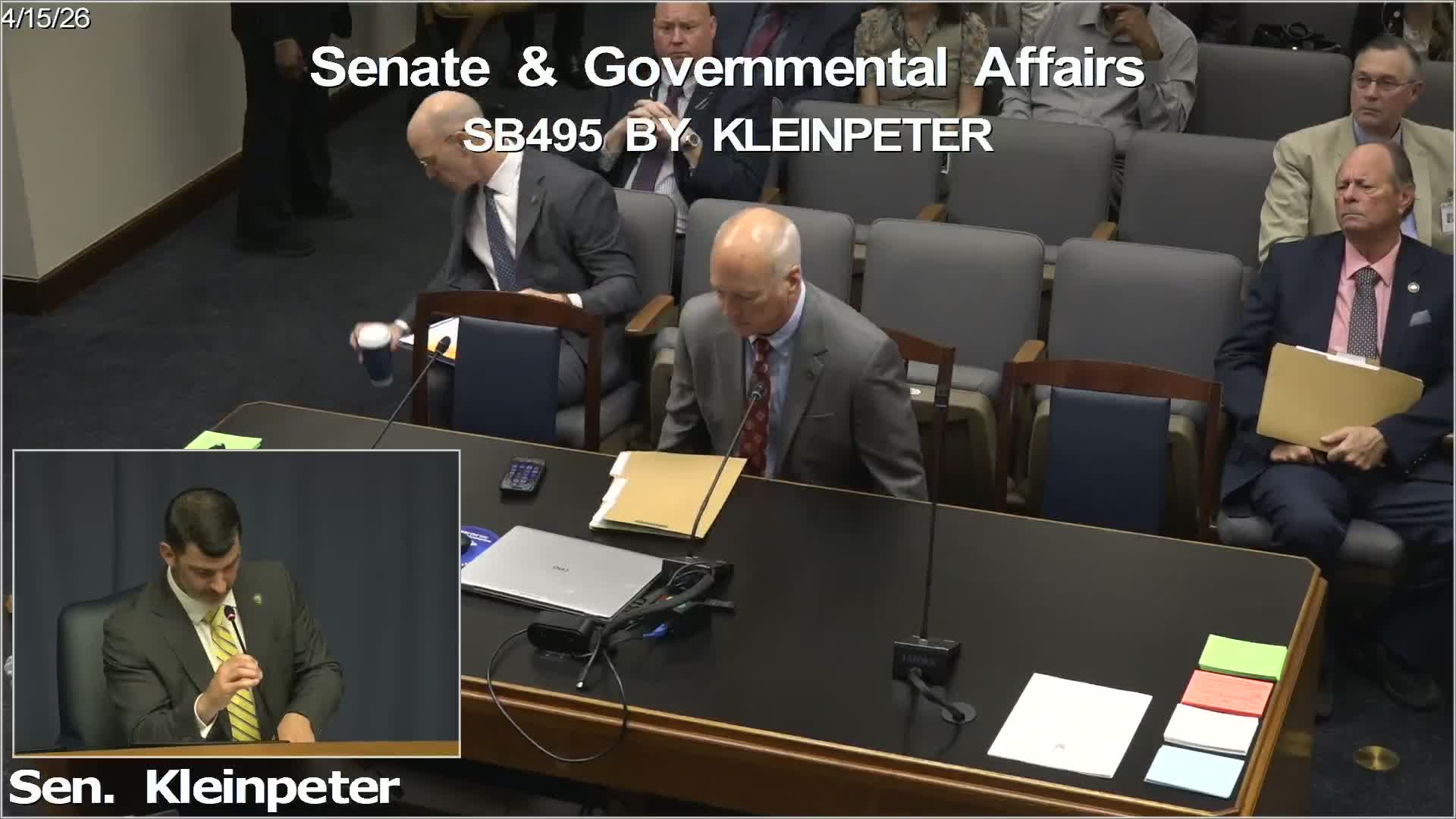
Senate Bill 4 25, presented Tuesday to the Senate Governmental Affairs Committee by Senator Morris, would implement a constitutional provision allowing civil suits to remove some public officers for conviction, commission of a crime, malfeasance or gross misconduct. Senator Morris told the committee the measure is intended to give the legislature a procedure that mirrors Article 10, Section 25 of the constitution while placing a high threshold on initiation.
"The amendment just makes it clear that the attorney general does not have the authority to institute such an action on her own without the vote of either two‑thirds of the House or two‑thirds of the Senate," Senator Morris said, explaining a committee amendment that limits the attorney general’s independent filing authority.
Supporters said the bill simply provides a civil route to enforce constitutional removal standards and requires a two‑thirds legislative vote before any suit is filed. "There’s a pretty high guardrail before that could happen," Morris said, adding that the court would determine whether the evidentiary standard for gross misconduct or malfeasance is met at trial.
Opponents, including public commenters and civil‑liberties groups, urged caution. "This bill, however, is clearly political in nature," Bruce Riley told the panel, calling the language vague and warning it could be used for partisan removals. Sarah Whittington of the ACLU of Louisiana opposed the civil pathway, arguing it lowers evidentiary thresholds and could create a "double‑jeopardy opportunity both in the civil realm and in the criminal realm."
Committee members pressed the bill's author on who would determine terms like "gross misconduct" and on venue provisions. Senator Reese offered and the committee adopted an amendment removing references to the 19th Judicial District as a special venue and instructions from counsel fixed a drafting typo changing "gross negligence" to "gross misconduct."
After debate and public testimony, Senator Reese moved that the committee report the bill to the floor with amendments. Senator Carter objected. The secretary called the roll; the motion carried on a 4‑3 vote (yeas: Faizy, Miller, Reese, Womack; nays: Carter, Jenkins, Sellers). The committee report sends SB 4 25 to the Senate floor with the adopted amendments for further consideration.
What’s next: The bill will appear on the Senate floor calendar with the committee amendments for further debate and possible floor amendments.