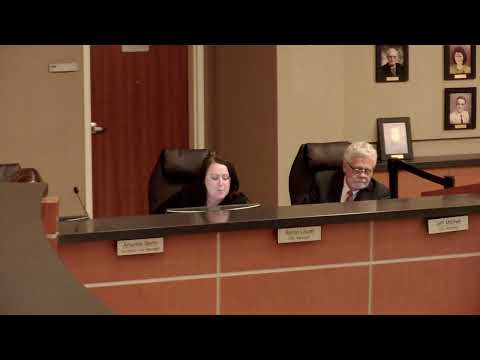
West Sacramento council adopts interim impact-fee reductions for tiny homes on wheels amid calls to study water/sewer charges
Loading...
Summary
The City Council approved an interim proportional impact-fee reduction program for tiny homes on wheels and a payment-plan option, adopting resolution 26-18. Advocates urged further engineering analysis to lower water and sewer connection fees; staff said connection fees must remain unchanged pending comprehensive nexus studies required by state law.
The West Sacramento City Council voted to adopt an interim proportional impact-fee reduction program for tiny homes on wheels, approving staffs recommendation and establishing a payment-plan option to reduce upfront costs for applicants. City planner Daniel Ruben presented the proposal and recommended the council find the action exempt from CEQA and adopt resolution 26-18.
Advocates and a tiny-home owner told the council the proposed fee structure still leaves disproportionate water and sewer connection charges that undermine affordability. Robin Davis, who said she owns a tiny home, told the council an independent plumbing analysis showed her unit requires about 25% of a typical homes water supply and produces about 31% of the wastewater, and urged the council to adopt alternative #3 to continue the item so the city could incorporate the engineering study.
"These aren't luxury units," Davis said. "This is the new starter home. If we agree this is the lowest-impact housing, then it should also have the lowest barriers to entry." Andrea Montano, a community advocate who submitted written comments, said the city's square-footage methodology is reasonable but asked staff to initiate further inquiry with outside agencies on connection fees.
Staff defended the distinction between connection fees and monthly usage. Tristan Osborne, planning manager, explained that impact and connection fees pay for system capacity and are separate from monthly usage charges. Mark Collier, the citys principal engineer, told the council that connection fees are based on meter or pipe size and the potential demand of the parcel (including landscaping), and that the city lacked a mechanism to recoup revenue if connection fees were lowered below current minimums.
Ruben and other staff said their interim approach reduces eight of the roughly ten fee categories assessed (utilities, traffic, parks, fire, police, city facilities, flood protection, and others) by converting the smallest residential fee tier to a per-square-foot rate and using multifamily EDU rates for sewer and park fees where appropriate. The program excludes fees charged by other agencies (for example, school district and regional sanitation) because West Sacramento lacks authority to set those rates.
The program also includes a payment-plan option: applicants would pay 25% up front and pay remaining balances quarterly until final permitting or fee payment is complete. Staff said the interim policy is intended to apply citywide and to be replaced by updated nexus studies and fee schedules the city must complete by 2030 under state law (AB 602).
Council members asked staff to follow up on an engineering report brought by the applicant and to provide clearer documentation explaining why connection fees were not reduced. Council discussion repeatedly distinguished the long-term nexus-study process from the interim policy being adopted; several council members said they supported the interim program while asking staff to continue reviewing the engineering analysis and to report back.
The council adopted the recommendation (resolution 26-18) after a roll-call vote; the presiding official announced the measure approved. Staff said the city will implement the program immediately and continue work on the fee nexus updates required by 2030.
The councils action creates a pathway intended to lower many development fees for tiny homes on wheels as primary dwelling units, while leaving connection charges unchanged until a comprehensive, consultant-led nexus analysis is completed.