Get Full Government Meeting Transcripts, Videos, & Alerts Forever!
Get email alerts on the Local Budget topic
No spam. Unsubscribe anytime.
First Selectwoman Emery Giugones explains mill-rate changes and $1.8 million vehicle-tax shortfall
Summary
First Selectwoman Emery Giugones said a recent property reassessment and state changes to motor-vehicle valuation reduced vehicle tax revenue by about $1.8 million, forcing the town to raise its proposed mill rate modestly and consider a 0% budget while trimming capital and seeking grant funding.
First Selectwoman Emery Giugones said Friday from her office that changes to state motor-vehicle tax calculations and a recent property revaluation have forced the town to adjust its proposed mill rate and budget.
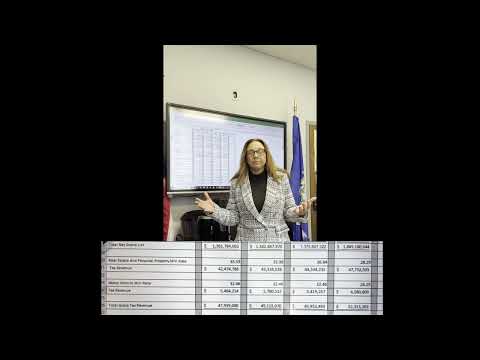
Giugones said the town's motor-vehicle tax revenue fell after state directives and reassessment effects, leaving the town with a roughly $1.8 million decline in vehicle tax receipts. "Basically, we lost $1,800,000 in revenue from our motor vehicles," she said, and added that the shortfall is one reason the town's draft mill rate moved to 28.29 from an earlier starting point of 27.12 in her calculations.
Why it matters: the state is changing how it values vehicles for local taxation, moving away from Blue Book values toward MSRP-based values and taxing vehicles at a declining percentage of MSRP (noted by Giugones as 90%, 85% and a 5-point decline each subsequent year). She warned that as vehicle taxes phase down, those revenues will be shifted onto homeowners unless offset by other funds.
Giugones described the reassessment that followed the town's revaluation: some homes increased by 40% to 60% over the past four years, creating apparent disparities in individual tax bills. She said reassessment can lower the motor-vehicle mill rate and cited the state's motor-vehicle mill-rate cap (noted in her remarks as 32.46) compared with the town's previous motor-vehicle rate (36.84), which affected state support and local calculations.
On revenue figures, Giugones presented totals showing tax revenue moving from about $49.95 million to roughly $52.31 million in the figures she displayed, and said motor-vehicle receipts moved to about $4.58 million under the new mill-rate calculations. She characterized the difference as a revenue loss of about $1.8 million for vehicle taxes.
Budget options and next steps: Giugones said she had trimmed proposed increases several times (she listed drafts at 2.4%, 2.1% and 1.9%) and is now presenting a 0% flat budget to the Board of Finance at the coming Monday/Tuesday meeting. "It's the Board of Finance's budget," Giugones said, noting that after her presentation the board will take the lead. She warned that a flat budget may require cutting or postponing some capital projects or services but said the town will seek grants and other funding to fill gaps.
Giugones also said the town used ARPA funds in recent years to pay for capital work and that contingency funding was reduced to keep taxes low; she expects to slowly rebuild capital reserves. She gave a working rule of thumb for road work, saying repaving a mile of road costs about $1 million, and cautioned that cutting a single employee would not produce substantial road improvements.
What's next: Giugones said she is waiting for final contract bids, insurance numbers and union-negotiation results before finalizing figures. She said she will continue presenting adjustments to the Board of Finance up to the town meeting in April, where the budget will be voted.
Quotes, attribution and process notes: all direct remarks in this article are attributed to Emery Giugones, First Selectwoman, as she identified herself in the briefing. When Giugones cited numeric figures or policy changes she attributed those to the state's actions or the town's internal budget calculations; the article does not infer additional statutory detail beyond Giugones's statements.