Get Full Government Meeting Transcripts, Videos, & Alerts Forever!
Get email alerts on the Survivor Justice topic
No spam. Unsubscribe anytime.
Senate advances substitute of clemency/resentencing bill for survivors after lengthy debate
Summary
Senate Committee on Judiciary C reported a substitute to SB 91 aimed at earlier clemency eligibility and sentencing consideration for survivors of trafficking and domestic abuse; the substitute drew support for giving survivors access to clemency but widespread testimony from advocates said the substitute is a partial fix and urged further reform and process safeguards.
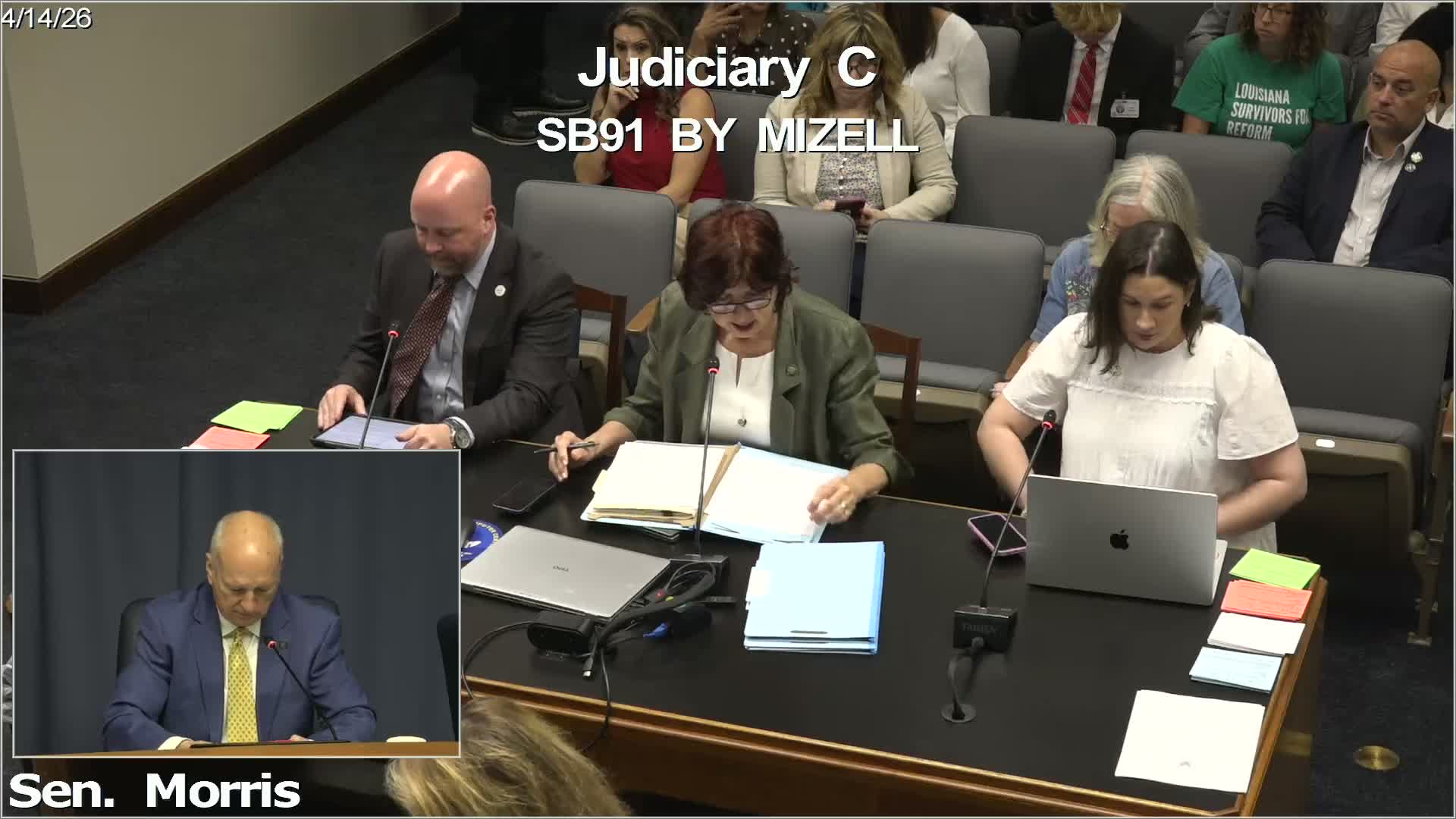
Senate Bill 91 was presented as a substitute after negotiations with prosecutors and the governor’s office. Sponsor Senator Mizell said the substitute strikes a compromise to allow certain survivors of trafficking, domestic abuse or related victimization to apply earlier for clemency or commutation and to provide clearer guidance to courts on how to weigh victimization at sentencing.
Francis Abbott, executive director of the Board of Pardons and Committee on Parole, gave data on applications and hearings under the current administration: he said the board had received dozens of applications involving female applicants and that the governor has signed "a little over 30" clemency recommendations in the past year; he also said the board has limited prior tracking specific to survivor-driven applications and that more data collection is needed.
Survivor advocates, legal clinics and national organizations urged a more robust remedy than the substitute: Tulane Law Clinic faculty, the Vera Institute, the Southern Poverty Law Center, survivor-advocacy groups and others testified that clemency alone is an imperfect administrative fix, cited limits of short parole‑board hearings and pressed for court-based remedies and clearer rules to ensure expert testimony and adequate time for survivor context.
Zach Daniels of the Louisiana District Attorneys Association said the substitute's sentencing provisions were designed to require courts to consider relevant mitigating evidence while preserving relevance standards and protections in pre-sentence investigations; he argued the change would standardize consideration rather than remove a judge's discretion.
Committee members debated the tradeoffs and asked the sponsor to continue discussions; the committee voted to report the substitute bill by voice vote, with multiple advocates urging further amendments on the floor to make the remedy more meaningful and to address procedural limitations in clemency hearings.