Louisiana committee advances bill making dissemination and possession of AI-generated sexual images of minors a felony
Loading...
Summary
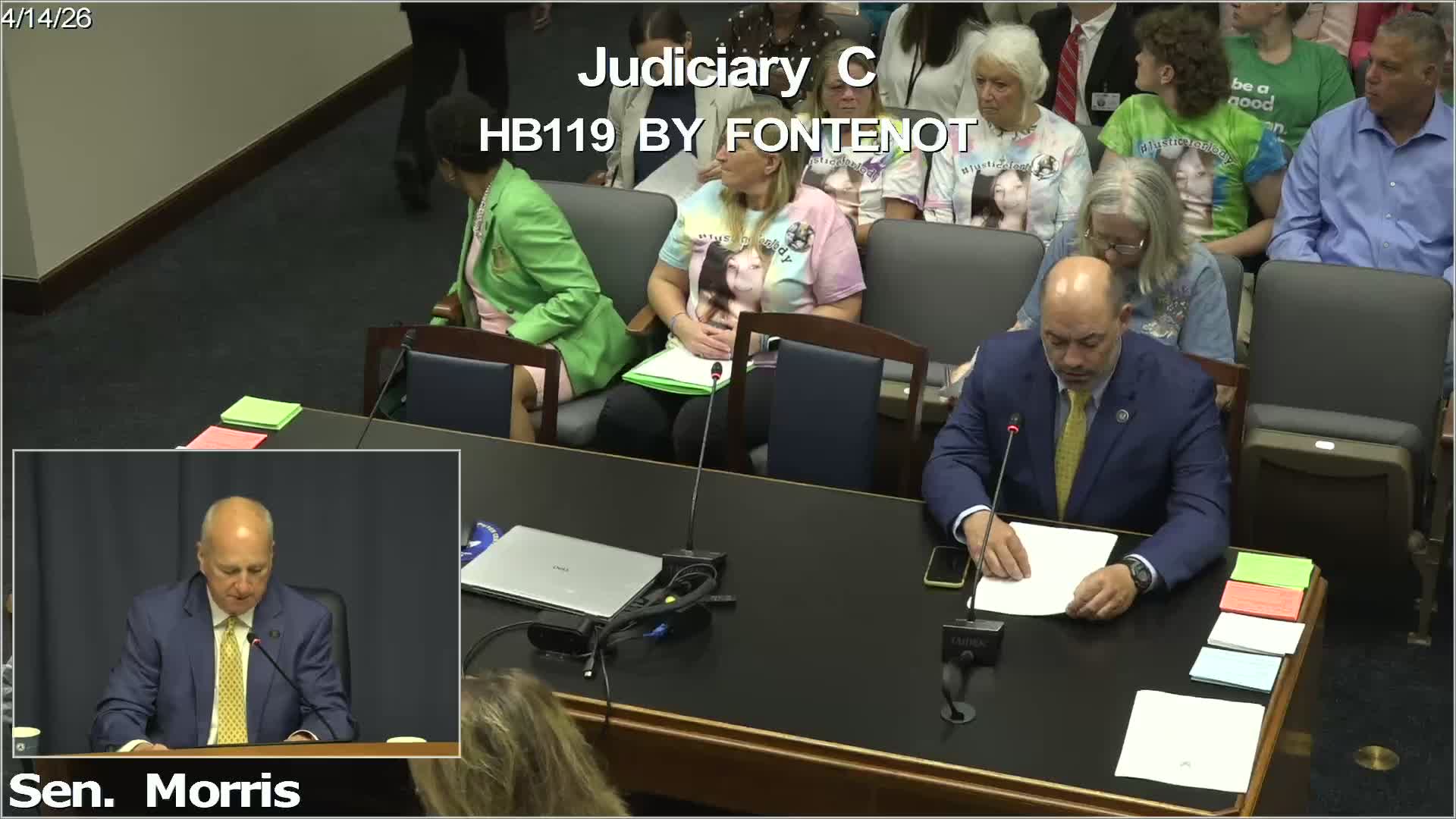
The Senate Judiciary C committee advanced House Bill 119 after survivor testimony and debate over juvenile handling; the measure elevates dissemination of AI-created child sexual imagery to a felony, creates an offense for possession of AI-created imagery of a minor, and calls for school training. Lawmakers and advocates discussed protecting children while avoiding overly punitive treatment of juveniles.
House Bill 119, authored by a member of the house and carried to the Senate committee, would raise to a felony the dissemination of artificially generated sexual images that depict a person under 17 and create a standalone possession offense for AI-generated imagery of minors.
Representative Fontenot told the committee the bill was prompted by a highly publicized school incident in his district and by a broader concern that the law lags behind new technology. "I changed the penalty from a misdemeanor to a felony for disseminating of an artificial intelligence photograph if it depicts a person under the age of 17," he said in committee remarks.
Audrey Wascom, a Baton Rouge resident and survivor-advocate who testified in support, described long-term harms from child sexual-abuse material and why AI-created images cause similar lasting damage: "Children whose likeness is used to create AI CSAM may not be physically touched, but in many ways the long term harm is the same," she said, adding that survivors and their families face ongoing safety and privacy risks.
Megan Garvey, speaking for the Louisiana Association of Criminal Defense Lawyers, urged technical changes to keep cases involving children in the juvenile-family system when appropriate. She recommended amending cross-references so that younger children could be addressed under the FINS (family-in-need-of-services) program rather than the delinquency code to avoid unnecessarily punitive prosecutions of minors who do not appreciate the consequences of their actions.
Lawmakers pressed for clarity on intent and implementation. Committee members noted HB 119 includes school-based education mandates and language allowing district attorneys discretion to pursue prosecution under adult or juvenile statutes; the sponsor said he would work with the DA Association to refine the drafting.
The committee reported the bill favorably for further consideration.
The next step is consideration on the Senate floor and potential technical amendments to ensure juveniles who share or unwittingly possess material can be routed to educational or juvenile-court remedies rather than automatic adult criminal prosecution.