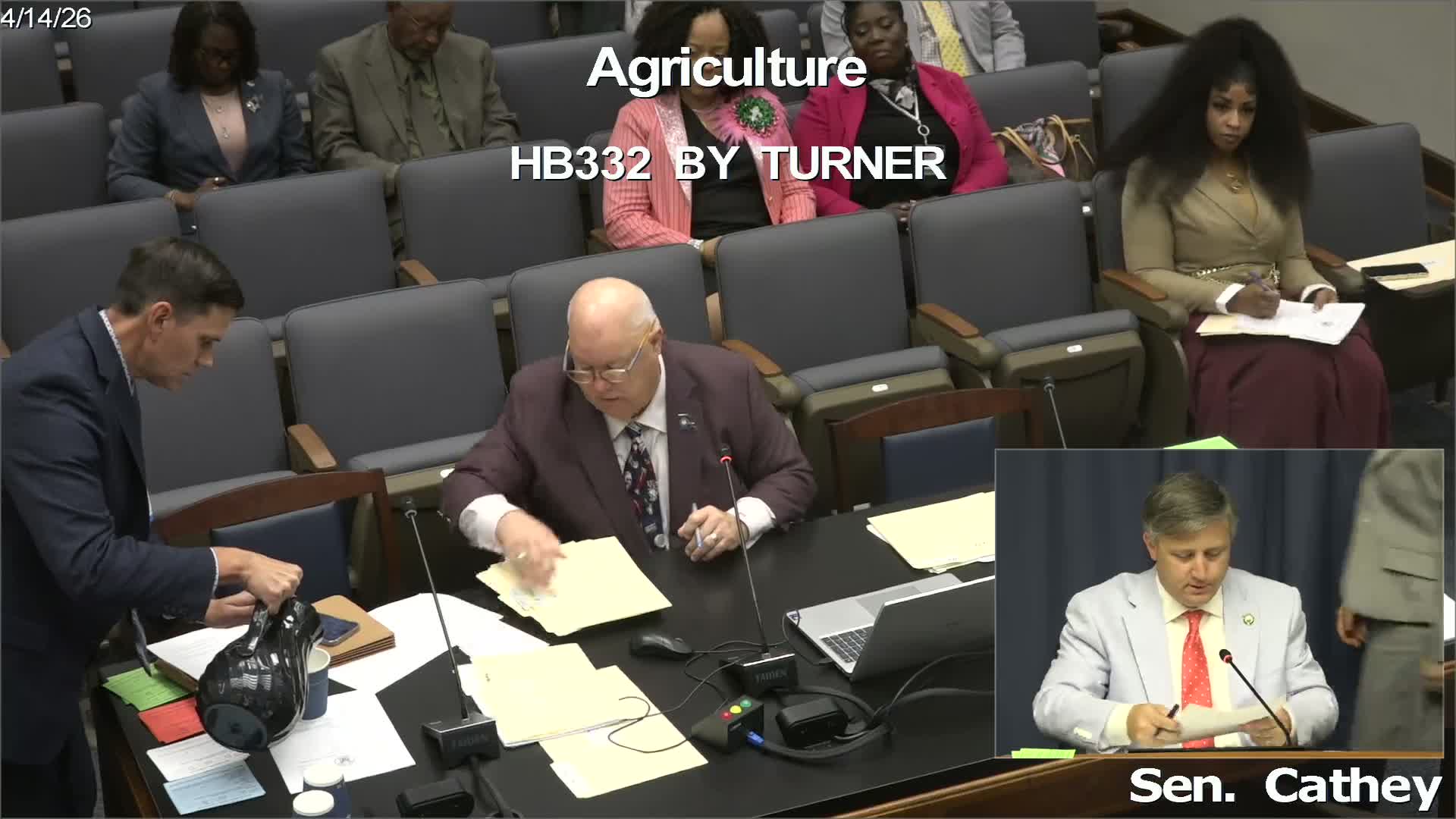
Committee backs higher cap and assessment for Cotton and Grain Indemnity Fund
Loading...
Summary
The Senate agriculture committee voted to report House Bills 344 and 370 favorably, increasing the fund cap from $12 million to $25 million and raising the assessment rate so annual collections would roughly double to about $1.25 million, measures sponsors said will protect farmers from larger broker defaults.
The Senate Committee on Agriculture, Forestry, Aquaculture and Rural Development on April 14 reported two companion House bills aimed at strengthening the Cotton and Grain Indemnity Fund. Commissioner Strain told the committee House Bill 344 would raise the fund cap at the Agriculture Finance Authority from $12,000,000 to $25,000,000, and House Bill 370 would increase the statutory assessment that finances the fund.
"We've had three defaults since the inception of this legislation," Commissioner Strain said, describing earlier losses and the growing size of claims. He told the panel the fund was tapped for roughly $6,000,000 in a recent Hansen Mueller default and that the measures together would help ensure the fund can cover larger claims without jeopardizing growers.
Strain told lawmakers the fund is financed by an assessment paid by farmers and is not backed by the state's full faith and credit; the bills seek to raise the maximum reserve and the assessment to improve solvency. He said the current assessment yields an average of about $626,000 a year and that the proposed rate would increase receipts to approximately $1,252,000 annually.
Supporters framed the bills as industry-driven protections. Strain said the proposals were developed with the Cotton and Grain Association, Farm Bureau and commodity groups and noted regulators have explored reinsurance but found limited market options.
The committee moved both bills forward by voice vote. The record shows Senator Wheat moved to report House Bill 344 favorably; the committee also reported House Bill 370 favorably.
What happens next: the bills will be placed on the Senate calendar for further consideration. The committee did not record a roll-call tally in the transcript; motions were adopted without recorded objections during the hearing.