Get Full Government Meeting Transcripts, Videos, & Alerts Forever!
Get email alerts on the Asset Management topic
No spam. Unsubscribe anytime.
Schneider Geospatial demos Simplicity fleet and asset-management tools to Iowa county engineers
Summary
At an ISAC webinar, Schneider Geospatial showcased Simplicity’s fleet, reporting and core work‑order tools for county engineering and secondary‑roads staff, highlighting automated mileage integrations, parts tracking, and an estimated multi‑week setup timeline.
At an ISAC webinar, Schneider Geospatial representatives demonstrated Simplicity, the company’s asset‑management suite, telling county engineering and secondary‑roads staff how the platform can centralize vehicle and road‑asset records, automate preventive maintenance schedules and produce reports to support budgeting.
Ryan Smith, Schneider Geospatial’s senior account executive for Iowa, opened the presentation and said the webinar targeted county engineering and secondary‑roads offices. He framed the problem in straightforward terms: agencies face aging assets, tighter budgets and staffing shortages that make efficient recordkeeping and maintenance planning more important. "Our focus is taking our different platforms and helping liberate that location based data, to help out our communities," Smith said.
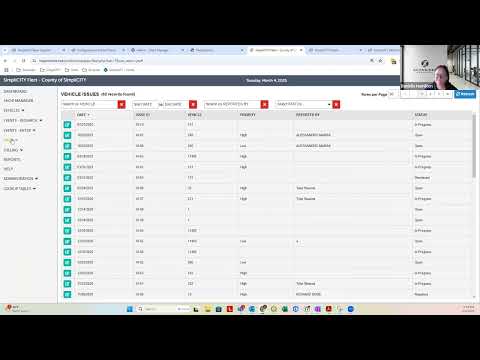
Product specialist Danielle Hamilton led a live demo of the fleet module. She showed a dashboard that surfaces repairs in progress, preventative maintenance (PMAs), open issues and fuel‑spending summaries. Mechanics and shop managers see different interfaces: shop managers can assign work, and mechanics receive only assigned tasks. "So this dashboard would be kind of that tool for the county engineer or other administrative staff to get a quick high level look at what's going on with their fleet department," Hamilton said.
Hamilton described how the system captures repair records, labor time and parts costs so agencies can calculate the total cost per repair or vehicle. The fleet module can track state inspections and send reminders; it can also integrate with third‑party fueling vendors or telematics providers so mileage and engine‑hours feed into preventative maintenance schedules automatically. Hamilton said parts can be tracked either in a simple list or with a full inventory and reorder alerts.
On implementation, Hamilton said agencies typically begin by loading a vehicle list (VIN, year, make, model), then set up preventative‑maintenance profiles and add employees. Asked about time to set up Fleet, she said, "As long as we have some data ready to load, it's pretty quick. I would say 12 weeks, maybe less than that," noting that creating detailed maintenance profiles is the most time‑intensive step.
Smith also highlighted reporting features that agencies can save and reuse — state‑inspection reports, vehicle‑inventory summaries, lists of issues reported by staff and preventative‑maintenance rollups. Hamilton noted reports include hyperlinks to open the related vehicle or asset record directly for faster follow‑up.
The presenters closed by answering audience questions about integrations and export options and reminded attendees the webinar recording would be posted on the ISAC website. Smith said he and Hamilton would be available for follow‑up conversations at the ISAC spring conference next week.
The session ended with presenters directing attendees to the ISAC webinars page for the recording and with contact information for those interested in a deeper demo or deployment discussion.