Lifetime Citizen Portal Access — AI Briefings, Alerts & Unlimited Follows
Jane Golden, in final council budget testimony, urges sustained funding for Mural Arts’ workforce and restoration work
Loading...
Summary
Jane Golden used her last budget testimony to ask Philadelphia City Council for about $1.9 million in FY27 operating support to preserve murals, expand community murals, and sustain restorative‑justice and workforce programs that she said serve returning citizens and young people.
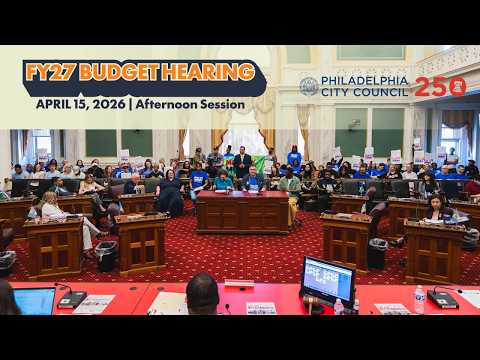
Jane Golden, executive director of the Mural Arts Program, told the Philadelphia City Council Committee of the Whole that this budget hearing would be her final testimony after four decades leading the program and asked council to maintain and increase city support to preserve the program’s work and staff.
Golden described Mural Arts as “a village” of artists, residents, community groups and city agencies that has produced more than 4,000 murals across every council district and runs a slate of programs she framed as public‑safety and workforce investments. She said the restorative‑justice and reentry workforce programs serve at least 70 returning citizens annually and that roughly 80% of program participants move on to jobs, training or education.
Golden urged council to keep the organization “close” to the city and reiterated a FY27 operating request of about $1,900,000 to cover four core buckets: community murals, restorations, restorative‑justice programming and the Tacony Lab neighborhood hub. “If we choose not to invest in Mural Arts,” she said, “what we’re ultimately saying is that the people who put their life and their voice on the line…will choose to leave.”
Council members highlighted specific projects Golden described, including the Tacony Lab as a local cultural hub, the “Color Me Back” same‑day work program and the Heart of Kensington Creates corridor, which will include 12 major murals and 400 resident‑made “gusset” pieces for SEPTA L‑line poles pending SEPTA approval. Nadia Malik, director of the program’s partnership with the Department of Behavioral Health, told the committee the project has produced strong neighborhood engagement and that about 350 of the planned 400 gusset panels are complete.
Members pressed Mural Arts for details on a restoration backlog Gold said includes roughly 195 murals needing conservation. Golden said restoration costs vary widely—“from a couple thousand dollars to much more major” depending on building condition and that deferred maintenance risks losing murals and their cultural value. She said the restoration portfolio is included in the $1.9 million request.
Mural Arts staff also provided programmatic metrics: the organization employs about 250 artists annually, serves more than 2,600 young people in arts education, completes 80–100 public art projects a year, performs more than 20 mural restorations annually and carries out roughly 100 graffiti remediations.
Participants with Color Me Back described the program’s impact in their own words. One participant said the program helped in recovery after rehab, provided paid work and helped build routines; another said she had advanced from participant to assistant artist and is now working on city murals.
Golden closed by praising Mural Arts staff and naming her executive team members she said would steward the organization forward. The committee recessed without taking a funding vote; council members repeated their support and said they would press the administration in negotiations to secure additional funds.