Senate committee hears bill to add slow-onset disasters to Alaska's disaster law
Loading...
Summary
SB 195 would expand the Alaska Disaster Act to define "slow onset" disasters (permafrost thaw, coastal erosion, rising sea level, drought, biodiversity loss) and require relevant expertise on state and local planning committees; committee set the bill aside after the first hearing.
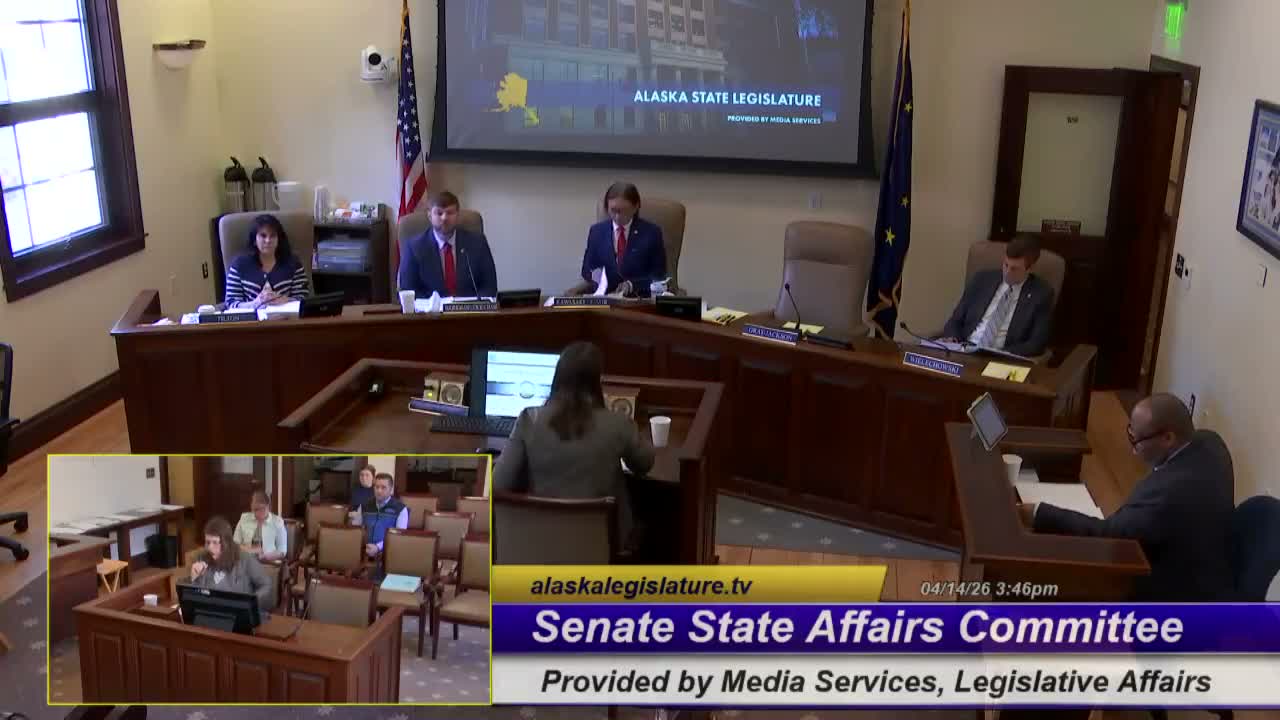
The Senate State Affairs Committee held a first hearing April 14 on SB 195, legislation that would amend the Alaska Disaster Act to include slow-onset disasters and require planning and mitigation attention earlier in the process.
Janet Calhoun, staff to Senator Kawasaki, read the sponsor statement: "Senate bill 195 seeks to update the Alaska disaster act to ensure that our state's disaster plans consider and recognize this type of disaster in statute, ensuring the right expertise is present at each level of planning, and that funds will be available to mitigate and handle slow onset disasters." She told the committee slow-onset events identified for inclusion range from melting permafrost and coastal erosion to long-term pollution and climate-induced displacement.
Calhoun cited research and supporting documents in the committee packet, saying one village is facing relocation costs in the neighborhood of $230,000,000 because permafrost melt has undermined foundations, and that roughly 144 native villages may need relocation because of infrastructure damage linked to slow-onset processes. Calhoun said including slow-onset disasters in Title 26 would allow the state to plan and mitigate earlier rather than react after damage occurs.
Jennica Hoone, staff to Senator Kawasaki, clarified the bill would not change building codes. "I do not think this bill would address building codes," she said, adding that the measure would add experts such as climatologists to the Alaska State Emergency Response Commission and local emergency planning committees so those bodies could recommend community-specific planning, including restricting rebuilding in disaster-prone areas when appropriate.
No public testimony was offered and the committee set SB 195 aside for a future hearing.
What happens next: The bill will return for further committee consideration; proponents say it aims to direct mitigation resources earlier, while details on funding sources and program design will be explored in follow-up hearings.