Committee advances bill to license radiologist assistants, adopts jurisdictional clarification
Loading...
Summary
The House Health & Welfare Committee reported HB 949 favorably with amendments after testimony from radiology professionals and the State Board of Medical Examiners; members added language clarifying that the radiology technology board may not regulate private radiology technologists.
The House Health & Welfare Committee on the floor advanced House Bill 949 on a voice vote after adopting technical and jurisdictional amendments.
Representative Coats, the bill sponsor, said the measure is aimed at "access to care and keeping up with the workforce," describing radiologist assistants (RAs) as"highly trained professionals with a master's level education" who extend a radiologist's capacity without diagnosing images or prescribing care. He told the committee that many rural hospitals rely on a single radiologist, creating delays in imaging and that RAs — regulated in roughly 35 states, he said — can safely expand capacity under supervision.
Supporters from the imaging profession told the committee the legislation would align Louisiana with other states and preserve supervision and safety requirements. Jason Smith, a radiologist assistant from West Monroe, described RA education, national certification and clinical training and urged members to "support HB 949" to improve access in underserved areas. Allison Puente, an American Society of Radiologic Technologists advocacy representative, cited a roughly 10% projected shortage of radiologist physicians by 2034 and noted recent CMS rules allowing virtual direct supervision.
The committee also addressed a contentious jurisdictional question. Vincent Collotta Jr., executive director of the State Board of Medical Examiners, warned that inserting language referencing the medical board into the radiology technology statute could create conflicts between boards. After extended questions and drafting changes, members adopted an amendment stating the radiology technology board "shall not promulgate or adopt rules regulating private radiological technologists, including but not limited to educational and credentialing requirements and practice and supervision standards." Committee members said the wording was intended to make clear each board retains its separate rulemaking authority.
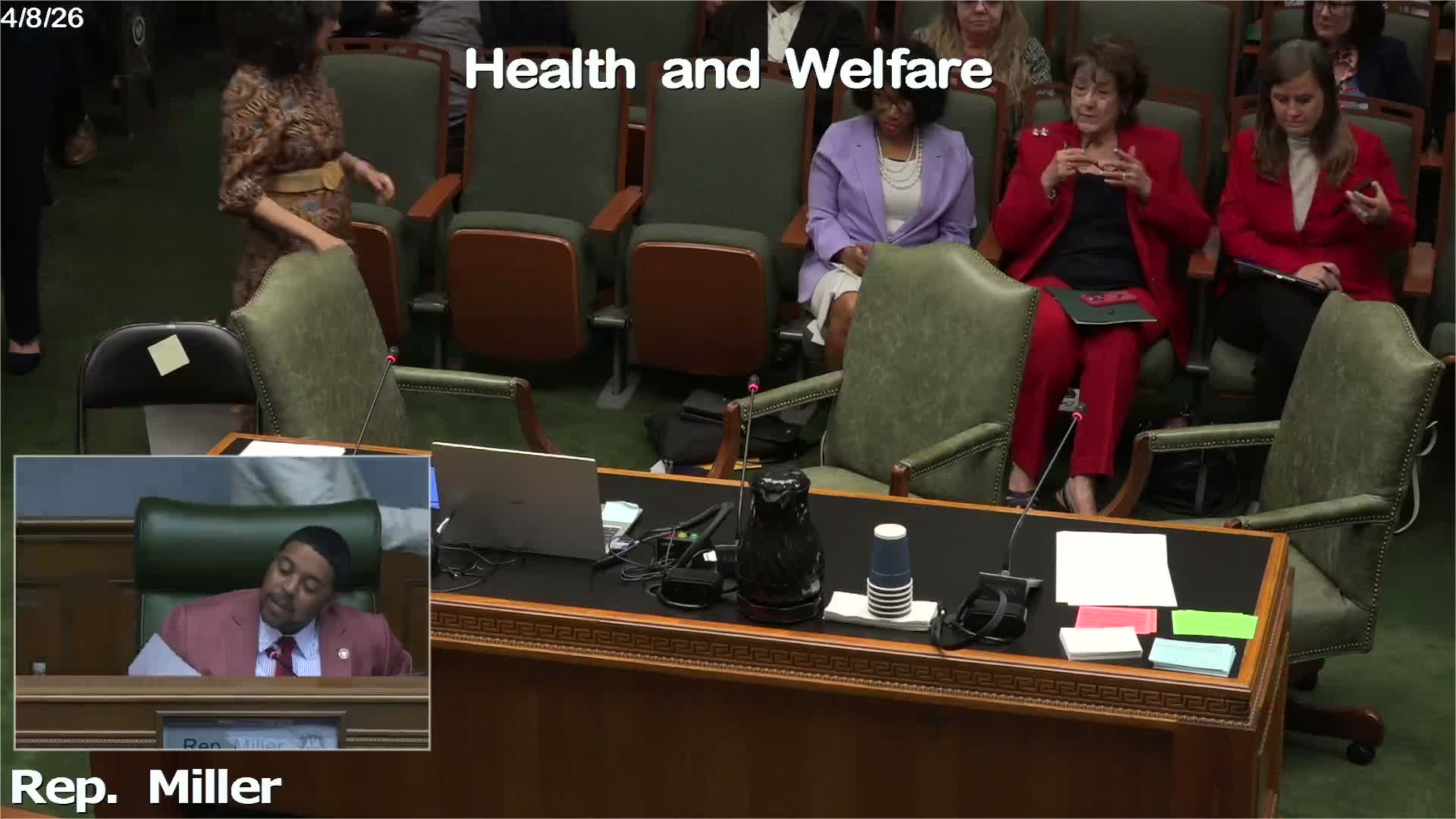
After debate and technical edits, Chair Miller moved to report the bill favorably with the adopted amendments. There were no objections and HB 949 was reported from committee favorably with amendments.
The committee next business moved on; the bill will proceed through the legislative process with the committee's adopted statutory language defining the limits of the radiology technology board's authority.