Get Full Government Meeting Transcripts, Videos, & Alerts Forever!
Get email alerts on the Events Policy topic
No spam. Unsubscribe anytime.
Sierra Madre council directs public review after nonprofits voice alarm over proposed special-events fees
Summary
After hours of public comment from volunteers and nonprofit leaders warning that new cost-recovery rules would make longstanding community fundraisers unworkable, the council directed the Community Services Commission to hold public meetings and recommend criteria for classifying events and who should receive city sponsorship or fee waivers.
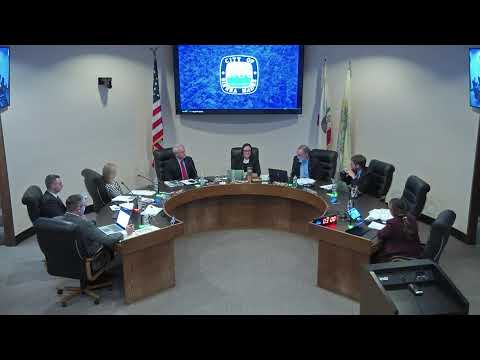
The Sierra Madre City Council on April 14 stopped short of adopting a final special-events fee policy after extensive public comment from local nonprofits, event organizers and residents who said full cost recovery would threaten volunteer-run traditions.
Ted Taggart, library and community services supervisor, told the council the draft policy would establish three event categories (city-produced, city-sponsored, applicant-driven), standardize application timelines, improve tracking of staff time and reduce routine fee waivers. Taggart said the city currently absorbs roughly $78,000 annually in event-related costs and staff proposed moving applicant-driven events to full cost recovery while applying a two-level sponsorship review for larger city financial commitments.
More than a dozen speakers representing the Sierra Madre Events Committee, Friends of the Library, Historical Society, youth sports and other volunteer organizations warned that the proposed charges would make signature events — including the Wisteria Festival, art fair and fundraising dinners — unprofitable or force them to cancel. Friends of the Library president Jeanne Martin said the art fair helps fund $55,000 in annual library programming and that higher fees would “erode some of the characteristics that make Sierra Madre so special.” Historical Society president Diane Sands and others said many groups rely on small net proceeds and volunteer labor and could not absorb the additional costs.
Council members praised volunteerism while noting the city faces a structural deficit and asked for a more collaborative path forward. After discussion, Council member Kelly Kriebbs moved and the council seconded a direction asking the Community Services Commission to hold appropriately noticed public meetings with community organizations and advise the council about event categorization and how each category should be treated regarding city support and monetary help. The motion passed by voice vote.
Why it matters: The policy would shift long-standing practices toward formal cost recovery and reduce routine fee waivers; nonprofit leaders said that change risks extinguishing events that drive tourism and downtown activity. Councilmembers framed the decision as an opportunity to formalize MOUs and craft tailored solutions for different event types, not as an immediate imposition of fees.
What’s next: The Community Services Commission will schedule public meetings to gather input and return recommendations on criteria for 'city-sponsored' status, fee-waiver policy and possible MOU frameworks to preserve fundraising events while addressing city fiscal pressures.