Lifetime Citizen Portal Access — AI Briefings, Alerts & Unlimited Follows
Committee approves open‑meetings bill that would tighten posting, minutes and basic training requirements
Loading...
Summary
HB1049 would require clearer public‑meeting notices, improved minute content (including makers/seconders and vote records on request) and basic awareness training or legal counsel for meeting chairs; supporters said it protects civic engagement, while county and parish associations warned of costs to small public bodies. The committee reported the bill favorable.
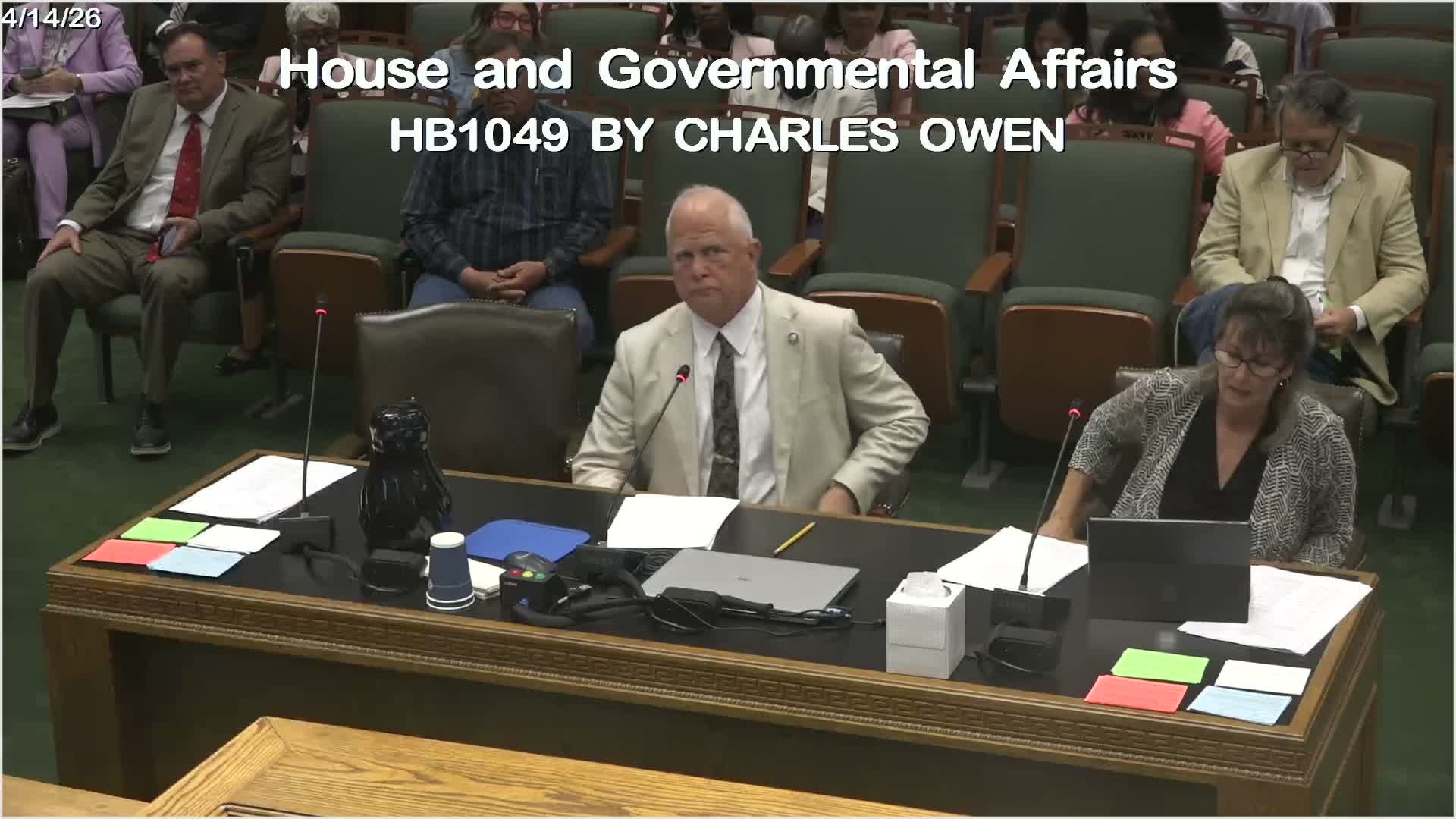
Representative Owen presented House Bill 1049 as a good‑government package to clarify how meeting notices are posted, improve minutes by recording makers and seconders and provide draft minutes in a timely way, and ensure that the presiding officer has basic training or legal counsel available.
Nancy Tower, a longtime open‑meetings advocate from Beauregard Parish, told the committee small local boards often do not know the law exists and would benefit from simple awareness training. "People serve on the boards. They sit down for their first meeting. There's no orientation. There's no overview," Tower said, urging a low‑cost approach to training.
The Police Jury Association cautioned about costs to small entities for legal counsel, website and minute‑publication requirements. Debbie Hinton, Executive Counsel of the Police Jury Association, estimated incremental annual compliance costs in the thousands for some small public bodies and urged care to avoid imposing burdens on already underresourced local districts.
Committee members discussed scope, enforcement and technical fixes (for example, whether draft minutes must be posted and how to account for publishing costs). The sponsor said the bill does not attempt to change existing enforcement mechanisms but aims to reduce inadvertent violations by empowering meeting chairs with accessible guidance or counsel.
After discussion and a period for testimony, the committee voted to report HB1049 favorable. Members signaled interest in refining technical language and scope before floor consideration.
The debate highlighted a common tension: advocates for transparency sought stronger, consistent practices across diverse local entities, while parish and municipal representatives worried about unbudgeted costs for small boards.