Lifetime Citizen Portal Access — AI Briefings, Alerts & Unlimited Follows
Committee advances bill to shield intercollegiate revenue-sharing details, sponsor cites athlete safety
Loading...
Summary
The House Government Affairs committee advanced HB608, a bill to exempt intercollegiate athletics revenue-sharing documents from public-records disclosure, with supporters citing safety and recruitment concerns and opponents warning it could hide information about public funds; the committee reported the bill favorable as amended (9–3).
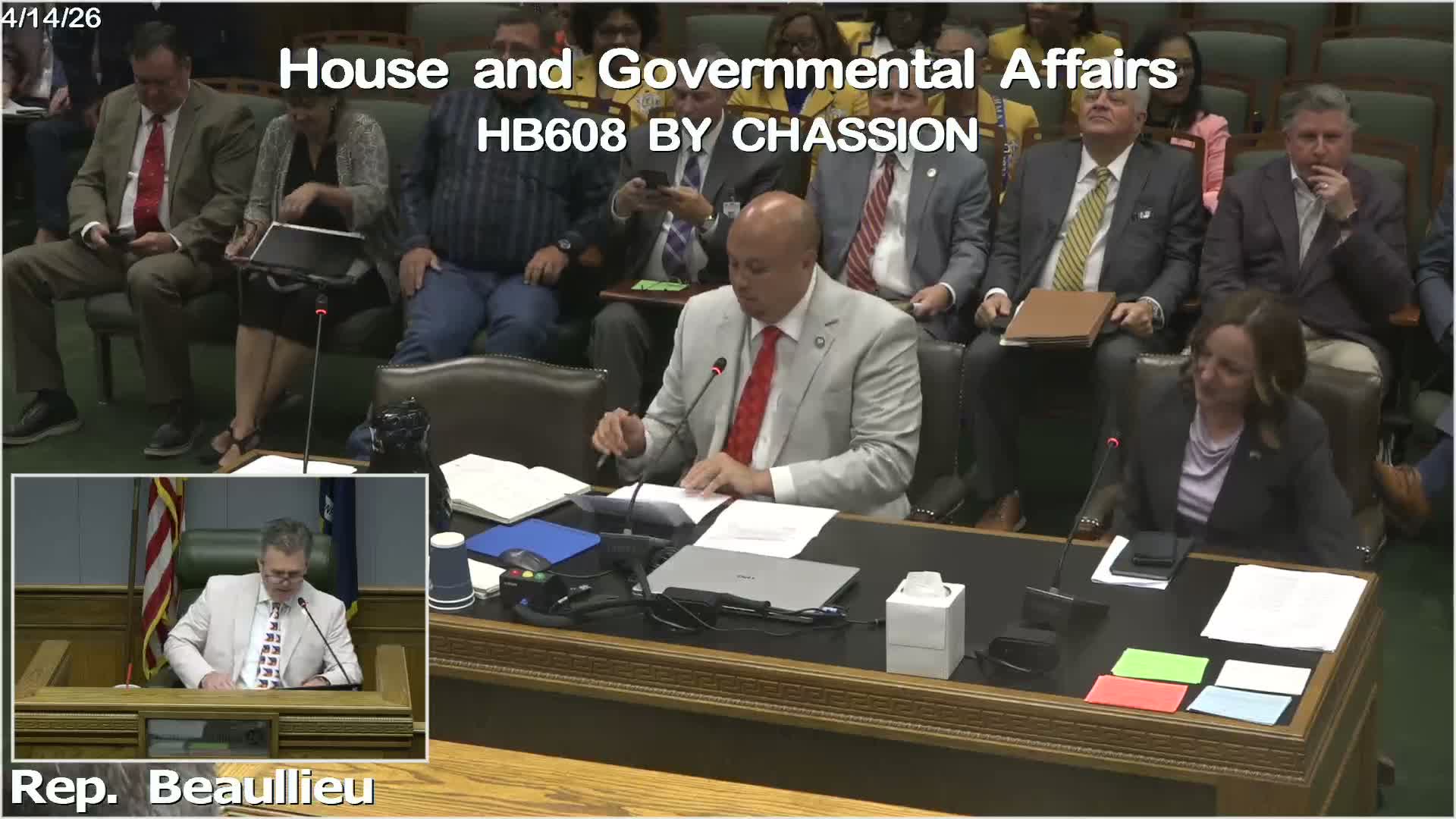
Representative Chastain asked the House Government Affairs committee to report House Bill 608 favorably after presenting legislation that would create a public‑records exception for documents tied to intercollegiate athletics revenue‑sharing programs.
The bill’s sponsor said the measure is intended to protect student‑athletes from harassment and to prevent rival programs from using disclosed pay information to “poach” players. "No 1 no 1 should specifically know that a certain athlete is making 50,000, let alone 500,000," Representative Chastain said, arguing that disclosure can endanger players and harm team cohesion.
Proponents at the table, including Julie Cromer of LSU, told the committee that privacy for allocations and individual amounts helps protect students and campus safety. "My name is Julie Cromer. I'm the executive deputy athletics director at LSU and here to provide support to the room," Cromer said when identifying herself for the record.
Opponents — including the Louisiana Press Association and the Public Affairs Research Council of Louisiana — said the exemption would limit citizens’ ability to track how public dollars are used. Scott Sternberg of the press association warned that “exempting the total amount of revenue given to an athletics department means that we will no longer know how much each university…is spending,” and Dr. Steven Procopio of the Public Affairs Research Council said, "It is tax dollars going to these purposes and I can't see any reason why if tax dollars touches part of this that the public does not get the ability to know."
Committee members pressed on several legal and oversight points: how the bill distinguishes revenue‑share funds from private NIL contracts; whether the legislative auditor retains access for audits; and how the proposal would interact with Title IX reporting obligations. Supporters said current law already exempts certain athlete contracts and emphasized that courts or parties could seek unsealing where required.
After adopting a technical amendment package earlier in the hearing and discussing possible refinements with media stakeholders, the committee voted to report HB608 favorable as amended by a roll call of nine yeas and three nays. The bill will next go to the House floor for consideration.
The committee record shows sustained debate over the balance between athlete safety and fiscal transparency; proponents urged narrow, safety‑focused protections, while press and transparency advocates urged clearer guardrails to preserve public oversight.