House transportation panel advances bill to create Louisiana State Infrastructure Bank
Loading...
Summary
The House Transportation Committee reported HB 11 57 favorably after testimony from the transportation secretary and business leaders that a state infrastructure bank would help accelerate roads, bridges and port projects by leveraging federal, local and private funds.
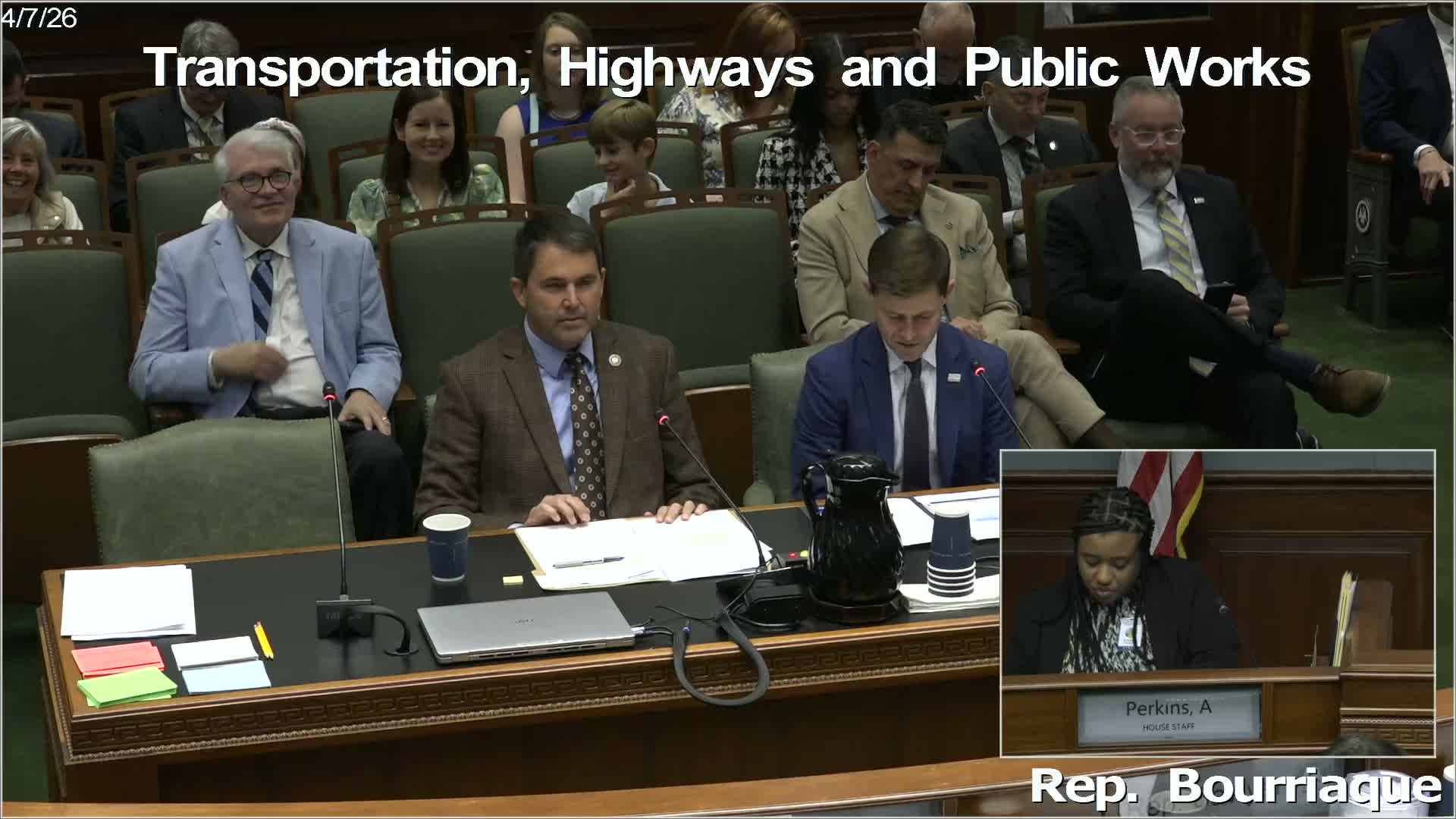
House members on April 7 advanced HB 11 57, a bill that would create a Louisiana State Infrastructure Bank to pool state, federal and private dollars for transportation projects.
Chairman Boriak, the bill's sponsor, said the bank is intended to give local governments an additional avenue to implement projects more quickly: "All we want to do is provide another mechanism whereby a local entity...can construct a project upfront," he said. Secretary Glenn Ladday of DODD told the committee the department has consulted states such as Florida and would pursue cooperative agreements with the Federal Highway Administration to establish both federal‑state and state infrastructure bank arrangements.
Economic development leaders emphasized potential project scale. Michael Hecht, chairman and CEO of Greater New Orleans Inc., told the committee the bank could help Louisiana compete for large investments and cited major projects — including a planned international terminal and river crossings — that require multi‑source financing. "This bill is that mechanism," Hecht said.
Lawmakers pressed sponsors for detail on governance and seed funding. Representative Walters asked whether the bill's board mirrors existing state boards; the sponsor said the draft envisions a six‑member board (including the director of rural development, a Bond Commission representative, agency designees and private sector expertise) and indicated staffing would be provided by the governor's office and participating agencies. On seed funding, the secretary and sponsor said a precise initial dollar amount had not been identified: the program would be developed through cooperative agreements and rule‑making and could look to annual FHWA unobligated redistributions in August for initial federal program dollars.
Supporters cited precedent. The secretary noted Florida's program (in place since 1999) and said those state loans have totaled over $660,000,000. The sponsor gave a local example where piecemeal annual appropriations delayed construction and argued a bank could assemble funds faster so projects do not sit unfinished.
After questions on board makeup, program priorities and readiness criteria, Chairman Boriak moved the bill favorably and the committee reported HB 11 57 to the House floor without objection. The bill will proceed to floor consideration and still requires appropriation actions and the formal cooperative agreements described by the sponsors.