Louisiana committee defers bill allowing Zachary to use DCI inmate crews to maintain private cemetery
Loading...
Summary
Lawmakers questioned whether public funds and unpaid inmate labor should be used to maintain a private, long‑abandoned cemetery in Zachary. City witness said the city pays DCI for transport and security but not the inmates; the author agreed to voluntarily defer the bill for revisions and more information.
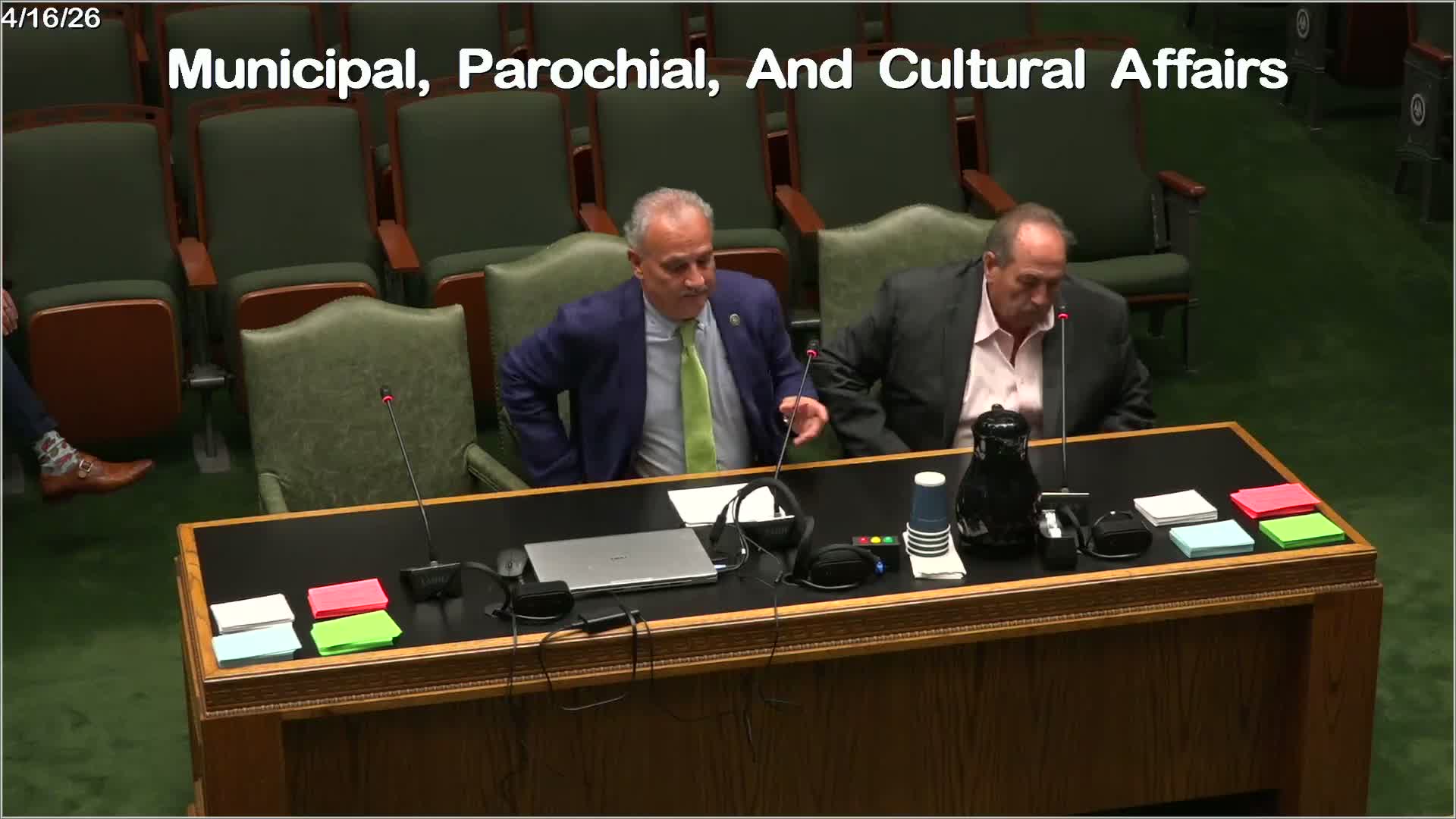
Representative Steve Adams brought House Bill 1087 to the House Municipal Committee to clarify that the City of Zachary may use Department of Corrections inmate crews under contract with DCI to maintain the small cemetery known locally as Zachary Public Cemetery. Adams said the cemetery sits at the corner of Highway 64 and Oceanic Highway and that the city has used DCI crews intermittently to mow and maintain it.
James Whitaker, representing the City of Zachary, told the committee the cemetery is private but effectively abandoned and that the city has contracted with DCI in the past. “It’s a private cemetery that is known as the Zachary Public Cemetery,” Whitaker said, explaining that the city provides transportation, equipment and pays DCI for security and transport of the crews.
Several committee members pressed the author and the witness for details. Representative Murray asked whether the city had attempted to contact family members of those buried there; Whitaker said the cemetery has a governing board but that many members have died and that the community—local churches and volunteer groups—has stepped in at times to help maintain it. Representative Murray said she was “very hesitant to start using unpaid prison labor to maintain private property,” noting a slippery‑slope concern about treating unpaid inmate labor as routine maintenance for private land.
Representative Knox raised a related due‑diligence question: if owners cannot be located, why had the city not attempted to acquire the property (for example to put the property into public ownership and budget maintenance)? Whitaker said he could not answer questions about title or sheriff’s actions on liens but described a long history of volunteer and city efforts to keep the site manageable.
Representative Billings highlighted the statutory and fiscal questions in the bill’s language. He asked whether funds appropriated by the Legislature for cemetery upkeep could properly be used on private property and whether a fiscal note should accompany the measure. Adams responded that the city had previously received a supplemental appropriation of about $25,000 for cemetery maintenance and that the current provision would allow those funds to be used to pay DCI (for transportation and security), not to pay inmates directly.
Other members said they would like time to tighten the bill language to avoid creating a precedent in which local governments routinely use unpaid inmate labor on private property. Representative Marcel withdrew an earlier motion to report the bill favorably and, after discussion, Representative Jackson moved to voluntarily defer HB 1087 to the next committee meeting so the author could work with members and provide clarifying language. The motion to defer carried.
The committee did not take a final vote on the bill; the author agreed to amend the bill’s language and return with additional information about funding, how DCI contracts would operate, and whether work‑release alternatives exist.